
Reading time: 4 minutes
Key messages
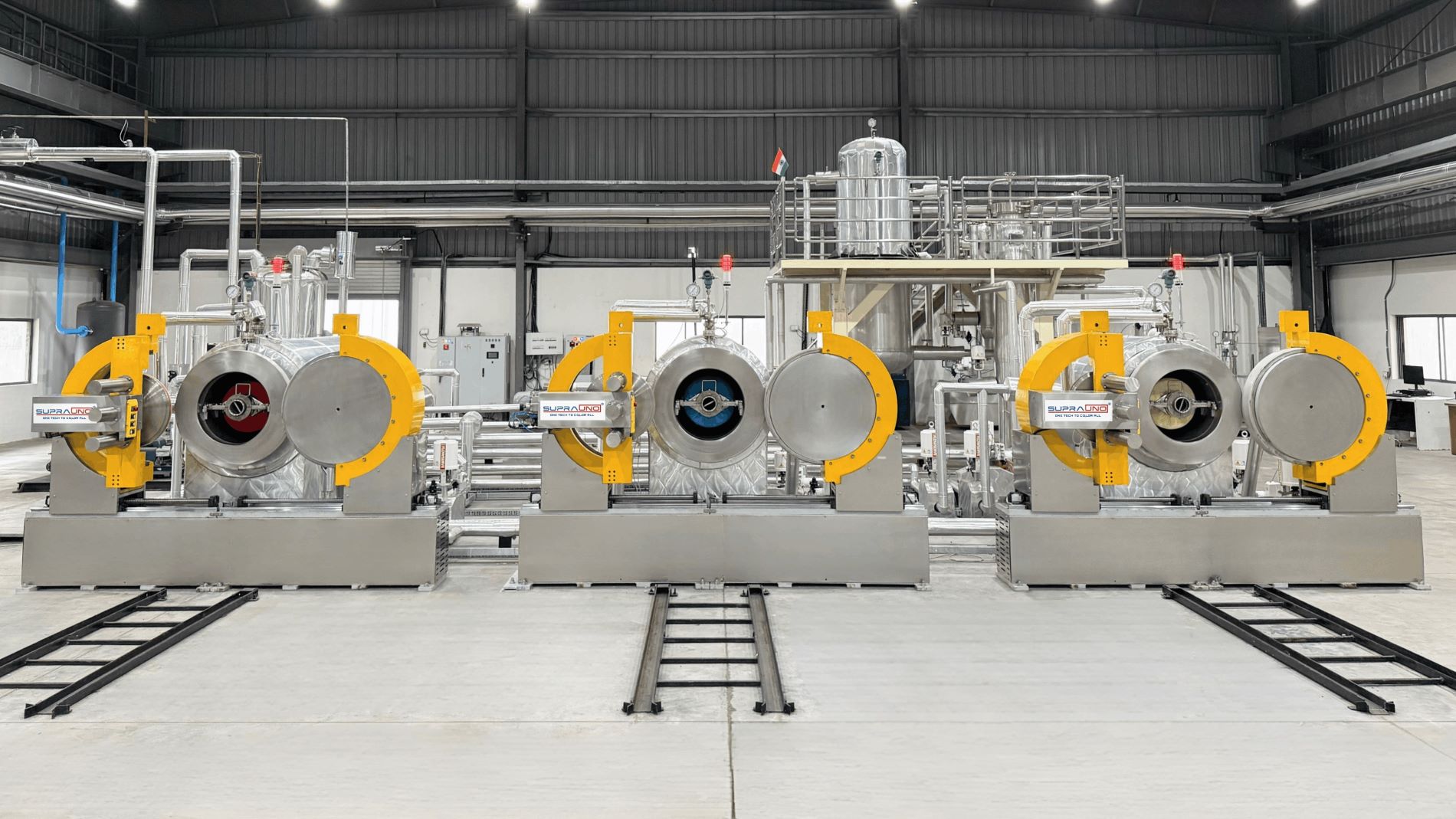
- SUPRAUNO® replaces water with supercritical CO₂ during dyeing
- The technology can be applied to natural, synthetic and blended fibres
- Water, salts and many auxiliary chemicals can be reduced or eliminated
- The process has already been implemented at industrial scale
- According to Dr Baser, the main challenge today is market adoption rather than technology
- Collaboration between technology providers, mills and brands will be essential for scaling
When an old idea gains new momentum
Textile wet processing remains one of the most resource-intensive stages of apparel production. Water, energy, auxiliaries and extensive wastewater treatment have shaped the process for decades. Unsurprisingly, interest in alternatives is growing. Yet many promising concepts struggle when confronted with industrial reality.
For Dr Swapneshu Baser, this is nothing new. The founder and Managing Director of Deven Supercriticals has spent more than 25 years working with supercritical carbon dioxide as a replacement for conventional solvents. “This concept of using supercritical carbon dioxide for textile dyeing is not new,” he explains. Previous attempts have explored the technology, but its applicability remained largely limited to polyester. This is precisely where Deven Supercriticals’ SUPRAUNO® technology seeks to make a difference.
In the end, SUPRAUNO® is not only the story of a new dyeing technology. It is also the story of how difficult – and how possible – it can be to fundamentally rethink industrial processes that have remained largely unchanged for decades.