The world's appetite for textiles seems insatiable: according to Textile Exchange's Materials Market Report 2026, published in September 2026, global fibre production reached a record 139 million tonnes in 2025 (2024: 132 million tonnes). This growth is being driven by the production of virgin fossil-based fibres, which still account for around 60 per cent of the total.[1] Nevertheless, attitudes are beginning to change – both in technical applications and in fashion.

Dr Terry P. Townsend, a statistician at the Discover Natural Fibres Initiative (DNFI), estimates production of bio-based cellulosic fibres at around eight million tonnes. Compared with virgin fossil-based fibres, this figure may not seem particularly impressive. Nevertheless, the expert has identified an interesting trend: “Investment capital in man-made cellulosic fibres is increasing as companies seek alternatives that are not subject to the environmental constraints of natural fibre production.” One advantage of bio-based man-made fibres, he explains, is that their raw materials can regenerate more quickly than major natural fibres such as cotton, wool or jute – an important consideration when it comes to scaling up production to an industrial level.


Scalability – the business potential of the bioeconomy?
Lenzing AG, one of the world's leading manufacturers of wood-based cellulosic fibres, is also seeing a noticeable shift in the reasons why companies are exploring alternatives to fossil-based materials. Although sustainability remains an important issue, other considerations are increasingly coming to the fore: security of supply, resilient value chains and reducing dependence on fossil raw materials – particularly in nonwoven and filtration applications. Lenzing believes that companies can strengthen their resilience by actively driving the transition and investing in solutions that are viable and scalable in the long term. The company demonstrated how this can work with its new plastic-free DualWipe innovation this year. The solution is designed to enable companies to reduce their use of fossil-based materials while making their value chains fit for the future. According to Lenzing, approaches such as these represent significant business potential for the bioeconomy.
40 per cent growth – because ‘bio’ is suddenly becoming cheaper
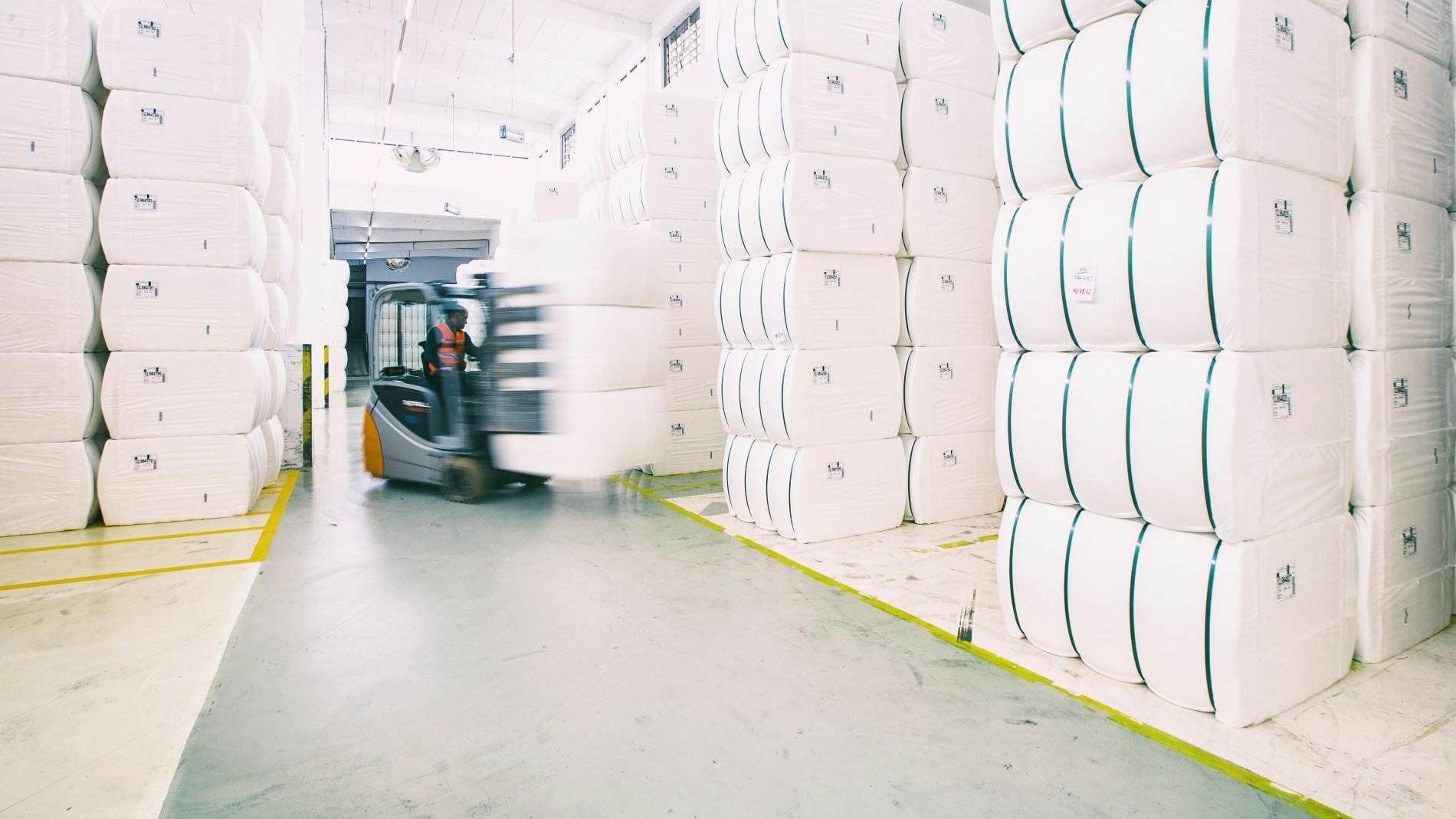
Torsten Zöller, Sales Manager New Business & MRG at Cordenka, one of the world's leading manufacturers of high-quality industrial rayon fibres, is observing similar developments. The current focus is on biodegradable horticultural twines made from technical viscose. Although the solution was introduced four years ago, demand is now rising significantly. “The season is in full swing. Compared with last year, we expect growth of a good 30 per cent, if not 40 per cent,” says Torsten Zöller. Enquiries are coming primarily from Europe, where stricter environmental regulations are prompting companies to rethink their practices, but also from markets including Argentina, Chile, China, Finland, Israel and Canada.


To develop new solutions, the brand works successfully with partners such as UPM Next Generation Renewables. In July 2026, their joint project – the world's first fleece jacket made from wood-based polyester – received the Ernst Pelz Award. For VAUDE, this is an indication that renewable raw materials can help bring together climate protection, circularity and industrial scalability.
Nevertheless, the company still sees major challenges. “VAUDE wants to help advance alternatives to fossil raw materials. However, to achieve this, we as an industry need reliable framework conditions that encourage innovation: clear political signals for the rapid further expansion of renewable energy supplies and market incentives to finally make a genuine circular economy for functional textiles commercially viable,” says Hilke Patzwall.
Market value: one trillion dollars – and rising
From technical applications to fashion, change is clearly taking place across the textile industry. Given global developments, this also appears necessary. In 2025, polyester accounted for 86 million tonnes of global fibre production, with virgin fossil-based polyester representing 88 per cent of this volume. Of the 9.7 million tonnes of recycled polyester produced, 97 per cent came from plastic bottles, while the share of textile-to-textile recycled fibres increased only marginally, from 0.61 per cent in 2021 to 0.76 per cent. The move away from fossil-based raw materials therefore still has a long way to go. But there are also encouraging signs: man-made cellulosic fibres already account for seven per cent of total fibre production.[4]
Is this share set to increase? Dr Terry P. Townsend believes so. According to his calculations, the total value of all bio-based textiles is around US$70 billion. Once products made from bio-based fibres have been spun into yarn, woven or knitted into fabrics, dyed and finished, and subsequently cut and sewn into clothing or home textiles, their value at retail level exceeds US$1 trillion.
However, the expert does not expect unlimited growth. “I have seen forecasts predicting average annual growth rates of up to eight per cent over a decade, which would double the market's current size. Such forecasts are largely marketing hype. A more likely scenario is that the value of bio-based textiles at the agricultural and industrial level will rise to around US$85 billion over the next ten years.” High-profile flagship projects and successful hidden champions, such as those mentioned above, are driving this development.
[2] ASTM D5511 / ASTM D6691 / ASTM D5210
[3] VAUDE Klimastrategie Net Zero bis 2040: https://www.vaude.com/de/de/blog/post/vaude-klimastrategie.html
[4] Source: https://textileexchange.org/knowledge-center/reports/materials-market-report-2026/