
Reading time: 5 minutes
When Leni Rohleder joined the family business, the Rohleder weaving mill based in Konradsreuth, Upper Franconia, as Head of Sustainability five years ago, one thing was clear to her: “I didn’t want to be just the owner’s daughter”. Instead, she looked for a topic she could take responsibility for independently and, at the same time, use to get to know the company, its processes and the people behind it. Sustainability quickly emerged as the obvious focus – partly because it was a topic she cared deeply about.
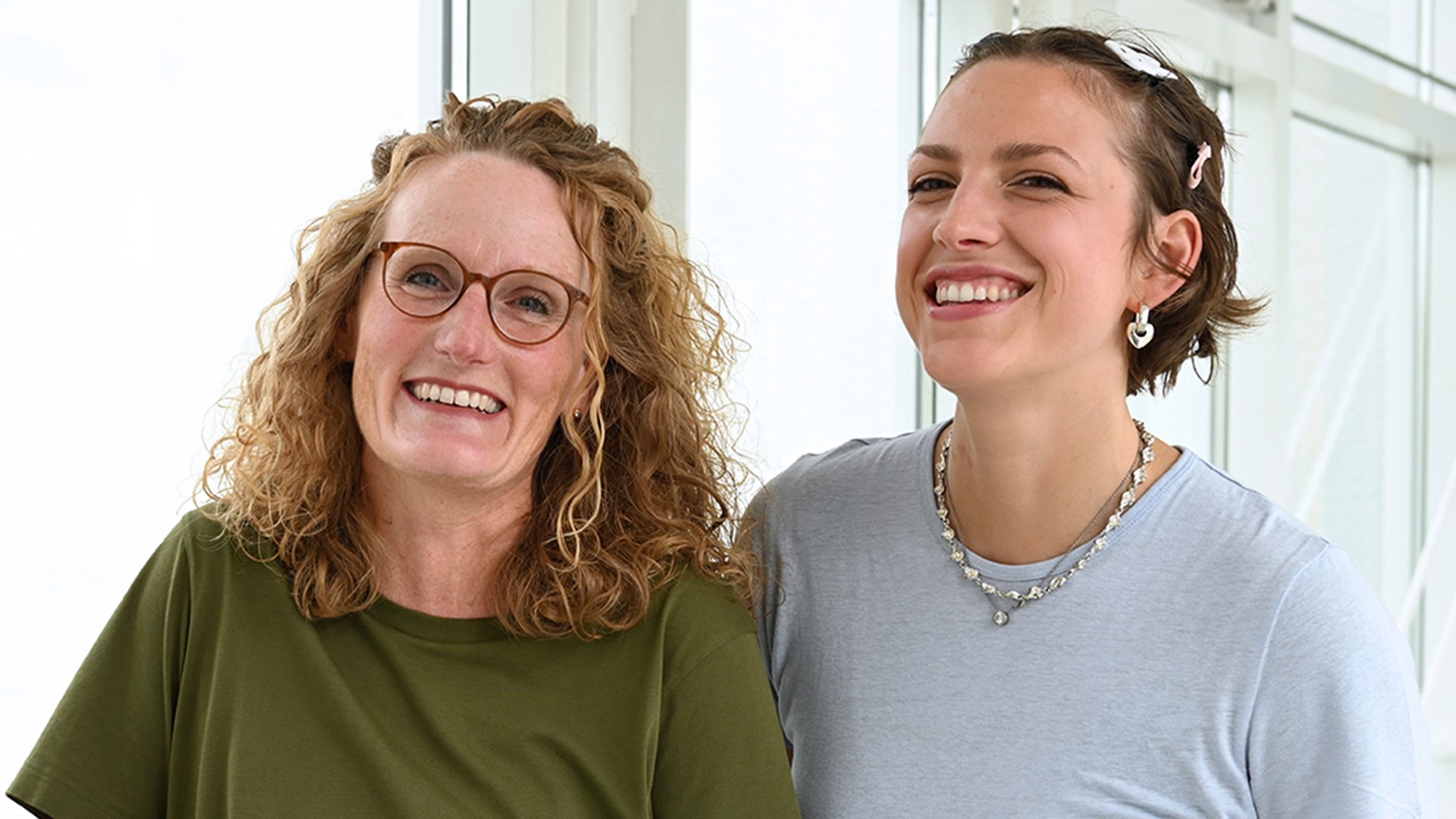
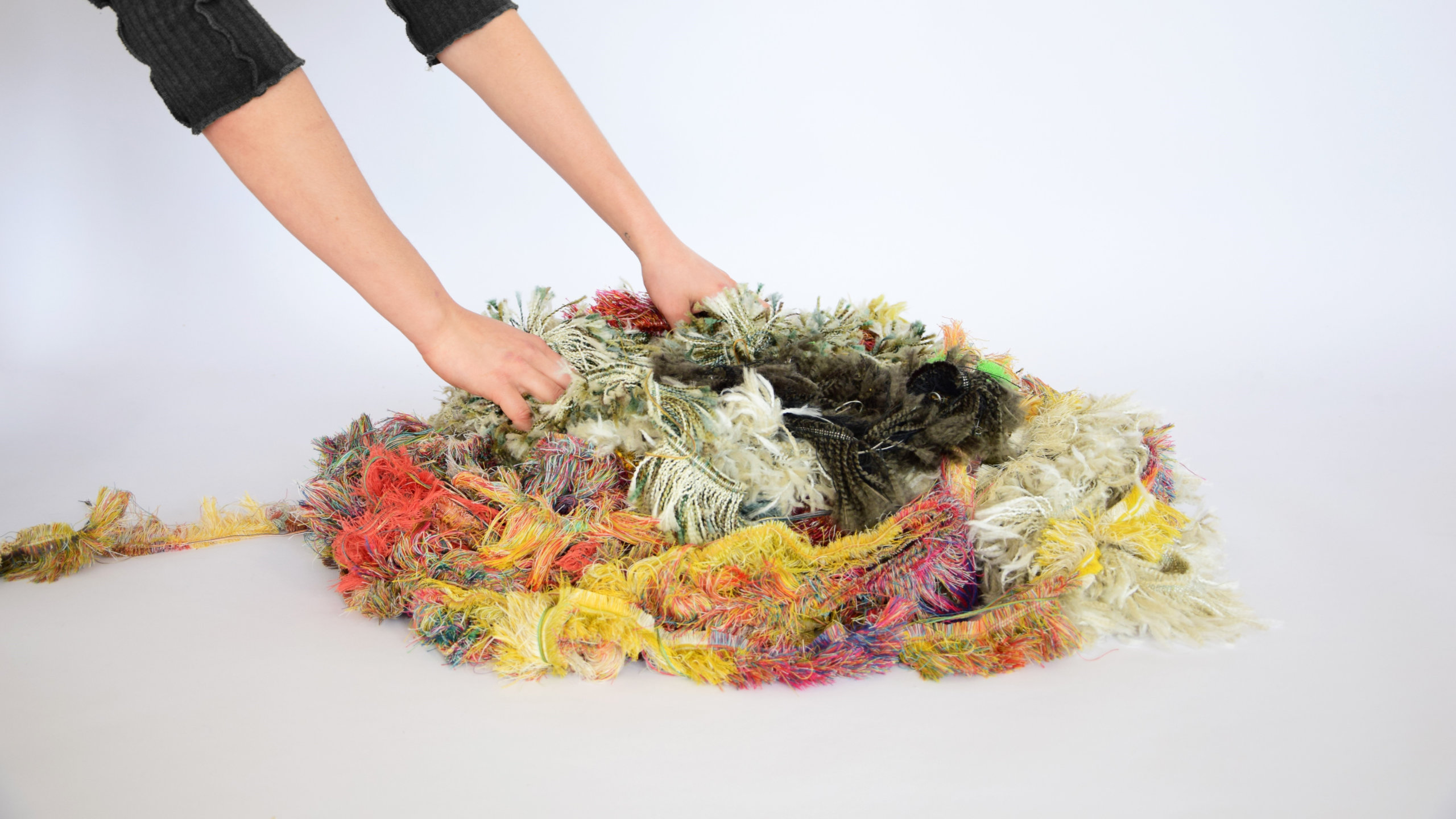
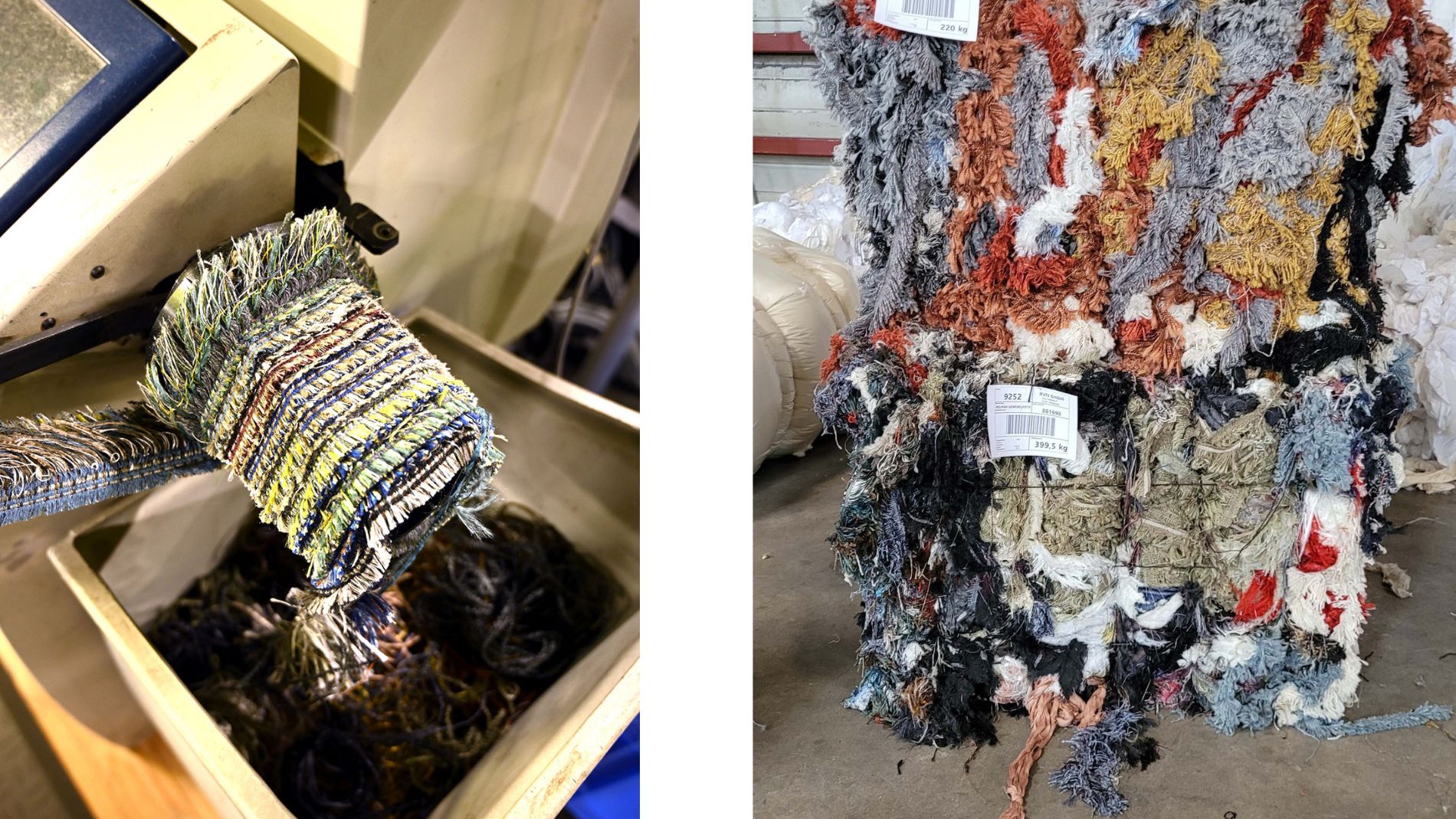
“Reduce, Reuse, Recycle – that was the logical starting point for me,” she explains. In textile designer Melanie Peter, who has been developing fabrics at Rohleder for 25 years, she found an enthusiastic ally. Together, they began to analyse the company’s material streams within the company in greater detail. It soon became clear that the company’s largest waste stream consists of textile scraps – in particular the so-called weaving strips, which are technically unavoidable by-products of the weaving process.
Until now, these materials have been recycled only through downcycling, for example into painter’s drop cloths or insulation materials. At the same time, the situation worsened during the COVID-19 pandemic. Parts of the existing recycling process broke down, and some waste materials suddenly had to be incinerated – an expensive process and, from a sustainability perspective, far from ideal. “It was clear to us that this couldn’t be the solution,” recalls Melanie Peter. “We wanted to show that something of high quality could be created from these residues.”
The decisive impetus finally came from the Institute of Materials Science (IFM) at Hof University of Applied Sciences in Münchberg, which has a circular needle-punching machine. The technology enables non-woven textiles to be formed into stable tubular structures with different mandrel diameters. The idea of developing furniture from the material emerged almost immediately. Together with the IFM, the RecyTube research project was launched. For Leni Rohleder and Melanie Peter, this was uncharted territory: funding applications, material tests, development cycles – there was much to learn. At the same time, the project met with great support internally. Colleagues helped with collecting and sorting leftover materials, dug out old fabric stocks or adapted processes. “That was actually the best part,” says Melanie Peter. “That so many people said: ‘That’s cool, we’re in.’”
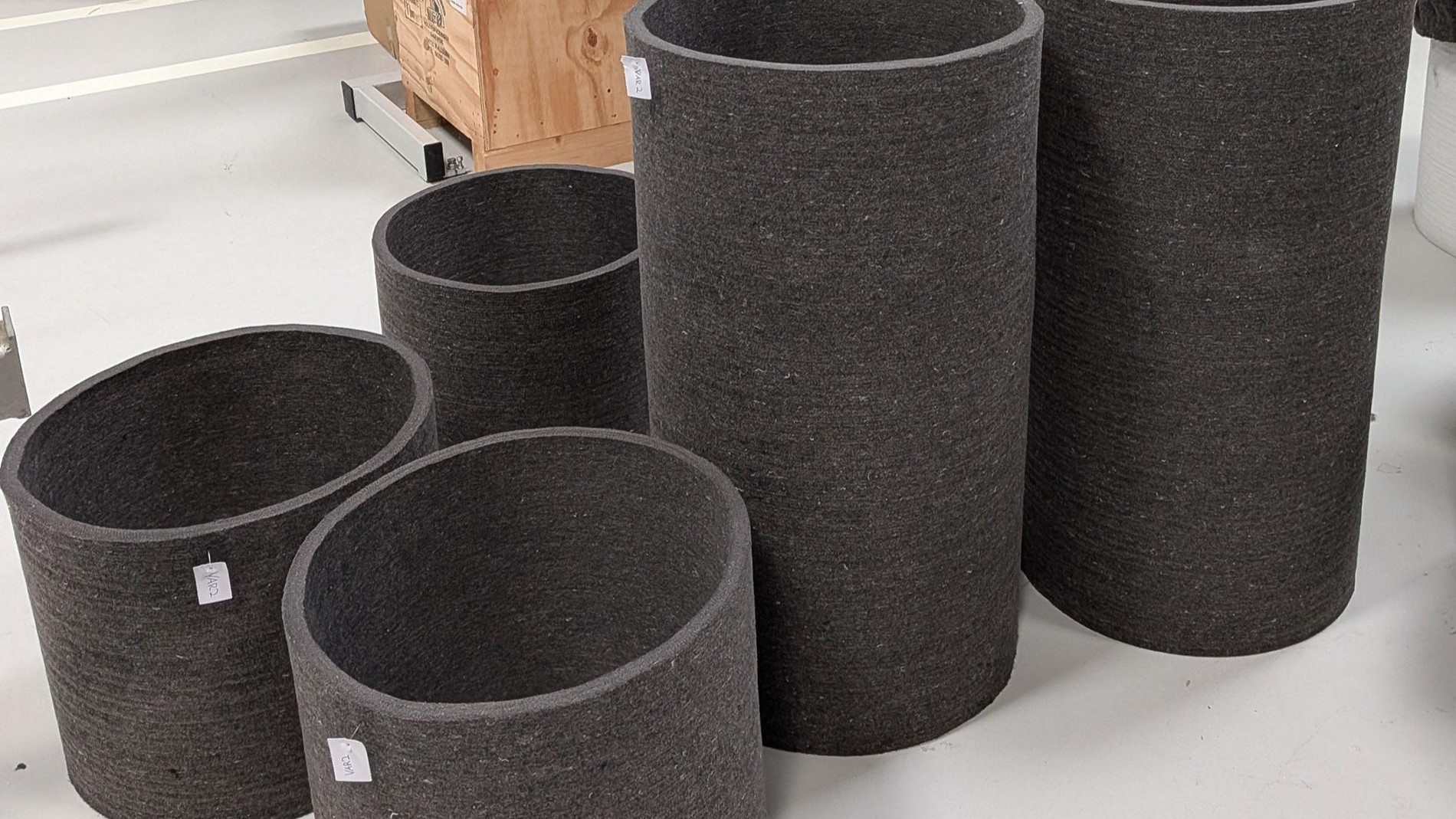
Technically, the process began with the collection of the weft strips. These were mechanically broken down in a shredding unit until the fabric scraps were reduced to individual fibres. It was precisely here, however, that the complexity of recycling became apparent: if the yarns are processed too little, too many yarn scraps remain. If they are broken down too much, the fibres become too short and lose their stability. “You’re constantly looking for the sweet spot,” explains Leni Rohleder. “How much can the material be processed so that it can be easily turned into a fleece, yet still remains stable?” At this stage, it was decided to add a small proportion of black virgin fibres to achieve the necessary stability for a durable piece of furniture. This not only improved the strength but also gave the material a high-quality anthracite-coloured appearance – a far cry from the typical “look of industrial felt”.
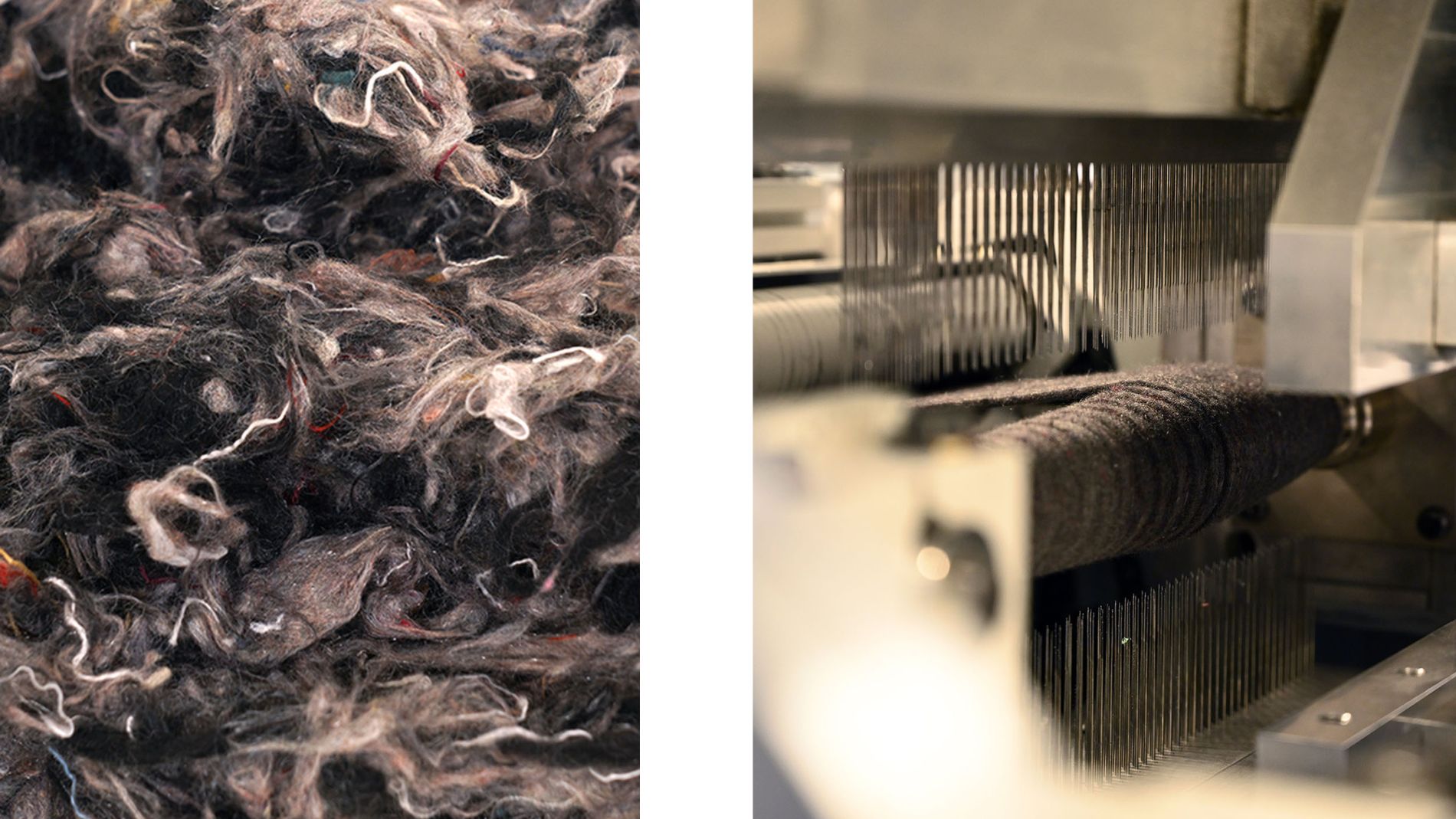
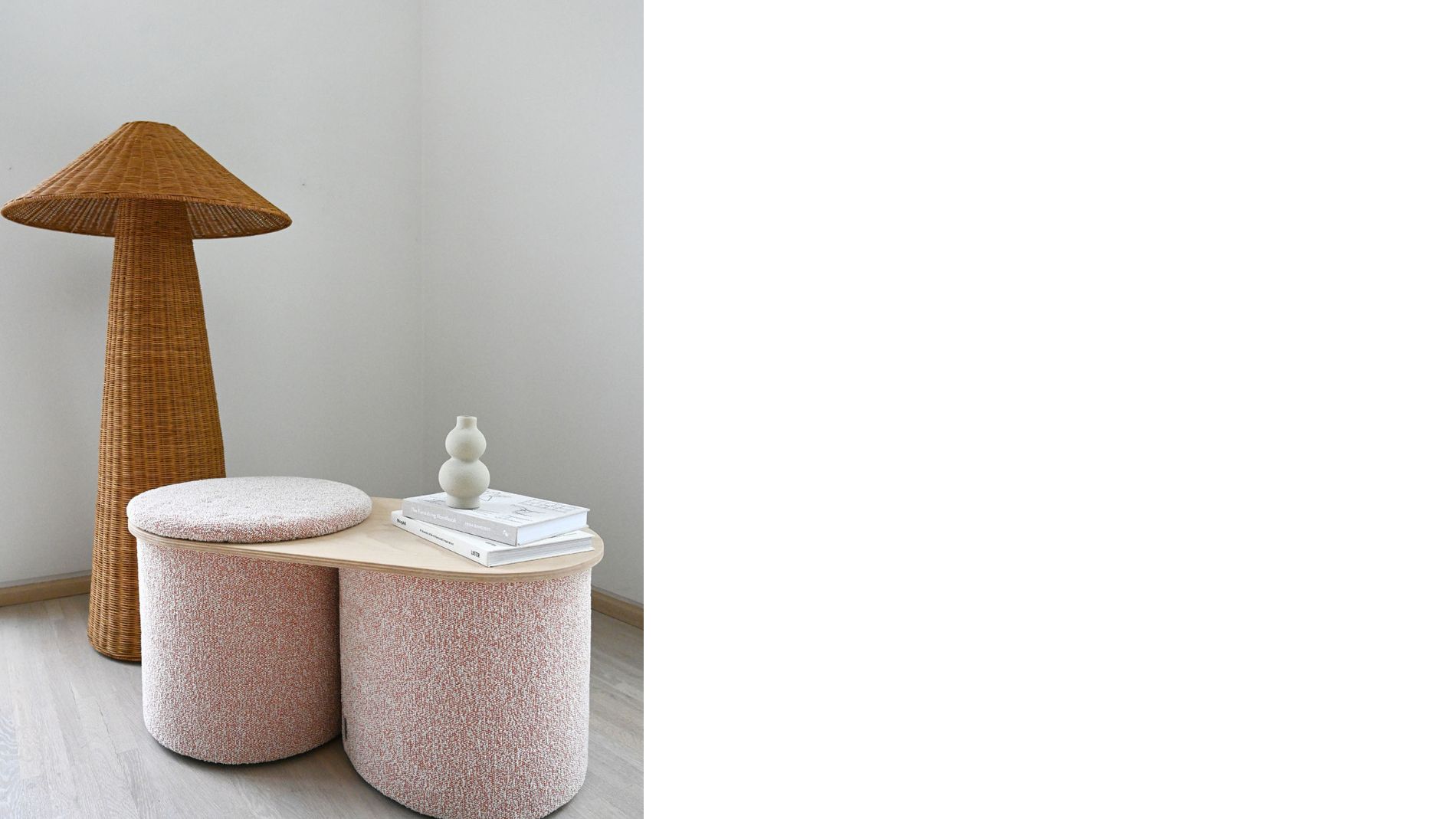
In the next step, the fleece strips were processed into solid tubes on the circular needling machine. In this process, thousands of needles compress the fibres until a stable structure is formed. The result is a surprisingly robust round tube with a core diameter of 40 cm, from which a first stool and a bench were eventually created. The outcome was far from certain: “It could just as easily have been the case that, despite all our efforts, no piece of furniture would have emerged. That’s simply part of research,” says Leni Rohleder, clearly delighted.
Support with the design and construction of the furniture came from the furniture manufacturer Signet, based in Hochstadt am Main in Upper Franconia. “We have been working closely with Signet for many years, and Managing Director Thomas Schlosser was immediately open to the project,” recalls Leni Rohleder. Together, the team developed solutions for lids, bases and connectors. It became clear in the process that sustainable design goes far beyond simply using recycled materials. “If you really want to think about sustainability holistically, you can’t just glue everything together or work with foam,” says Melanie Peter. “Ultimately, the product must be able to be dismantled into its individual parts and returned to the material cycle.”
This mindset, in particular, is said to be one of the greatest challenges of the transformation. Many conventional processes in furniture manufacturing are designed for maximum stability and comfort – not for circularity. RecyTube therefore seeks to bring these two worlds together.
The fact that the project is now attracting attention far beyond the region is evident from numerous presentations and collaborations. RecyTube was represented at the Coburg Design Days in 2024 and 2025 – and will be taking part again this year. The presentation at Techtextil in Frankfurt and a talk at an event organised by Bayern Innovativ also attracted considerable attention.
Industrial partners such as the BWF Group, a specialist in technical needle-punched felts and circular-needled speciality products, are already supporting the project with a view to potential industrial applications. After all, the question is no longer simply whether a stool can be made from textile waste. What is far more exciting is what other applications might be possible: could the non-wovens replace foam in the future? Could they even be used to produce new yarns? “That would then truly be a closed-loop system, where we could carry out genuine fibre-to-fibre recycling,” says Leni Rohleder, who is also very open to follow-up projects. Or could the project be applied to other textile sectors?
And what specific insights were gained for the Rohleder company? Leni Rohleder and Melanie Peter are in agreement on this: “We are certainly benefiting from a significant transfer of knowledge. We have also been able to significantly expand our network.” And last but not least, the company’s own production processes were scrutinised and adjusted in one or two areas to further reduce waste.
For Leni Rohleder and Melanie Peter, one thing is clear: sustainability is not a short-term trend, but a long-term process of change. Even if economic pressure and rising costs are currently often pushing the issue into the background. “You can certainly see that many companies are just focused on economic survival at the moment,” says Leni Rohleder. “But that is precisely why we need to think ahead and gain experience now. That way, we’ll be prepared when demands increase.”
RecyTube impressively demonstrates just how much innovative potential lies in what is often regarded as waste – and that the circular economy for textiles can only work if research, industry and design break new ground together.