
Reading time: 2 minutes
Proximity
A few steps to the left, they say from behind the camera. Patricia Urquiola smiles briefly – half amused, half focused. It’s Heimtextil 2026. The room is full, the lens is searching for stillness – but this installation has no interest in stillness. It wants proximity. And it claims it.
Inside
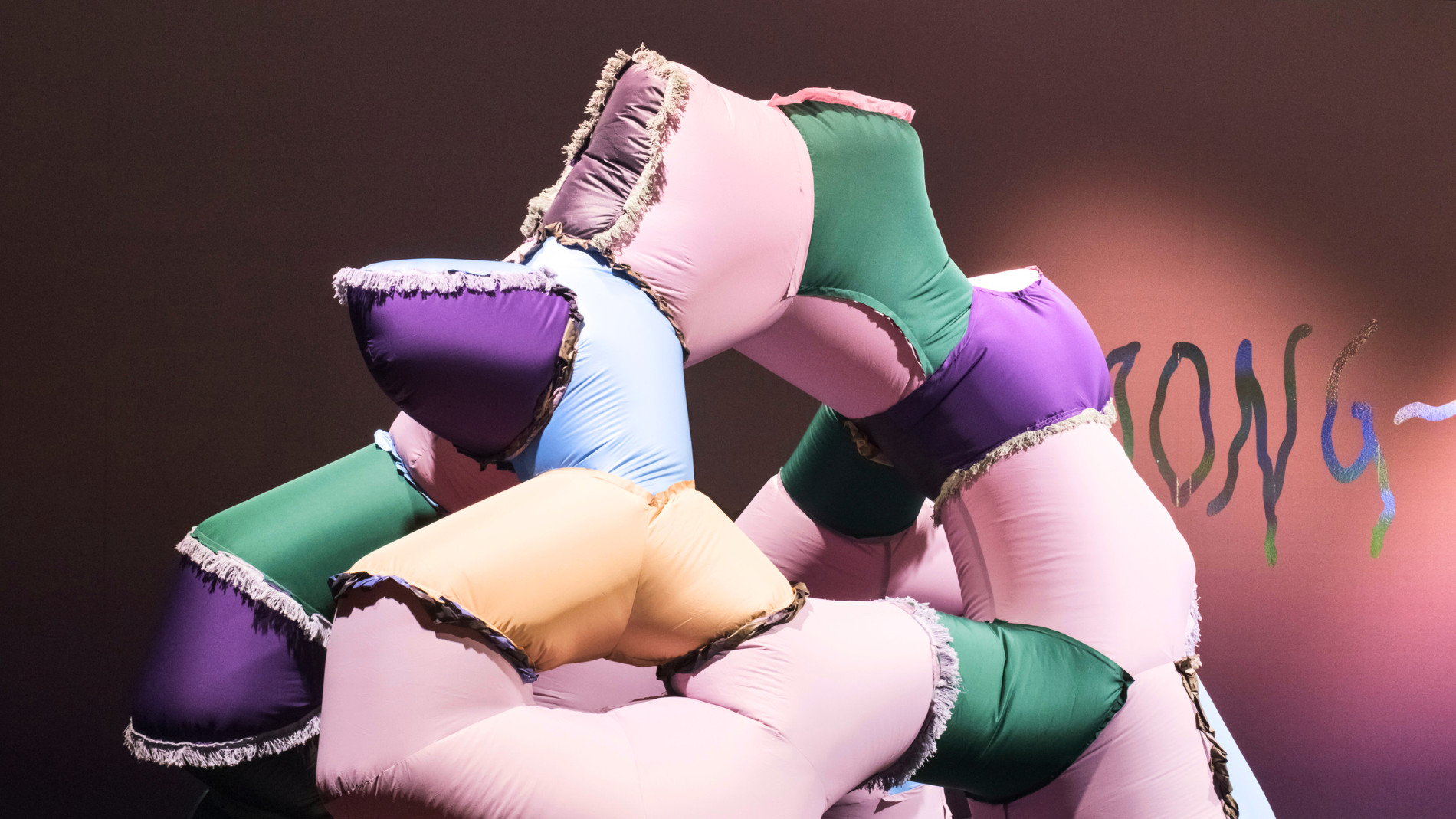
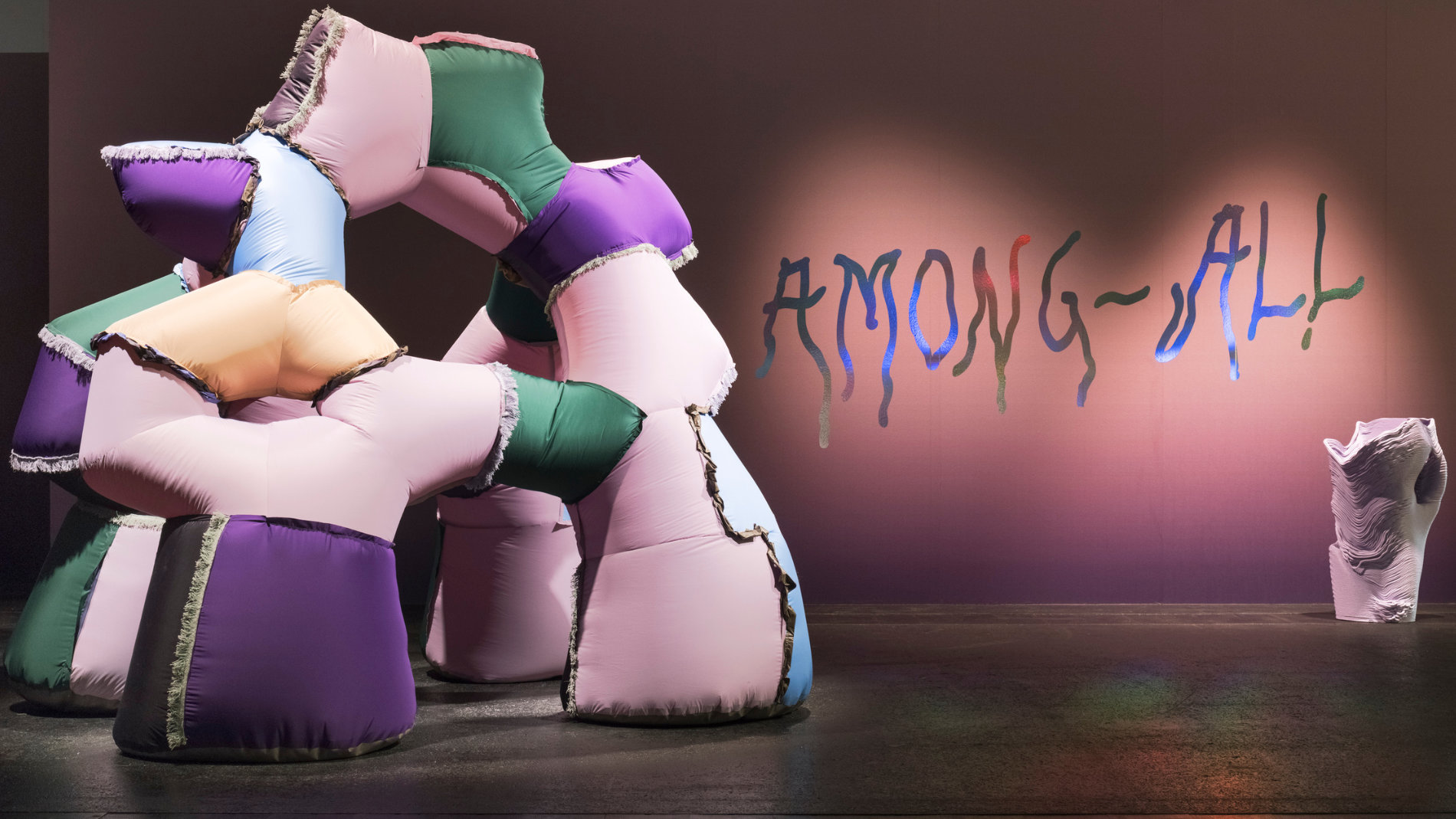
“among-all” is the second act of a line of inquiry Urquiola began last year. Titled “among-us” – a kind of textile test arrangement built in layers: a square one entered in order to feel distance. This time, distance has been abolished. “You are already inside,” she says. No more observing – now it is about being surrounded. Textile is not put on display – textile does the displaying: the body, its movements, its hesitation, its passage.
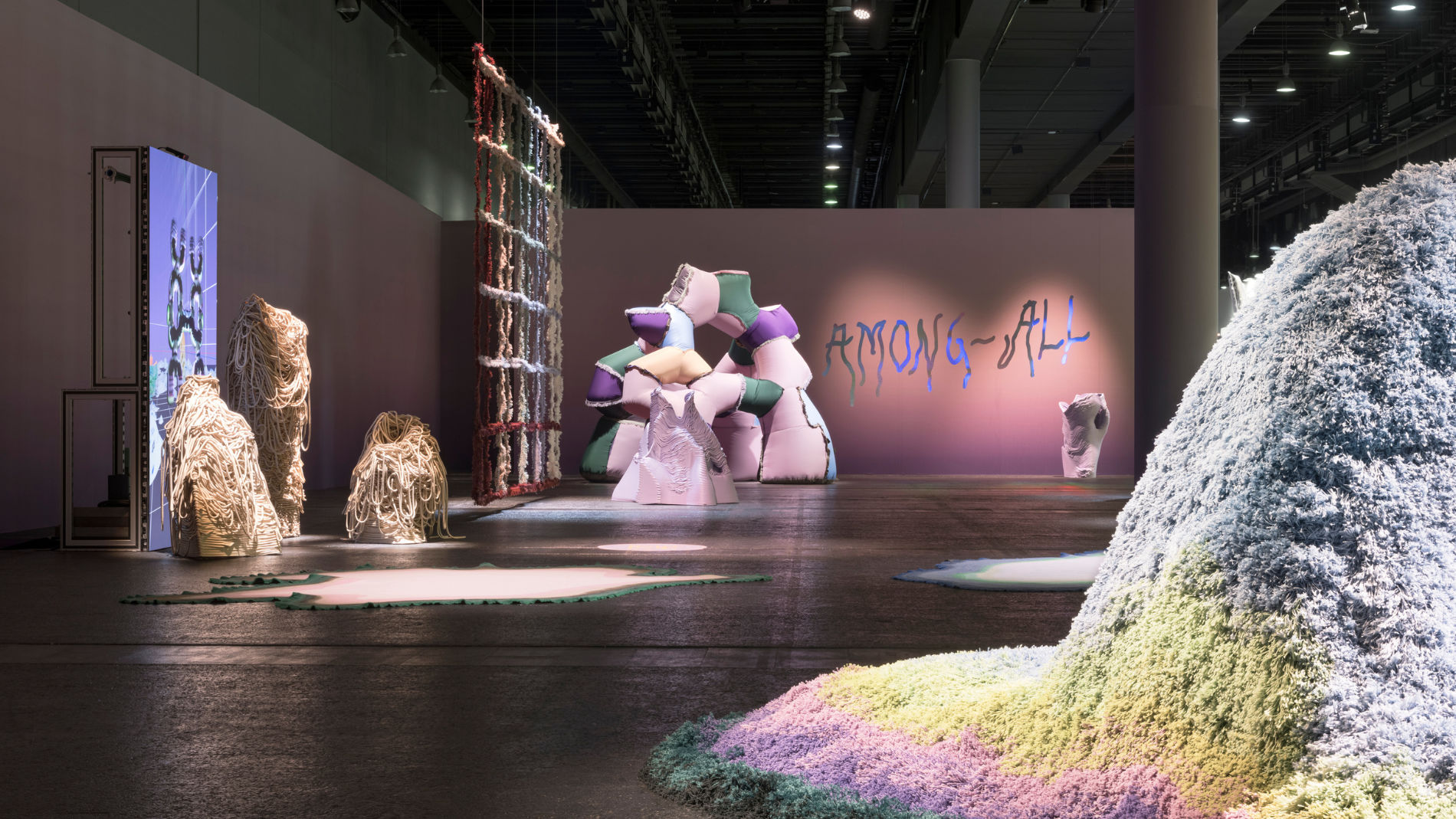
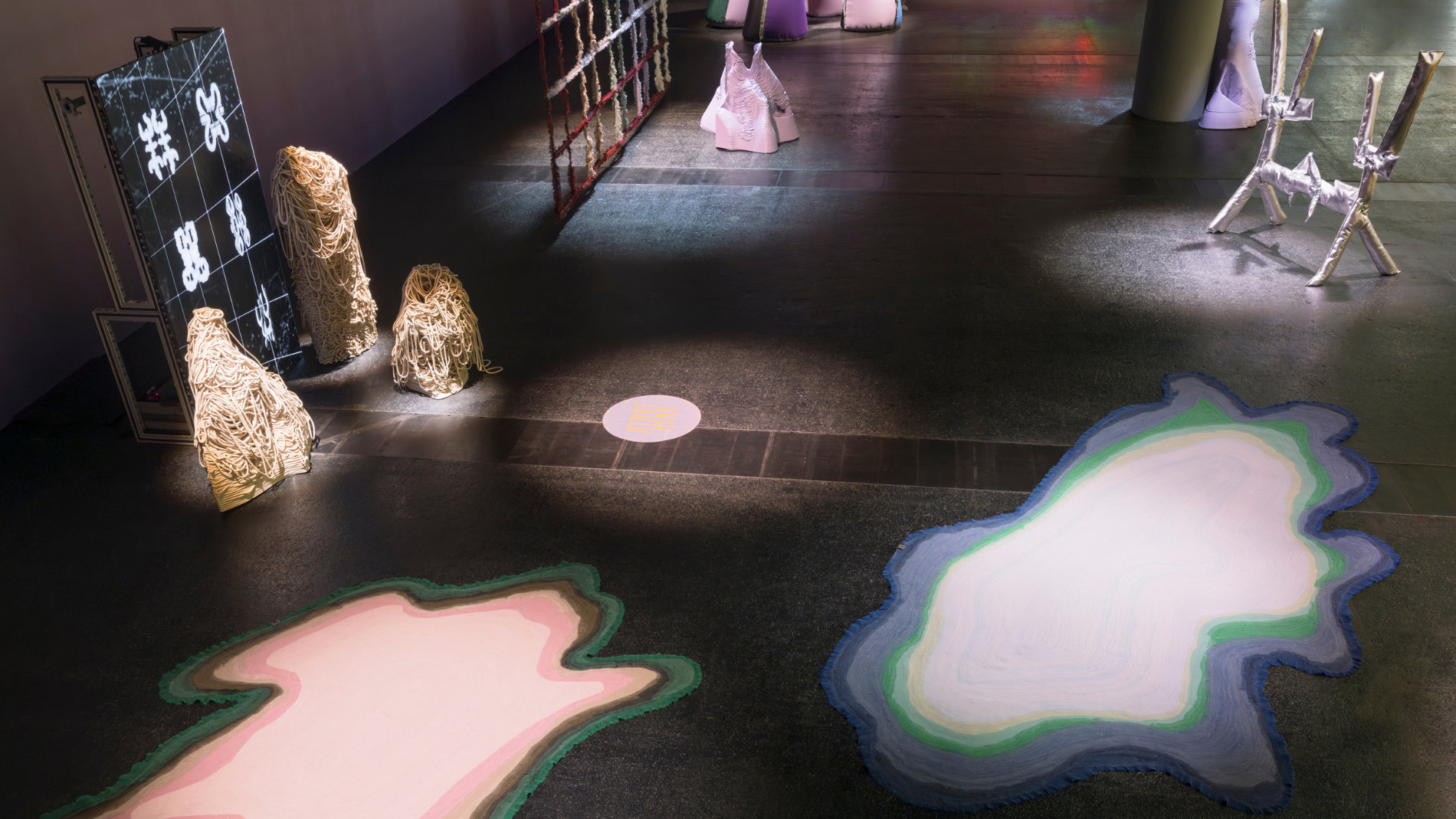
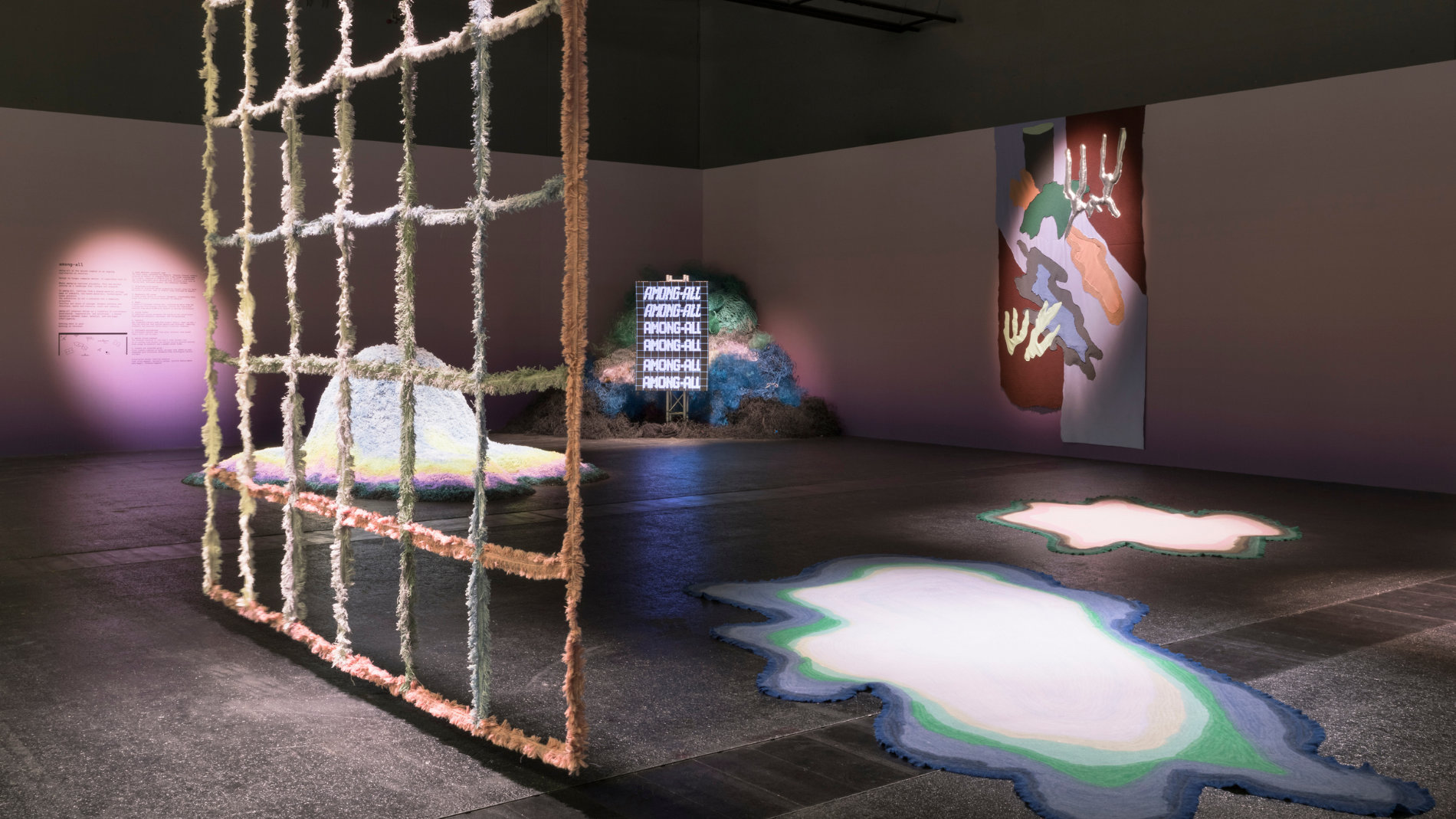
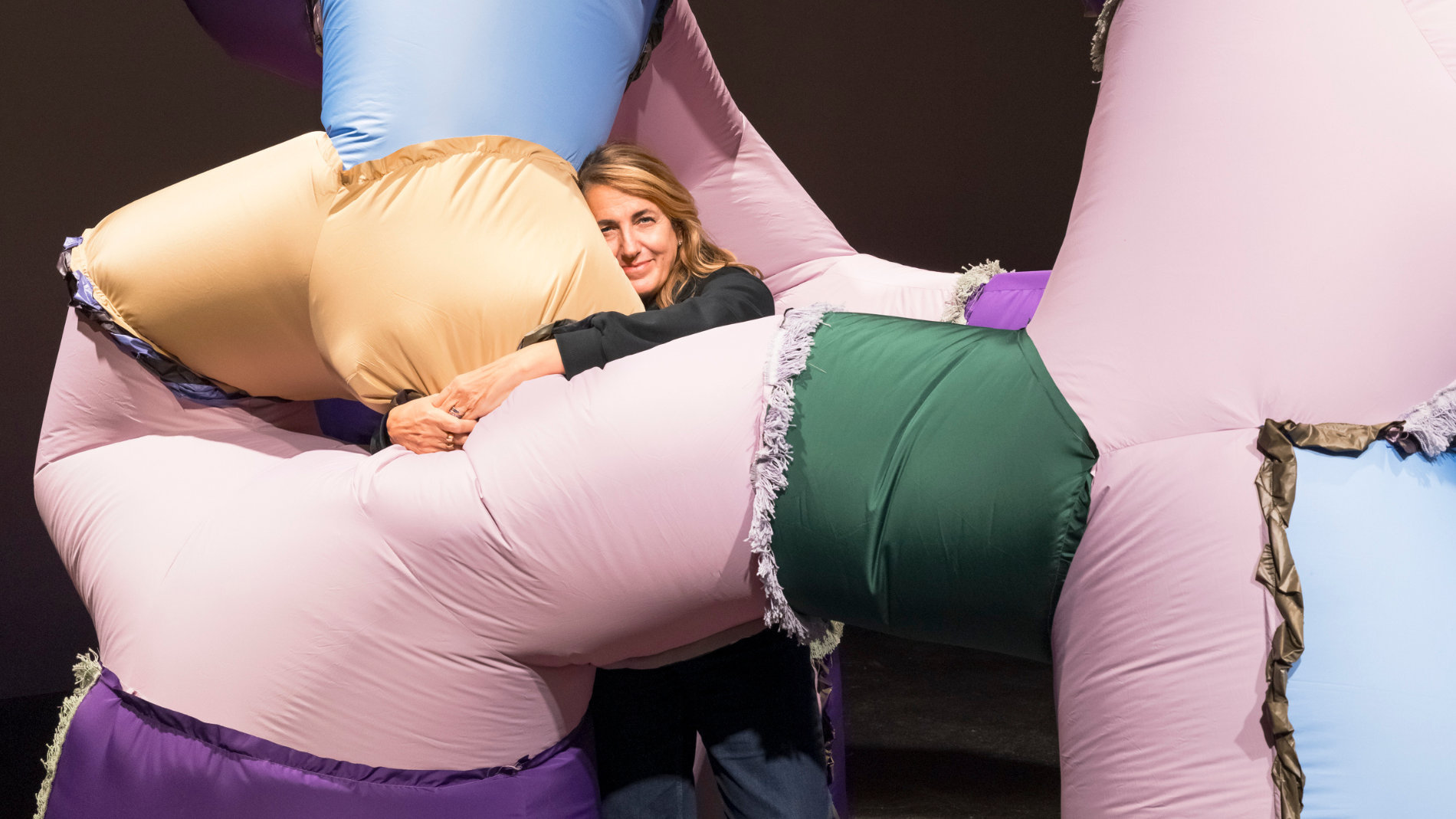
Photo: Constantin Meyer, Cologne
Dialogue & Resonance
Urquiola speaks about design as if it were an overused word. Control over material, control over form – yes, that exists. But she wants to shift the term: away from control, toward negotiation. Material is not a subordinate; it is a counterpart. It must be questioned, respected, sometimes playfully provoked. Design as a cultivated relationship – not a demonstration of power.
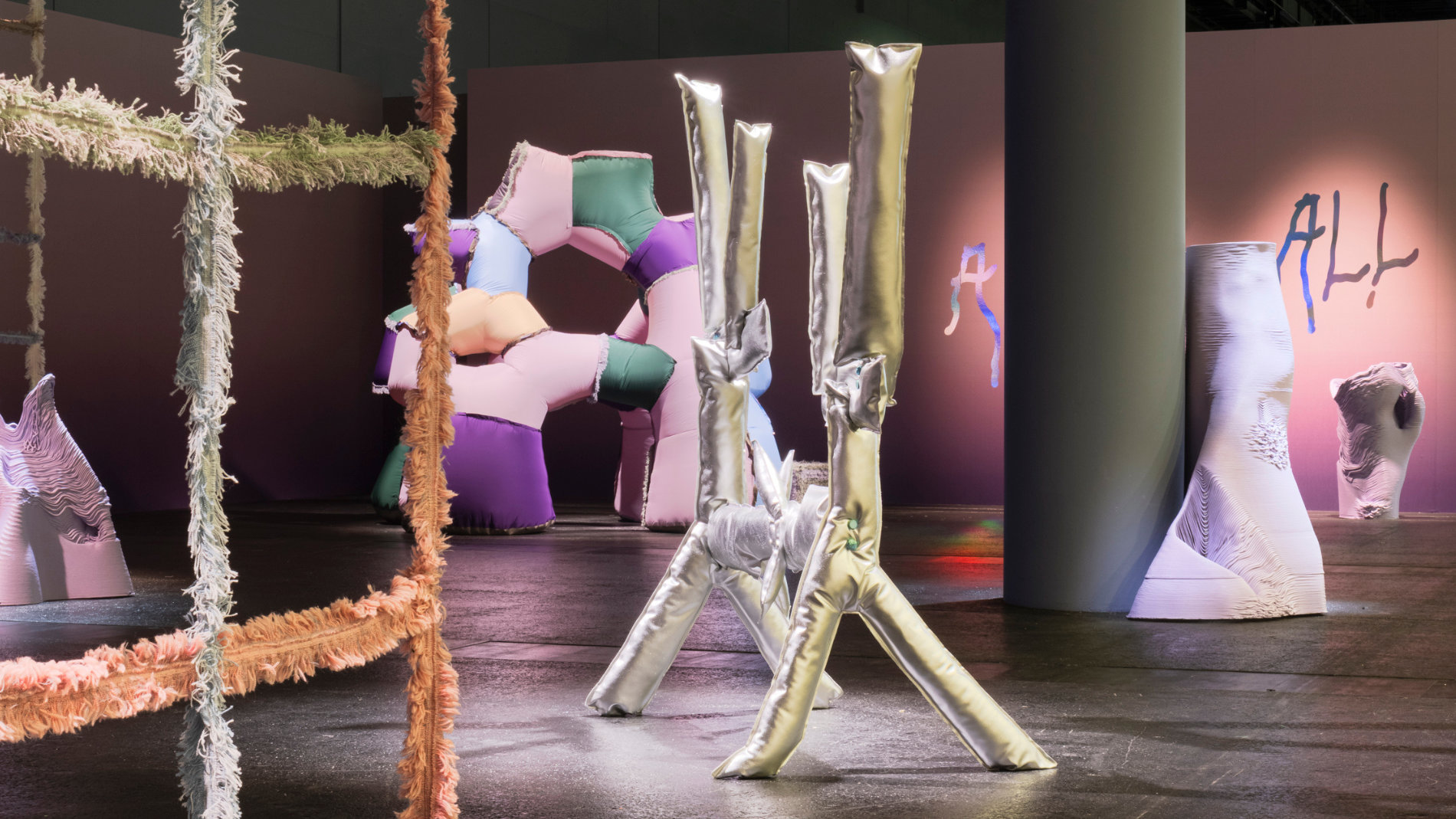
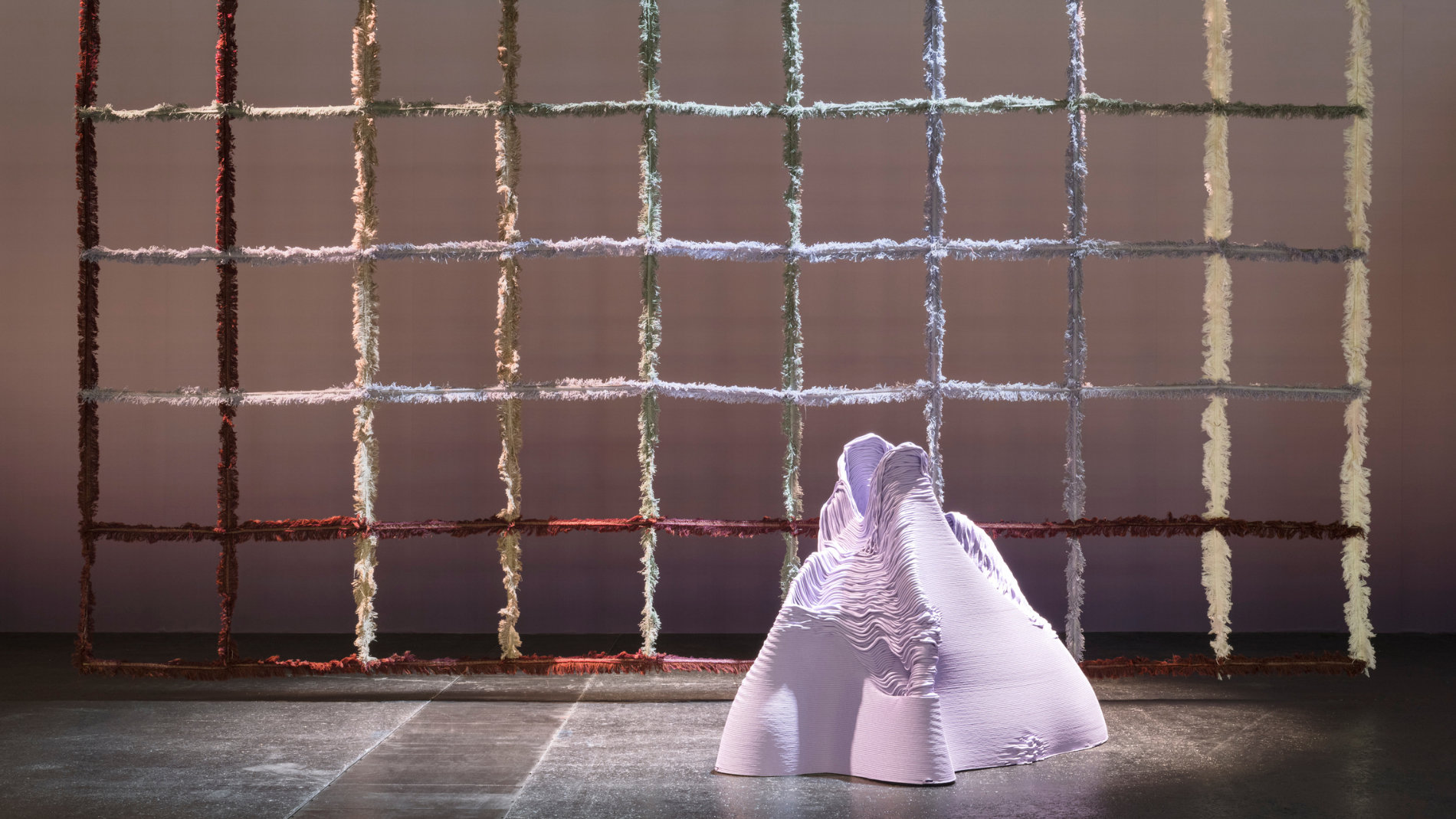
Around ten objects inhabit the space. Everything vibrates. A kind of “moon tent,” as she calls it: a tent that grows into the living room, a mountain range of softness whose slopes one traces while moving along them. In the background, a tapestry of squares – natural, regenerated – like a quiet record of what is happening here: material narrates space.
Bambi
And then there is this creature. Half object, half character. Urquiola spontaneously calls it “Bambi”, because it looks as though it has only just been born. It comes from a digital world, from a drawing, from a video – and suddenly lands physically in front of us. Its skin: orange and silver. Up close, you become part of the story yourself: responsive technology, a touch of AI, a surface that responds in return.
Grid & Air
A digital grid becomes real – made of remnants. A German company supplies edges, cut-offs, leftover fabrics. Urquiola turns them into fringes, carpets, a system that no longer needs to be logical. The grid is not order, but the memory of order. And at its core: material “reborn” – even as a 3D-printed structure, no longer yarn but a new grammar of thread.
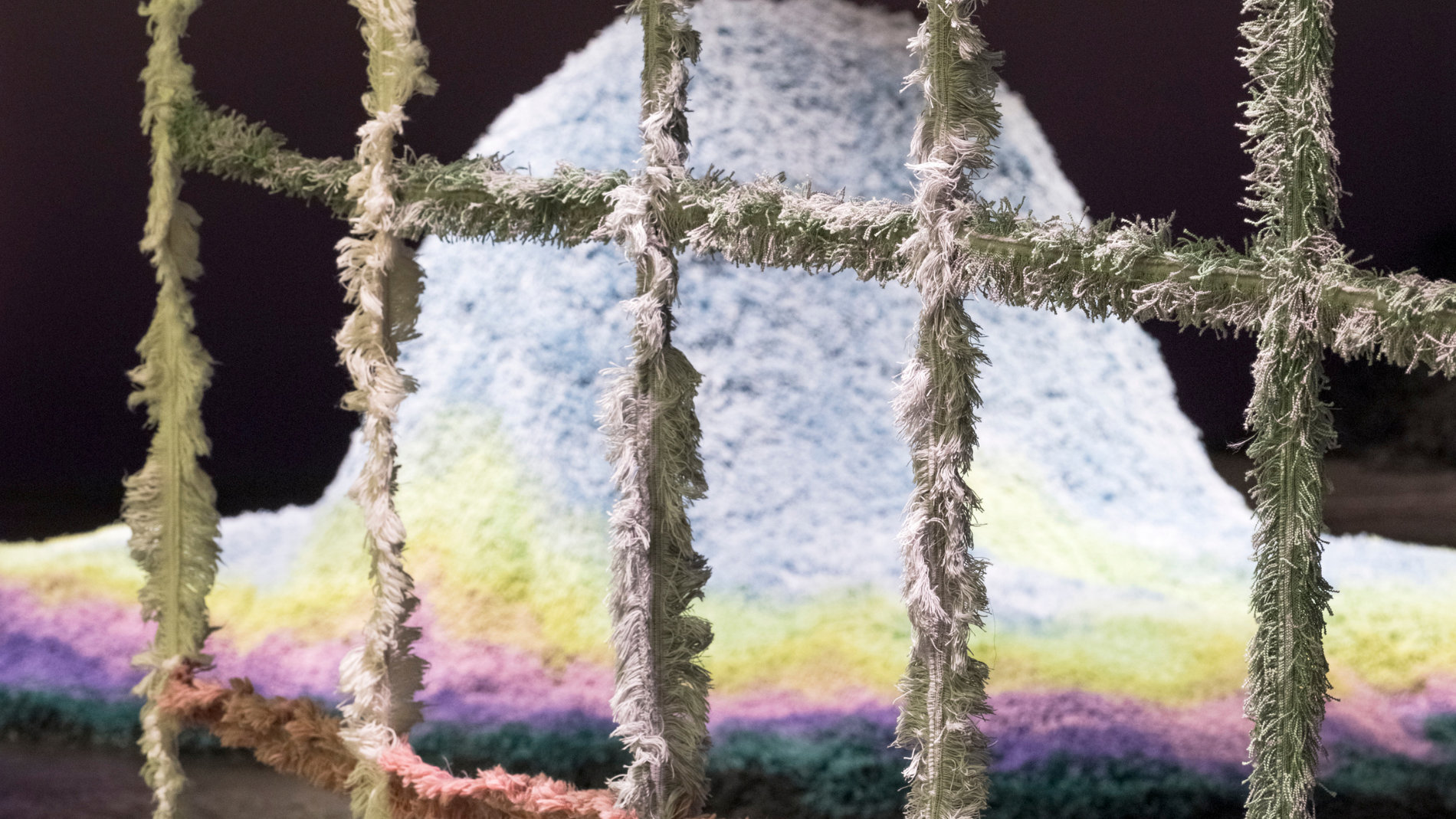
In the end, something hangs that refuses to be a curtain. Nylon remnants, light as air. Urquiola says textile is always architecture as well – but architecture with time embedded in it. Because it moves. Because it responds. Because it is never finished.
And that is precisely among-all: not a space you understand. But one that understands you – the moment you step inside.
Partner of Studio Urquiola




Photos: Constantin Meyer, Cologne