
Reading time: 3 minutes
“For me, we really have to start acting now.” The sentence comes early in the conversation – and it is more than an appeal. Berlin-based interior designer Kasia Mijas-Galloway of Matterialista describes how her perspective on materials and spaces has fundamentally changed in recent years. Motherhood, at the latest, turned sustainability into “a very pressing subject” for her: the future, she believes, must not look worse than the present.
This mindset shapes her projects from the very first sketch. For her, circularity is not an add-on within the material concept, but an integral part of every brief – even when the client does not explicitly demand it.
“I can’t really design something anymore that is obviously going to become waste.”
This means: materials must be reversible, biodegradable or recyclable. And the design process does not end with specification; it consistently considers future use and the return of materials into the cycle.
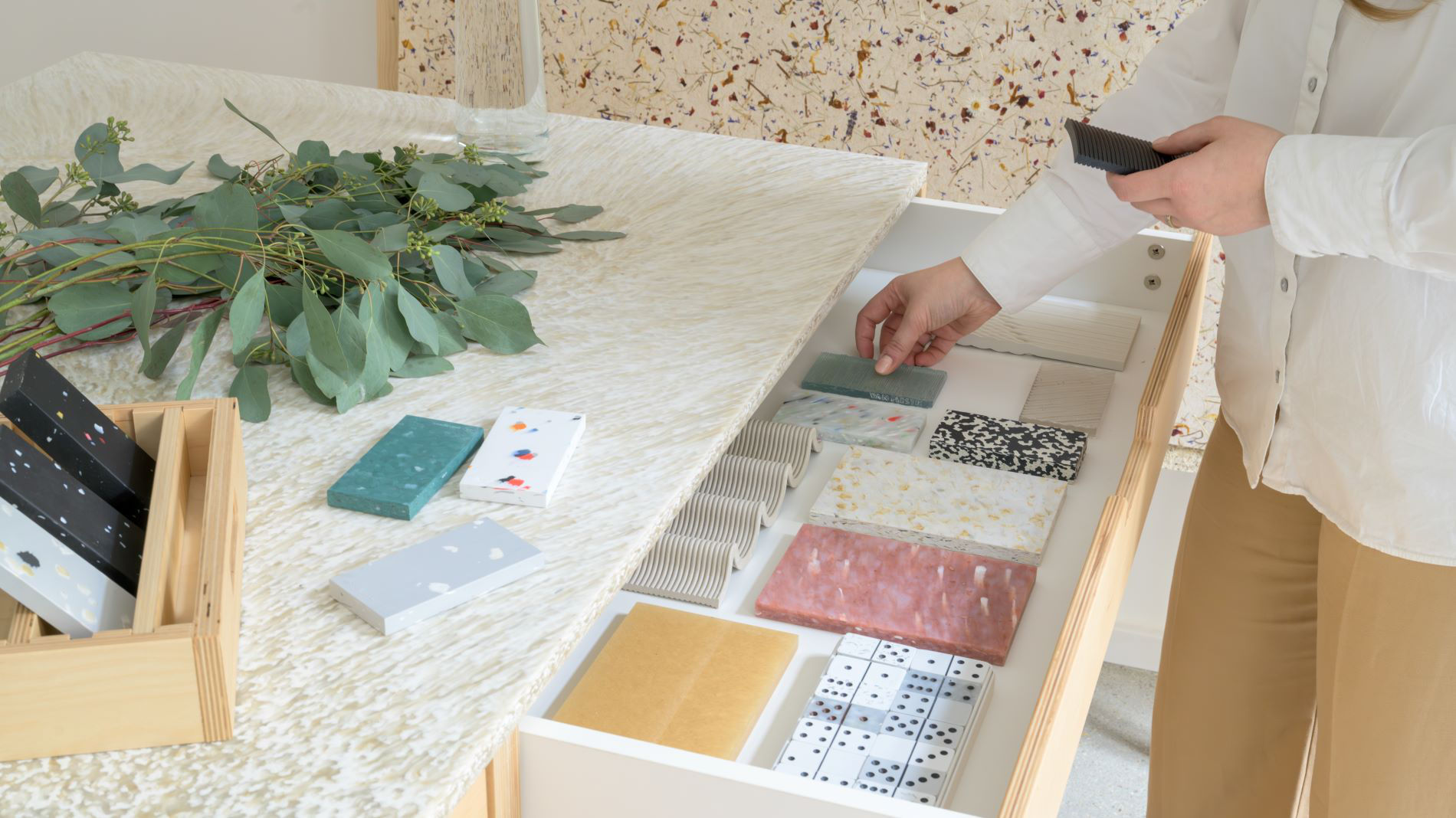
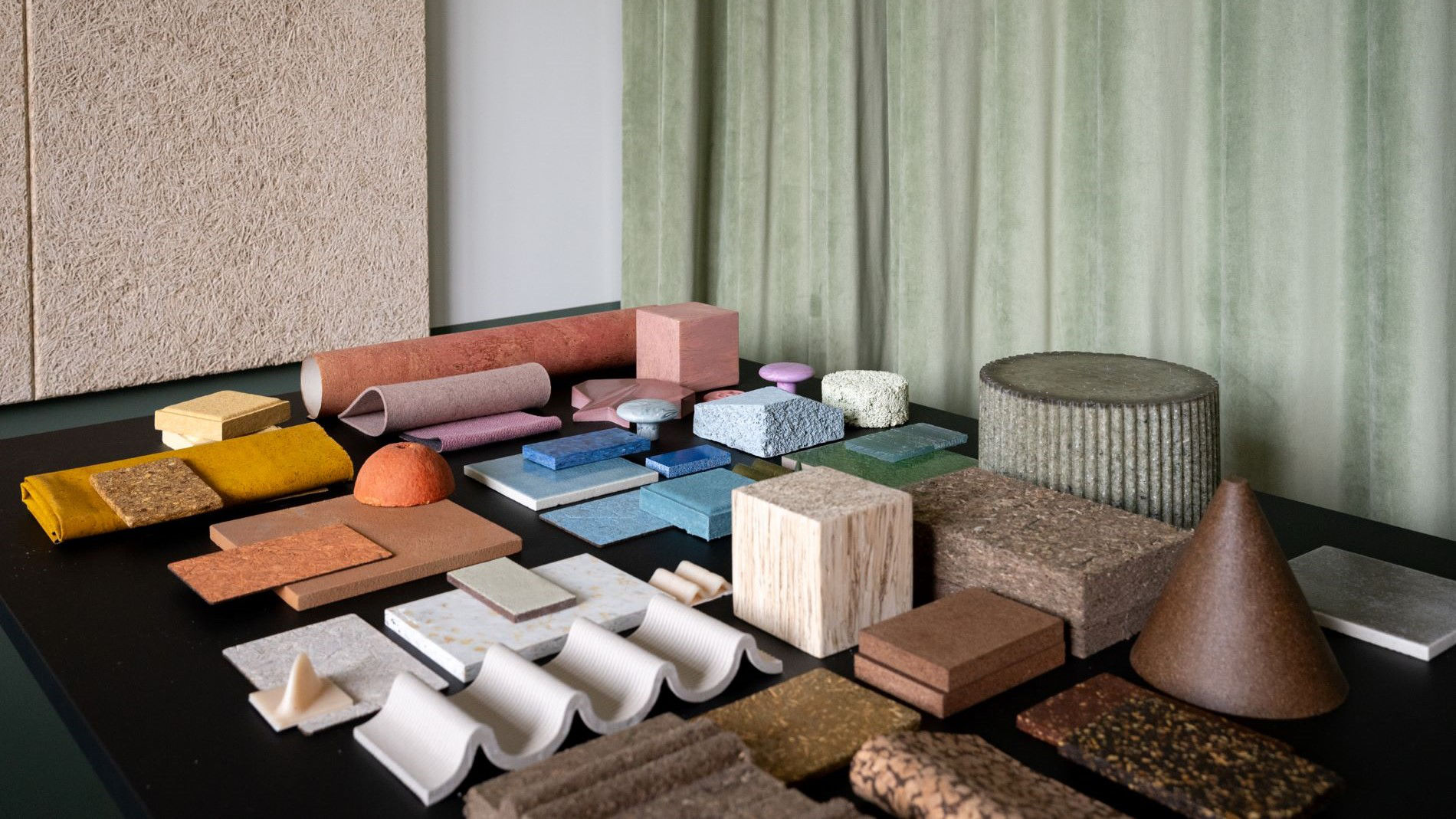
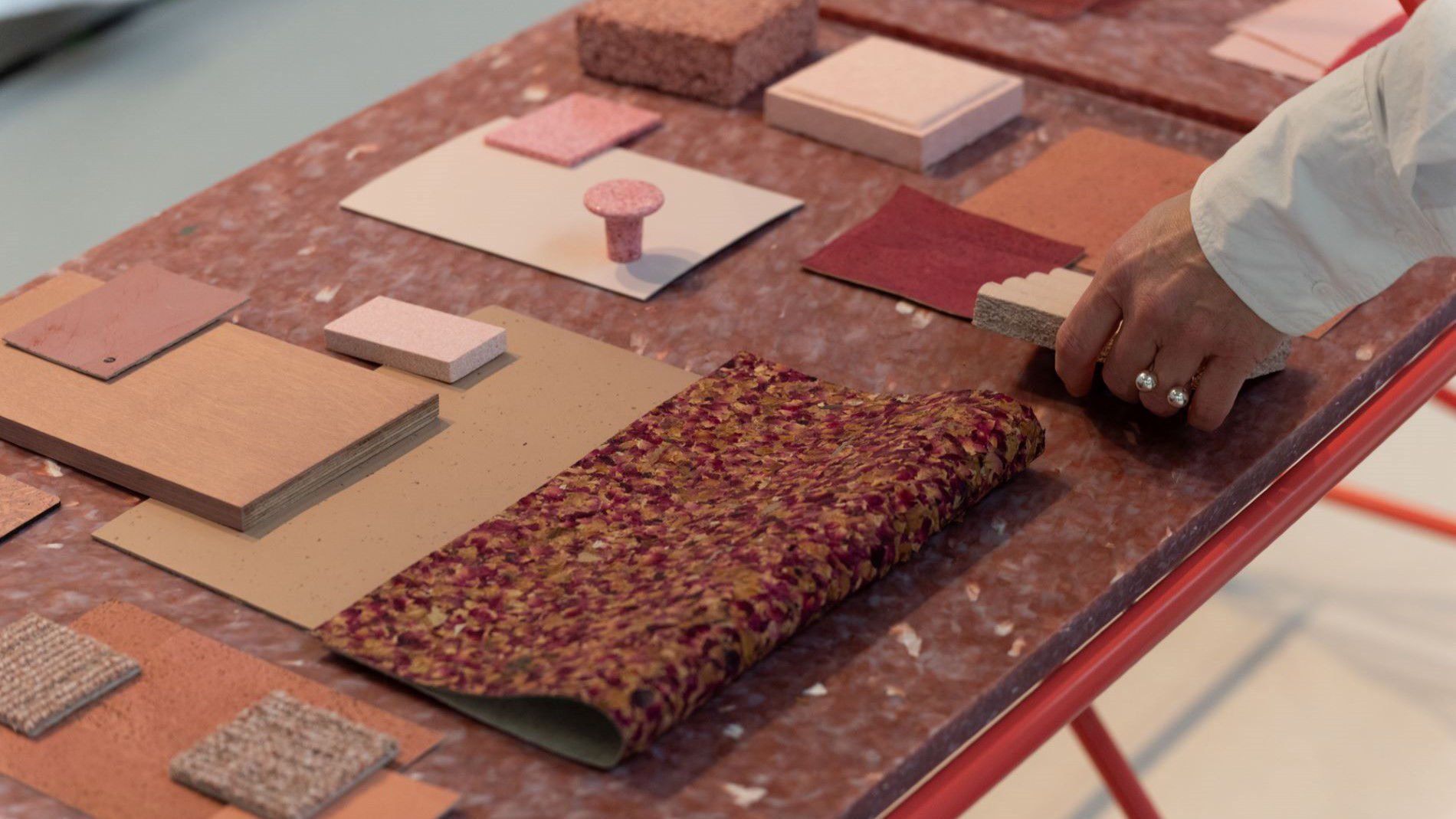
De-specification: The design principle of “do and undo”
Both provocative and programmatic, she calls her approach from specification to “de-specification”. At its core lies the principle of “do and undo” – consciously factoring in dismantling at the very moment of planning.
Here, to specify always also means to be able to unspecify. Everything that is defined should later be capable of being dismantled, separated and returned to material cycles.
She also observes an interesting aesthetic shift. The industry is increasingly accepting visible repairs and a certain degree of imperfection. “We’re now much more likely to accept things that look a bit more imperfect or are visibly repaired.” Quality is therefore no longer measured solely by a flawless surface, but by longevity and the ability to be dismantled.
Material health: Knowledge as a bottleneck
Material health and circularity lie at the heart of her work – and were also the catalyst for founding her brand, “Matterialista”.
As a designer, she often lacked crucial information from suppliers and resellers. “We didn’t even know which questions we should be asking.” Time pressure within project work made thorough research even more difficult.
Today, she shares precisely this knowledge: Which questions must designers ask? Which information is indispensable?
The key criteria include:
- Material clarity (material composition and ingredients)
- End-of-life concepts such as take-back programmes
- Responsibility on the part of suppliers
- Transparent process communication along the value chain

For her, circularity is not a one-way street. Manufacturers, too, must design products for circularity from the outset and support designers in the specification process.
Avoiding greenwashing: Transparency instead of perfection
Many companies claim sustainability for themselves. But how can genuine progress be distinguished from clever marketing?
"Circular interiors are not only a product choice, they are a coordination challenge”, says the designer. Because circularity begins with responsibility. For Kasia Mijas-Galloway, responsibility lies on both sides.

“As designers, we have to take responsibility for asking the questions. And as suppliers, there should be a responsibility to answer them.”
In this context, transparency matters more than perfection. A product does not have to be “super sustainable” – what is crucial is the disclosure of all relevant information. Only then can designers make informed decisions.
Helpful tools, in her view, include:
- EPDs (Environmental Product Declarations) for structured data transparency
- Cradle to Cradle certifications as guidance within the specification process
Open data creates freedom of choice – and sets limits to greenwashing.
Design for disassembly: Systems instead of objects
Responsibly dismantlable interiors may sound idealistic, but they are above all a technical challenge. For her, the solution begins with thinking in systems.
“As designers, we should design systems and not just objects.”
When designing a piece of furniture, she already considers how it can later be taken apart. Mechanical fixings instead of adhesives are a central principle.
Yet even the best design remains ineffective if it is ignored during execution. Installers and contractors must understand and implement the idea of dismantling. “It has to be a process that we’re all on board with.”
Circular interior design is therefore a collective task – from the first sketch through technical planning to the use phase and the return of materials into circulation.
Key facts
- Interiors are designed “on borrowed time” – the pressure to act is real.
- Circularity must be embedded in both the brief and the design process.
- “De-Specification” means specifying with future reversibility in mind.
- Material health requires targeted questions and maximum transparency.
- EPDs and Cradle to Cradle certifications support informed decision-making.
- Design for Disassembly demands systems thinking and close collaboration among all stakeholders.