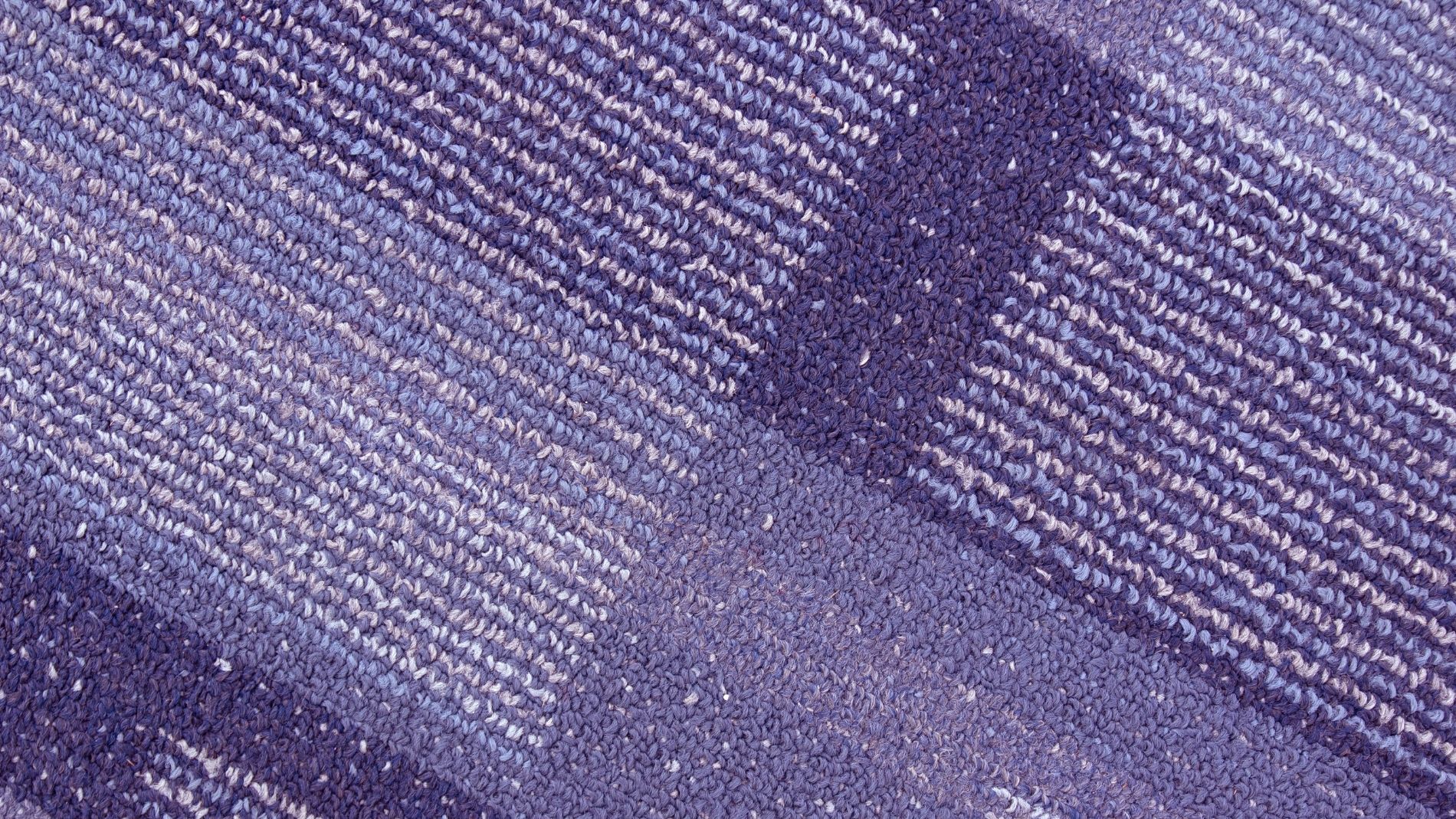
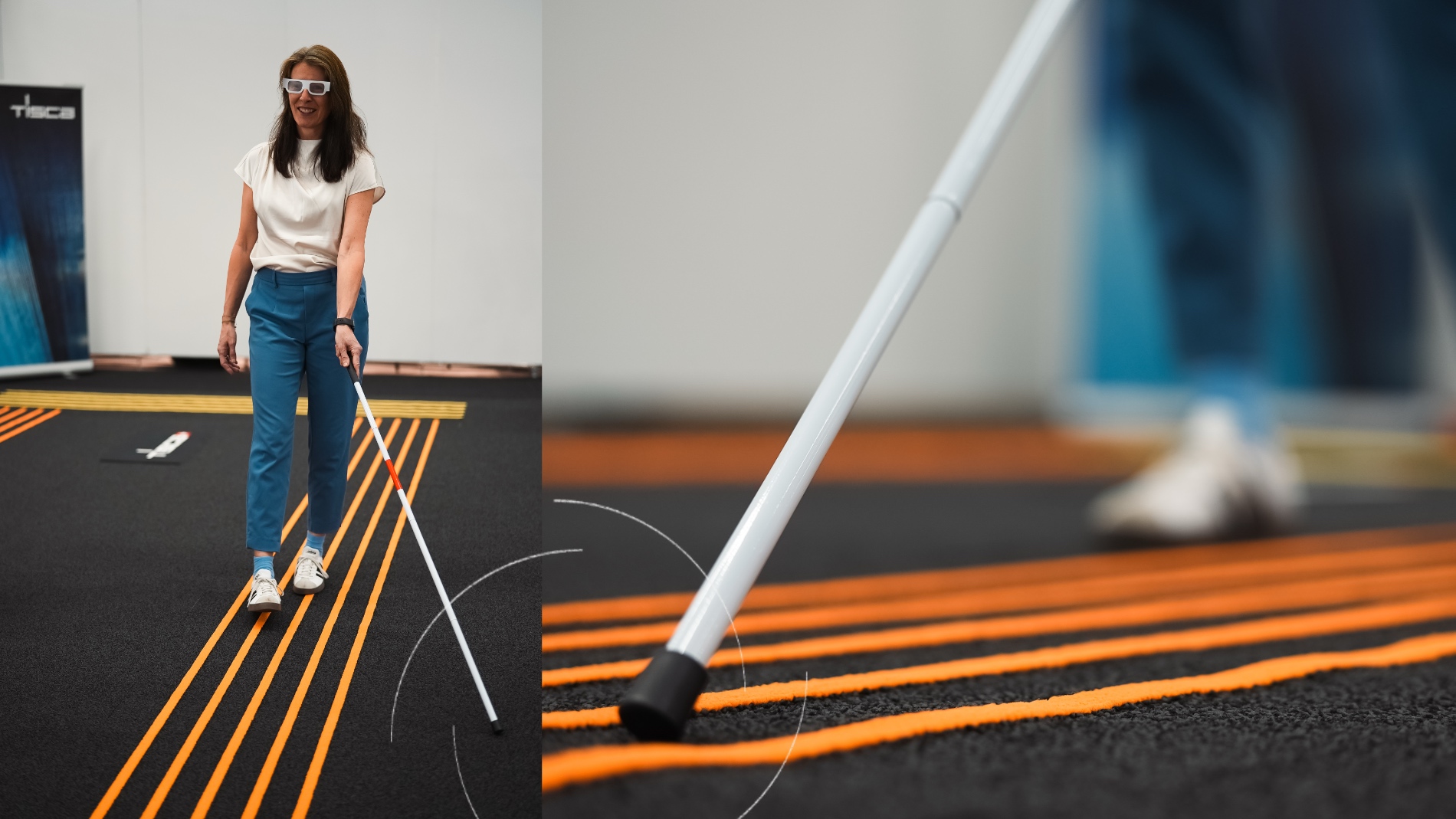
Hospital corridor, museum, university: for sighted people, finding the way is usually a matter of signage. For people with visual impairments, the floor often makes the difference. This is precisely where “ModuLeiT” comes in. TFI – the Institute for Flooring and Interior Systems at RWTH Aachen University – and THM University of Applied Sciences developed textile floor indicators that combine raised and recessed structures, visual contrasts and RFID tags. An accessible app can use the BIM model (Building Information Model) to guide users through buildings in real time.
The project began by addressing a gap: existing standards primarily apply to outdoor environments, and their dimensions could not simply be transferred to carpet. Widths, spacing and surface areas had to be reconsidered, tufted and tested with people with visual impairments. Their feedback informed several stages of development before the final structure emerged.
“You really have to consider it as a complete system.”
Showcasing the innovation at Techtextil 2026 in Frankfurt am Main
What the floor needs to communicate
The team initially tested tactile and visual contrasts separately, combined the most effective variants and then assessed the system as a whole. One finding was clear: the structure needs to extend across the entire 50 x 50 centimetre carpet tile. The 30 x 30 centimetre fields commonly used outdoors were not sufficient for interior applications.
The accessibility also could not become an aesthetic dead end
A design workshop explored colour combinations and how the concept could be integrated into existing collections. What matters are defined contrast values, not prescribed colours. For manufacturers, this is the key: the function can be standardised without standardising design.
“No architect would buy that from us – individuality is what counts.”
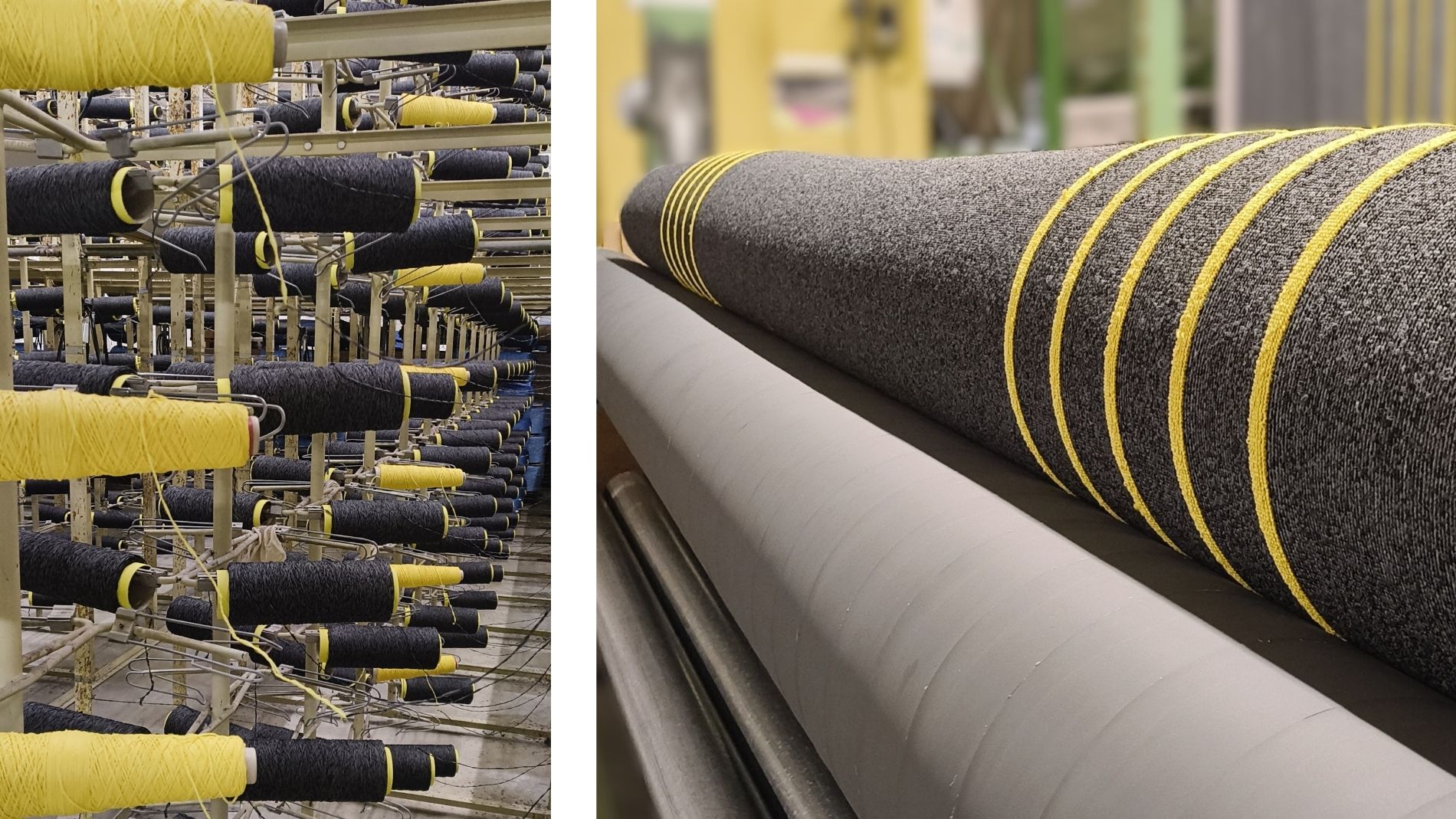
The manufacture of carpet tiles in the specially developed format
Ready for the contract business
The next step is clear: the prototype is to become a runner that can be flexibly combined – 50 to 60 centimetres wide, compatible with different carpet collections. To make this work, production and recycling need to be considered from the outset – from consistent back coatings to separable materials. Manufacturers, RFID providers, the construction industry and app developers are still needed.