
Reading time: 3 minutes
You should discover this if you are...
- A textile design studio or in-house design team deciding where generative AI fits in ideation, motif development or repeat production.
- A brand or retailer creative and marketing team weighing AI-generated visuals or virtual try-on against the risk of a generic, derivative look.
- A software or platform provider deciding where to prioritise investment in design-facing AI tools.
What is generative AI in textile design?
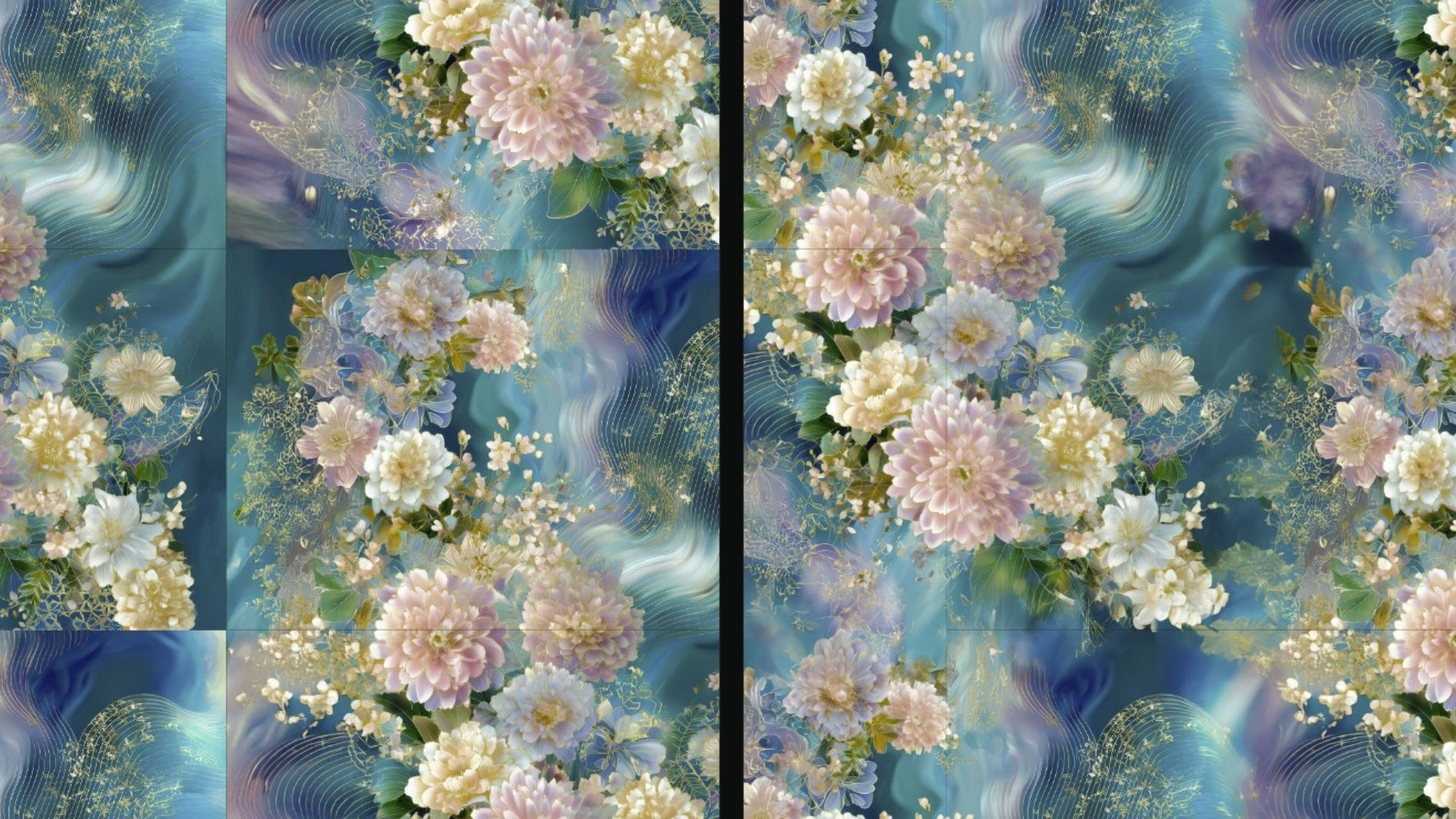
Generative AI in this context covers a specific set of design tasks rather than a single tool: rapid ideation, complex motif development, seamless repeat generation, virtual try-on and colourway exploration, all producible from a text prompt or a reference image in minutes.
A survey of 174 textile designers found that 73.3% already use AI tools in their work. According to the study, however, they tend to use them for organisational tasks rather than creative work1.
Opportunities: why is this important?
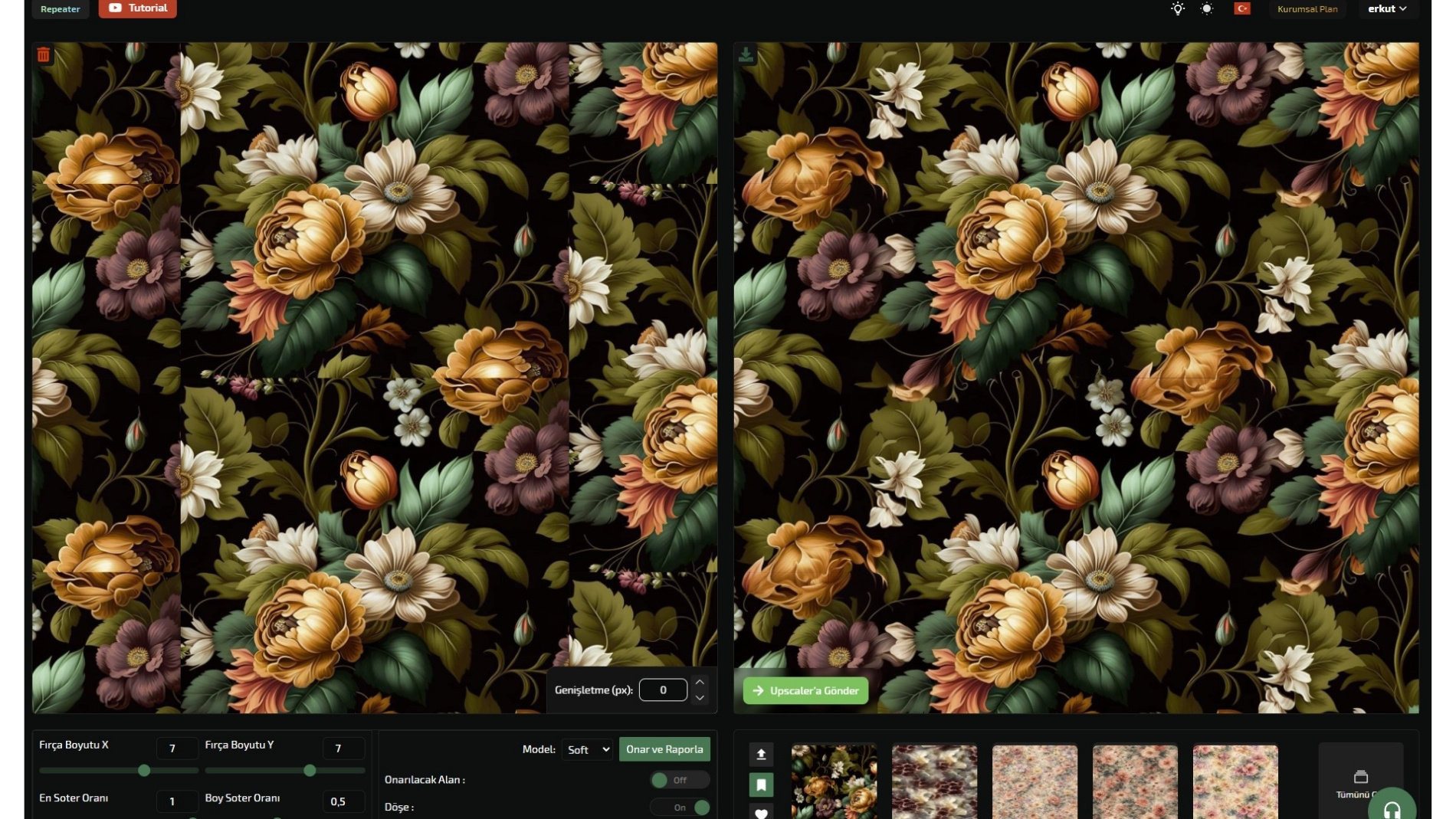
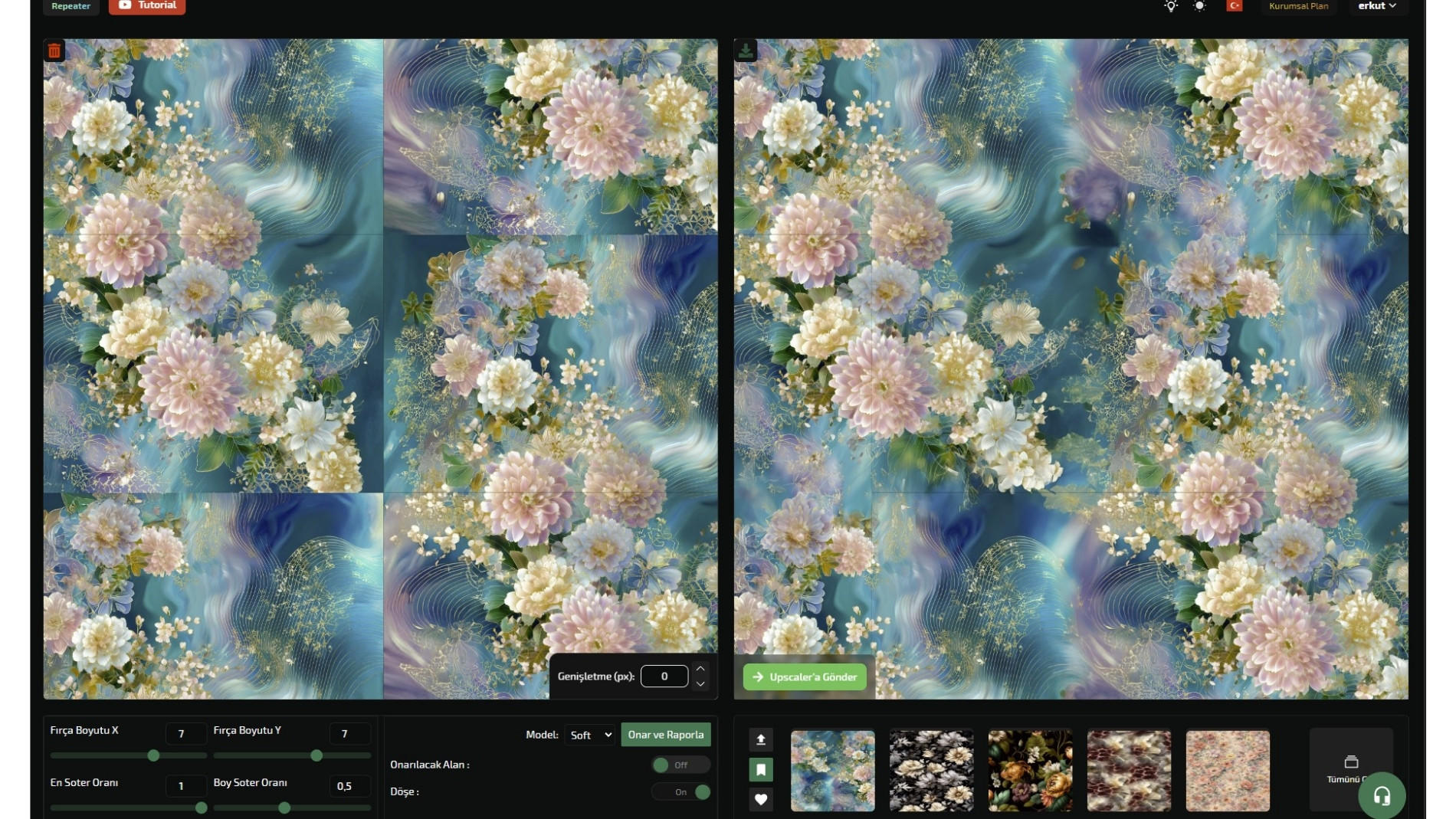
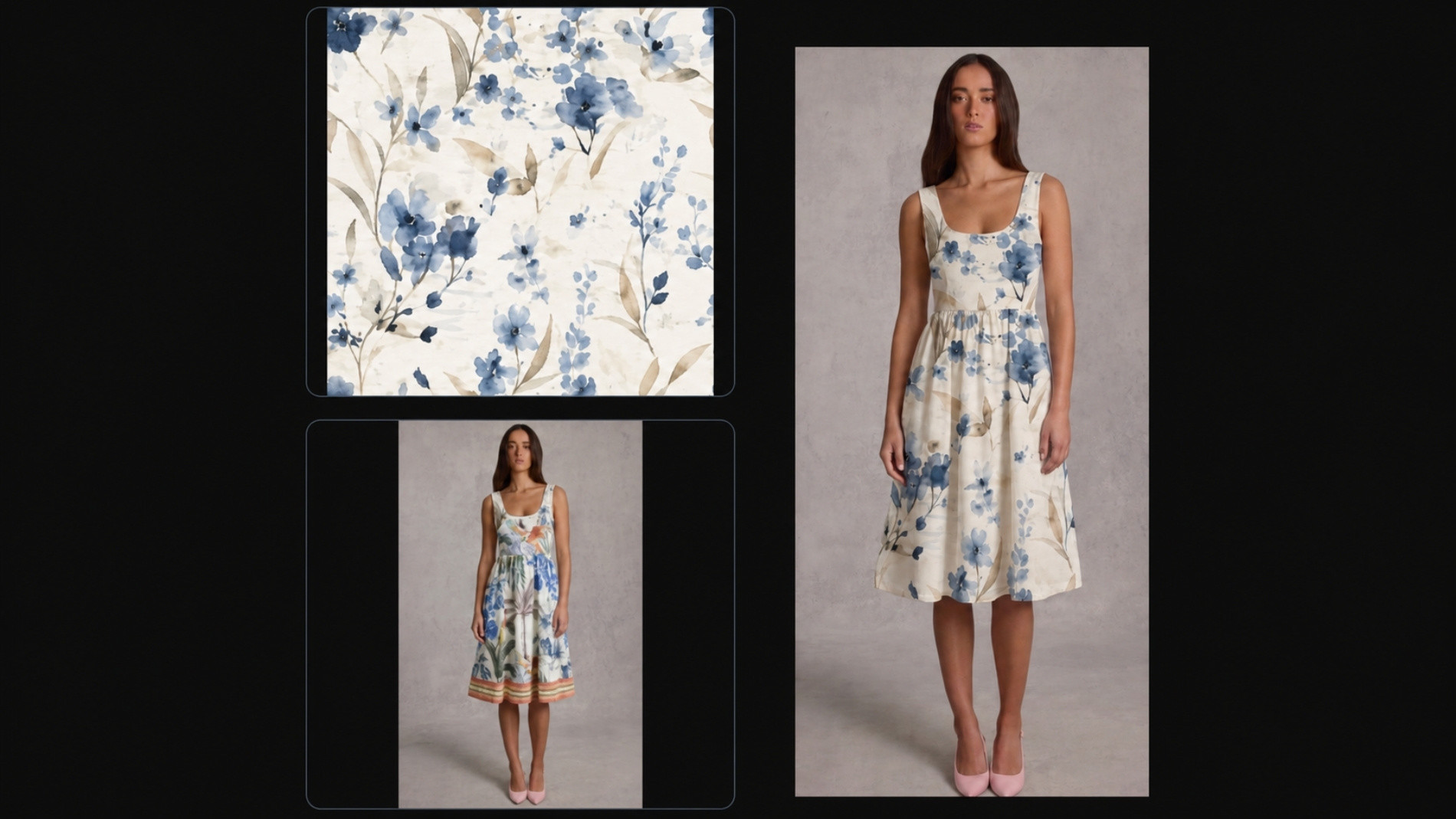
Textile design has long carried a set of slow, manual bottlenecks: sketching multiple concept variations, building seamless repeats by hand, producing a virtual sample for every colourway a buyer wants to see. Generative AI collapses much of that timeline. A half-drop repeat generated in moments rather than through manual tiling, and a garment placed convincingly on a model without a physical sample ever being cut.
| Challenge | Proposed solution |
|---|---|
| Slow, manual ideation and motif development | AI lets designers visualise dozens of concepts or colourways from a single prompt, rather than sketching each by hand. |
| Seamless repeats built manually, tile by tile | Repeat and half-drop patterns can be generated directly from a source design in moments. |
| Physical samples needed to show fit and drape | Virtual try-on tools simulate drape, texture and lighting on a model, cutting the need for a physical sample at the pitch stage. |
| Archived collections sitting unused | AI-assisted reworking lets studios revive existing artwork with new colourways or motifs rather than starting from a blank page. |
Adoption risk
| Category | Assessment |
|---|---|
| Compliance | Buyers are starting to ask for disclosure of AI-generated content as average AI imagery floods the market, and expectations around labelling are likely to firm up rather than fade. |
| Financial | High reported usage, at 73.3% of designers surveyed, is concentrated on operational tasks rather than original artwork, so studios may be paying for tools without realising their full creative value¹. |
| Geopolitical | Copyright and ownership treatment of AI-generated design work still differs by jurisdiction, which matters for studios selling artwork or licences across borders. |
| Sustainability | The computing cost behind image generation is rarely visible to the studio commissioning it, and is not yet part of how the sector talks about the technology's footprint. |
| Technology | The same speed that makes AI useful for ideation also drives what industry commentators call "AI Slop": a flood of derivative, soulless content produced faster than it can be curated. |
| Market relevance | Adoption is real but concentrated in ideation, repeats and virtual sampling rather than in finished print-ready artwork, so the case for adoption depends heavily on which task is being automated. |
| Brand power | A visual style built entirely on AI output risks blending into the same "Slop Aesthetic" now saturating Pinterest and Instagram, which undercuts the differentiation a brand's design language is meant to provide. |
| Demand | Audiences are growing used to AI-generated visual clichés, which may dull the impact of AI-only design work even as buyers demand more transparency about how it was made. |
Referenzen
1 Pattern Observer. (1 June 2025). AI in textile design: designers weigh in [Online]: https://patternobserver.com/2025/06/01/the-truth-about-ai-in-textile-design-what-174-designers-really-told-us-and-it-might-surprise-you/
2 AIT AI Tools. (13 August 2026). AI textile pattern generator tools [Online]: https://ai.ait.com.tr/
3 ElbiseGiydir. (13 August 2026). Virtual clothing try-on with AI: https://elbisegiydir.com/
Content by: Erkut Erenoglu, WTiN