

Reading time: 3 minutes
The digital textile printing market has faced major external pressures over the past six years, while internally evolving rapidly due to changing consumer demands, stricter environmental legislation and increasing digitalisation. Hardware, software and consumables must adapt so print service providers (PSPs) can remain competitive. At a recent panel discussion during WTiN's Digital Textile Printing Week, industry leaders discussed how PSPs can stay ahead in an increasingly crowded market.
The panel included Dmitry Sarbaev of Fluxmall DTG, Krisjanis Ozols, formerly of Printful, and Kevin Van Lancker, founder of Sportswear of Tomorrow and FLAVE. Van Lancker noted that although technological innovation generates excitement, most businesses currently prioritise reliability over cutting-edge capabilities. “Stability is the most important factor when we’re talking about quality and output,” he said.
Demand for digitally printed textiles fluctuates with market conditions, yet digital continues to outperform analogue during crises because of its flexibility. Van Lancker explained that Sportswear of Tomorrow values agility to manage uncertainty, low minimum orders and multiple materials. Ozols added that predictable supply, pricing and technical support are essential for business continuity.
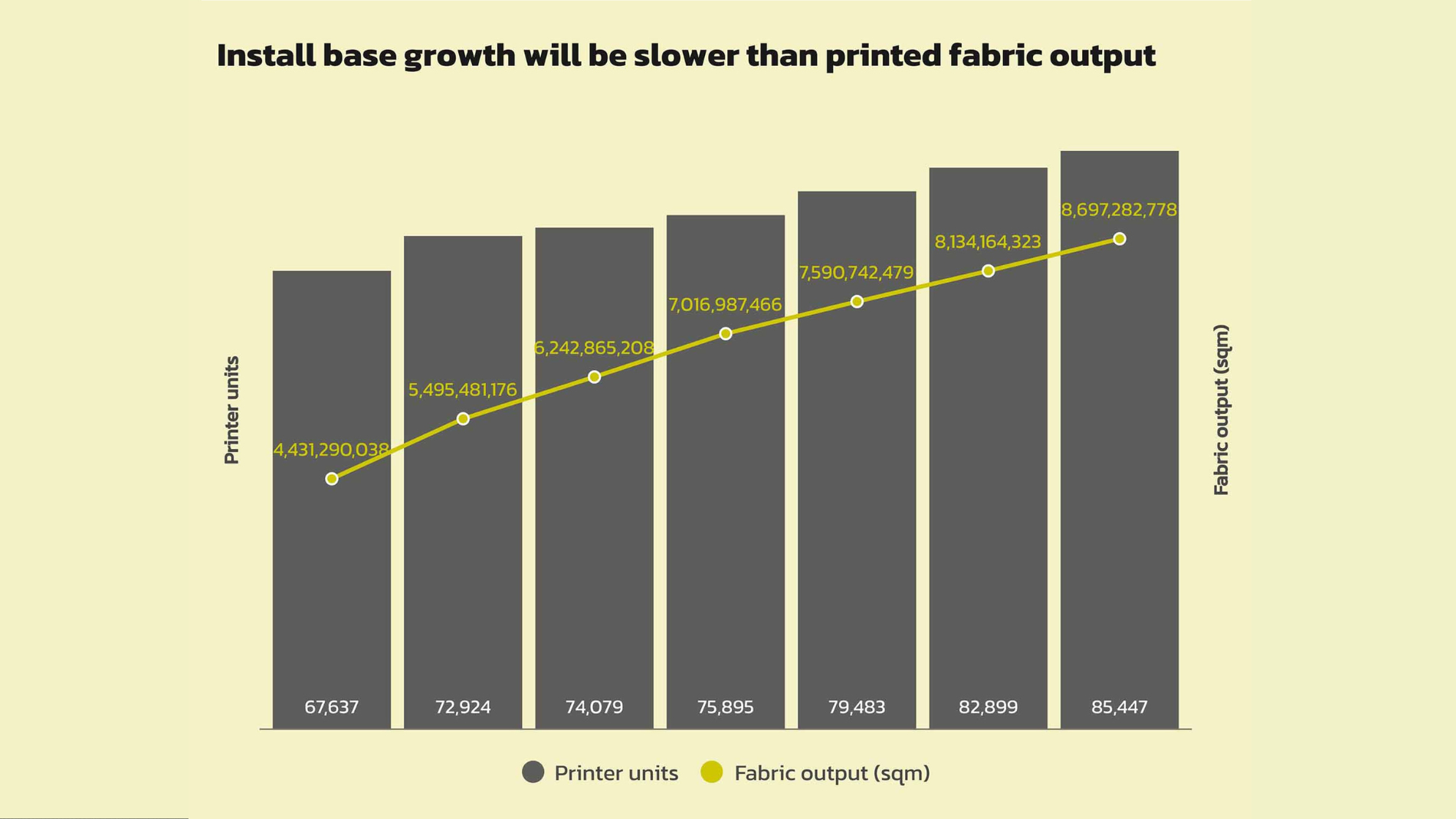
Digital textile printing output is expected to grow faster than the global install base of printers through 2030, as PSPs focus on maximising utilisation instead of investing in new machines. Reliability and uptime are therefore critical. Sarbaev stressed that customers expect rapid service and locally stocked spare parts to avoid downtime. Van Lancker agreed, saying businesses depend entirely on printer performance.
The industry is also shifting from hardware sales toward integrated solutions combining hardware, software, service and data. Sarbaev added that training, after-sales support and tailored solutions are now just as important as the machines themselves.
Environmental perceptions
Van Lancker argues that sustainability is a less significant driver of investment than performance, cost and print quality – particularly during an economic downturn – but that doesn’t mean PSPs don’t engage with the environmental challenge.
He argued sustainability is better achieved through flexible on-demand production rather than using recycled polyester and calling it sustainable because it fundamentally isn’t.
Ozols identified the four pillars of modern print service providers: “Speed quality, price and scope. You need an extensive catalogue and to be an expert in many things.”
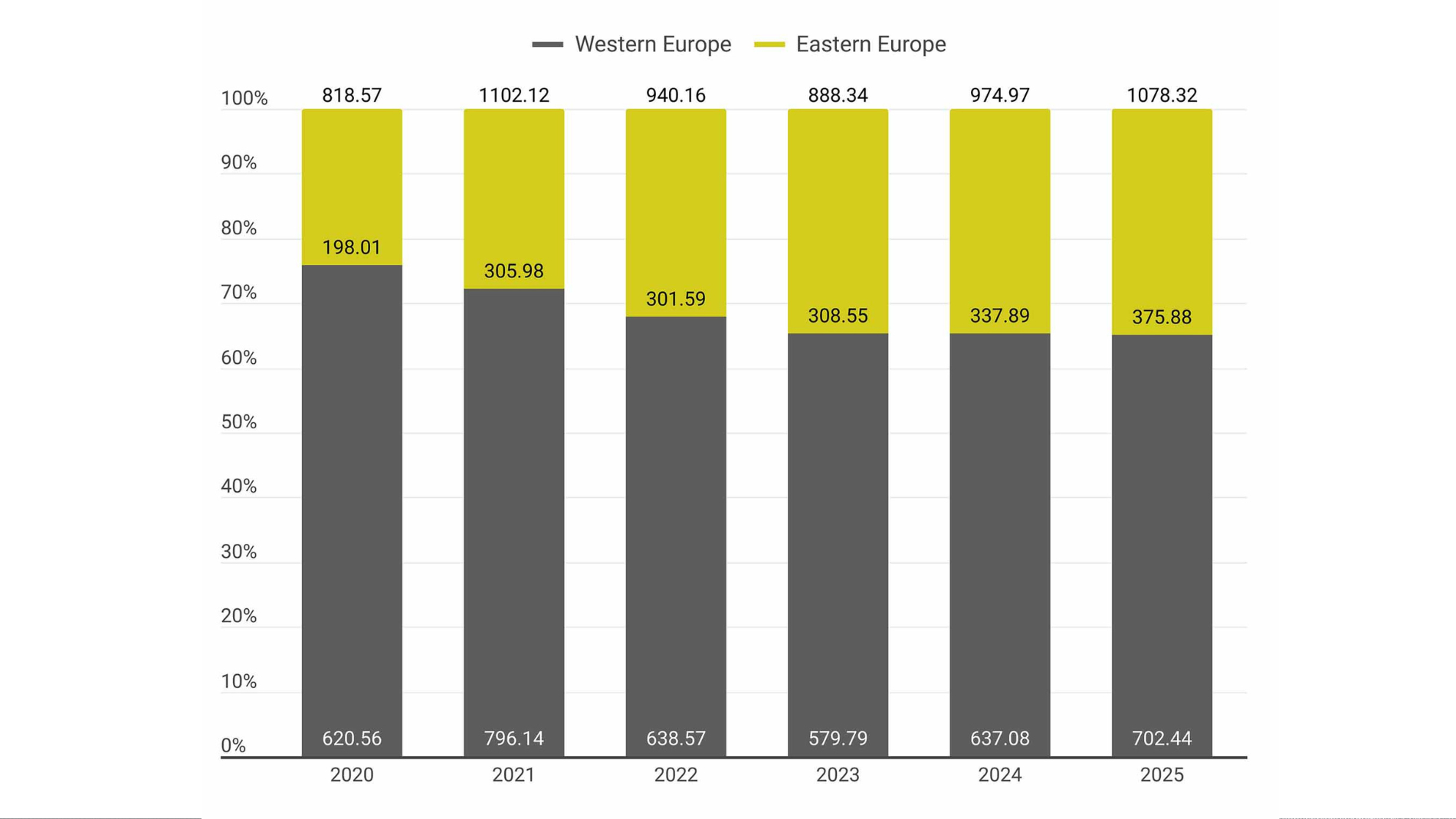
Ozols added: “We’ll see more on-shoring or near-shoring, because of the benefits associated with manufacturing closer to the end consumer.” These include faster time to market and lower logistical costs. Data from WTiN outlines that Eastern Europe is a high-growth market, having closed the gap on Western European productivity in recent years.
Automation and lead times
Nearshoring helps to reduce lead times, but this can be further enhanced with the implementation of automation and artificial intelligence (AI).
Van Lancker says his customers are only listening if you can guarantee delivery in five days; lead times used to be six weeks or more.
One of the reasons Eastern Europe is growing is that labour is cheaper than in Central and Western Europe, and proximity to the large consumer markets is favourable. But even so, costs can be further reduced. Ozols said: “Automation is the next big threshold because physical labour is such a big component in the cost.
“With AI in particular, companies become more autonomous and risk-averse when it comes to economic or supply chain hurdles.”
Author: Joseph Link, WTiN