
Reading time: 5 minutes
Meet the innovators
- Dimpora – A Swiss innovator offering a portfolio of proprietary, PFAS-free microporous membrane technologies.
- Zerøtec – Leveraging AI, this London-based startup has developed a B2B SaaS platform to facilitate low waste pattern cutting.
- Rara Barefoot – A barefoot shoe startup originating from India, focused on manufacturing styles for training, running and lifestyle uses.
- Sages – A London-based startup transforming food waste into colourful, biobased dyes for textiles.
Dimpora
Ongoing pre-series A | Zürich, Switzerland | PFAS-free waterproofing
Swiss membrane innovator, Dimpora1, has opened a pre-series A round in hopes of accelerating its sales and prototyping activity ahead of its first planned sales cycle.
Dimpora’s previous bout of funding was in the summer of 2024, which enabled it to scale up Asian manufacturing capabilities – a critical requirement for many of its prospective customers, who are largely situated in North America. With production scale unlocked, the startup has been able to execute more advanced prototyping and sampling in anticipation of its first commercial capsule orders.
To support these commercialisation efforts, Dimpora’s current round is expected to strengthen auxiliary business functions, such as enhancing its sales department. It’s hoped these components can better support customers through an initial sales cycle, from sampling to full collections, into reorders.
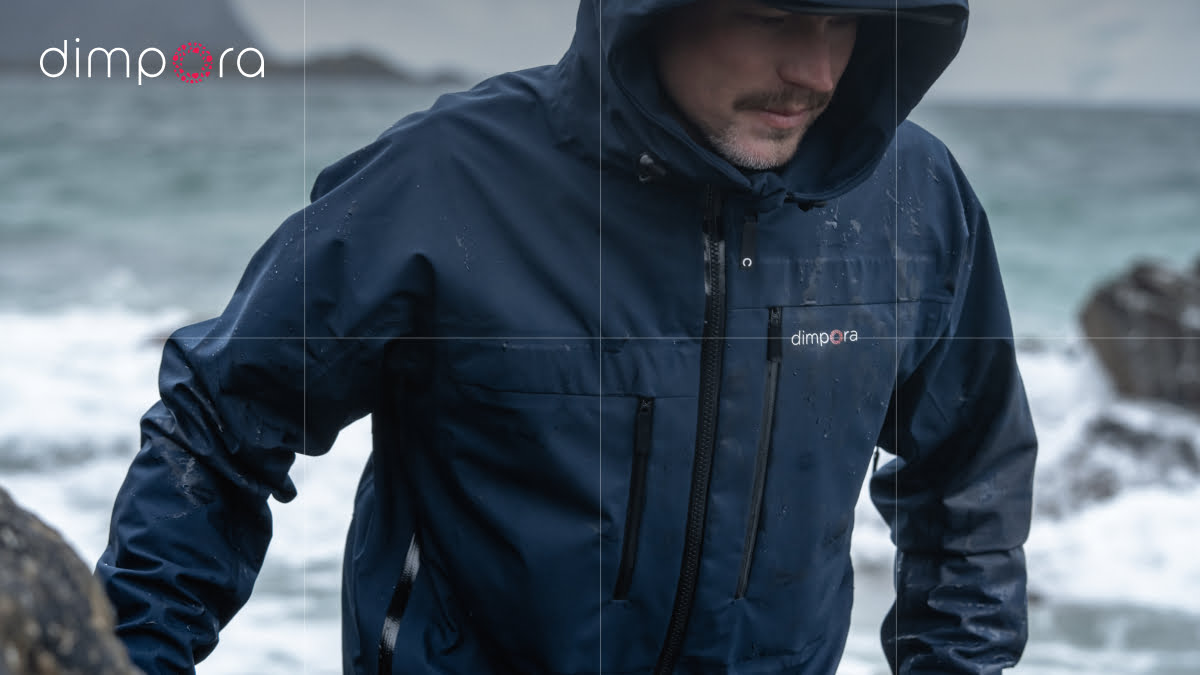
Targeting CHF 2.5m (US$ 3.1m), the round has already secured a soft commitment from existing investors of CHF 1.25m (US$ 1.55m), with an expected close in Q1 2026. However, the hope is to attract new investment, particularly from those with a combined interest in the textile industry and driving sustainability impact. Dimpora is open to both traditional, long-term finance investors and strategic supply chain interest. Stakeholders able to unlock networks within the laminates segment would be especially beneficial.
Once closed, commercial progression facilitated by the round is hoped to launchpad a full series A in 2027, with ambitions to hit revenues of CHF 50m (US$ 62m) by 2030.
Zerøtec
Pre-seed | London, UK | Circular fashion design platform
Elsewhere, Zerøtec2 closed a GB£ 640k (US$ 843k) pre-seed round led by VC firm, Bethnal Green Ventures. Other participants include SFC Capital, SCE Freiraum Ventures and specialist UK postgraduate education provider, Cranfield University, alongside other angel investors.
The startup is developing and scaling a proprietary B2B software-as-a-service (SaaS) platform, intended to optimise fabric usage in pattern cutting and nesting lay plans. Already, the system claims materials savings of 15% per garment over conventional approaches.
However, the financial boost is geared to support further software optimisations and talent expansion, to lay the groundwork for its next stage of growth. This includes scaling pilot projects with a number of global fashion partners.
Leveraging AI in its solution, the round coincides with Zerøtec’s physical move to technology business centre, Techspace, as part of the London AI Hub – a relocation hoped to inspire growth and technological advancement.
Rara Barefoot
Pre-seed | New Delhi, India / Ras Al Klaimah, United Arab Emirates | Barefoot footwear
Minimalist footwear brand, Rara Barefoot3, secured US$500k in a reportedly oversubscribed seed round in October. Participants include investors from Zomato, Urban Company, Tata 1mg, Shyft and HexaHealth, among others.
It’s timed with the launch of the brand’s first footwear lines, which canvas barefoot styles for the gym, running and everyday wear. Barefoot shoes are categorised by a minimal sole profile, wide toe box and flexible build quality, designed to instil greater ground feel and support the foot’s natural biomechanics.
The freshly injected finance is intended to support a direct-to-consumer rollout and scale Rara’s manufacturing capabilities for its next stage of growth.

Sages
British Design Fund | London, UK | Food-waste dyes
In October 2025, British dyes startup, Sages4, secured GB£190k (US$249k) in finance from the British Design Fund. The funding is expected to help the company expand its dye range, which currently derives from waste streams such as red cabbage, blueberries, avocado pits and onion skins. Ambitions also centre on enhancing the company’s partnerships with both brands and manufacturers.
This endeavour will be supported by the business beginning a transition from lab-scale to commercial capabilities, enabling a refinement of processes for eventual industrial throughput. Damon Bonser, CEO, British Design Fund, notes: “Sages is tackling a critical environmental challenge with a solution that’s both scientifically rigorous and commercially viable. The founding team brings deep expertise and a clear vision for scale and we’re pleased to support their journey as they develop sustainable alternatives for industries in need of change.”

Analyst insight
October 2025 has hosted a diverse flurry of funding activity, with the full spectrum of colouration, materials, technology and product attracting finance. However, we’re certainly missing examples of larger, later stage funding.
This perhaps reiterates textile’s fixation on marketable early-stage innovation, but trouble seeing it through the more difficult implementation and industrialisation phases.
The real-term adoption of novel solutions moves at a glacial pace; either through resistance, industrial feasibility or availability, brands and manufacturers are unable to quickly integrate commercial volumes into their supply chains. This puts huge pressures on young companies to sustain themselves on breadcrumb pilot revenue in the meantime.
Subsequently, low revenues hinder the ability to secure finance to bridge the gap, as returns for investors increasingly hinge on future order commitments being realised. This itself dependent on the pace of adoption.
In this way, the industry risks creating a self-fulfilling cycle: slow adoption limits growth, limited growth deters funding and the absence of funding hampers pre-revenue business survival.
Persevering through this period can therefore be incredibly difficult for all stakeholders. Just recently, we’ve seen the likes of Natural Fiber Welding and Pinatex wind down operations.
That said, it’s great to see Dimpora and Sages, which have been on the scene for a while, edging closer towards realising their commercial potential. The success of these pivotal next steps, facilitating larger orders and demonstrating industrial-grade production, will be key to completing the transition from startup to commercial ingredient brand.
Author: Jessica Robe, WTiN