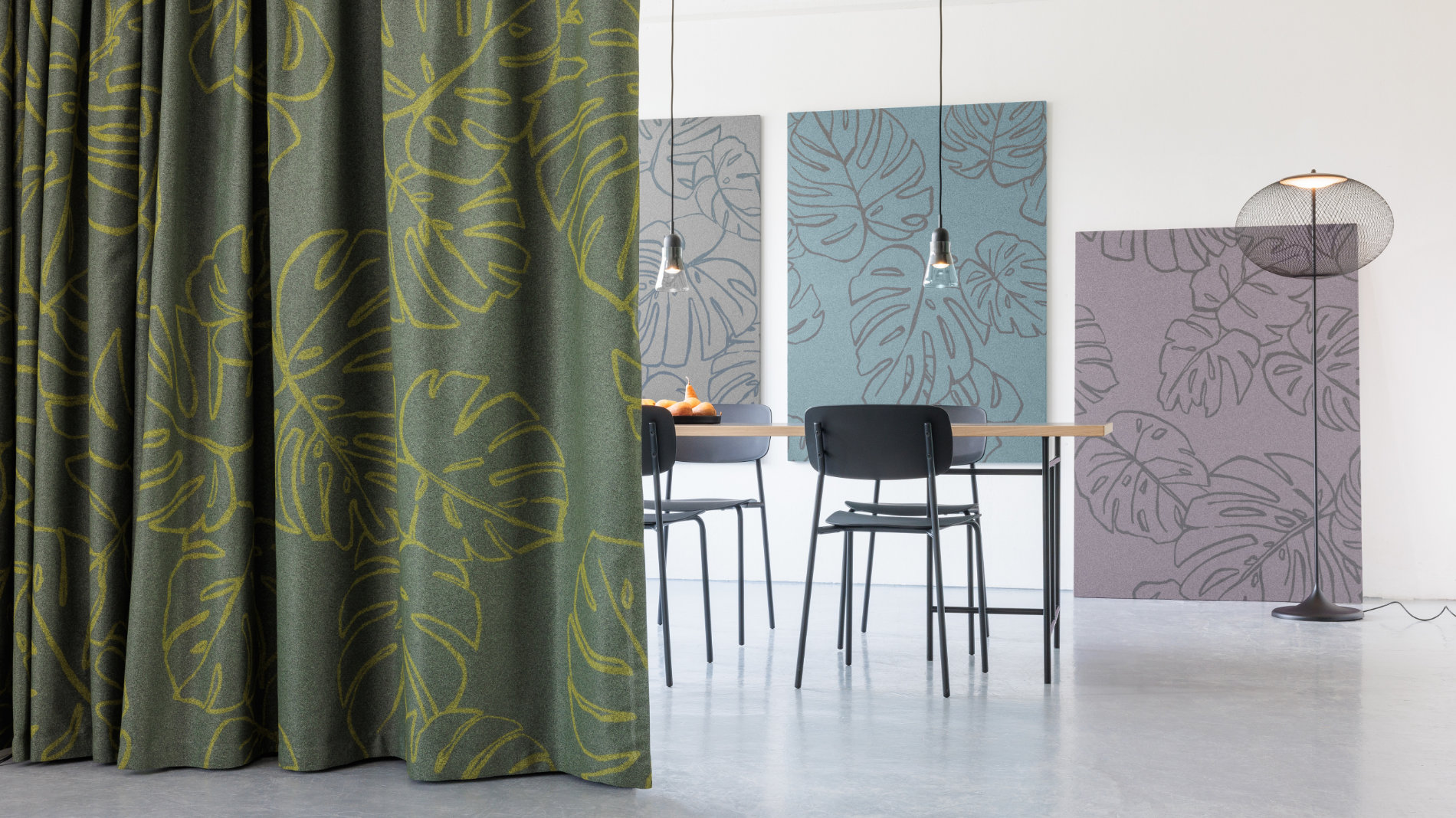
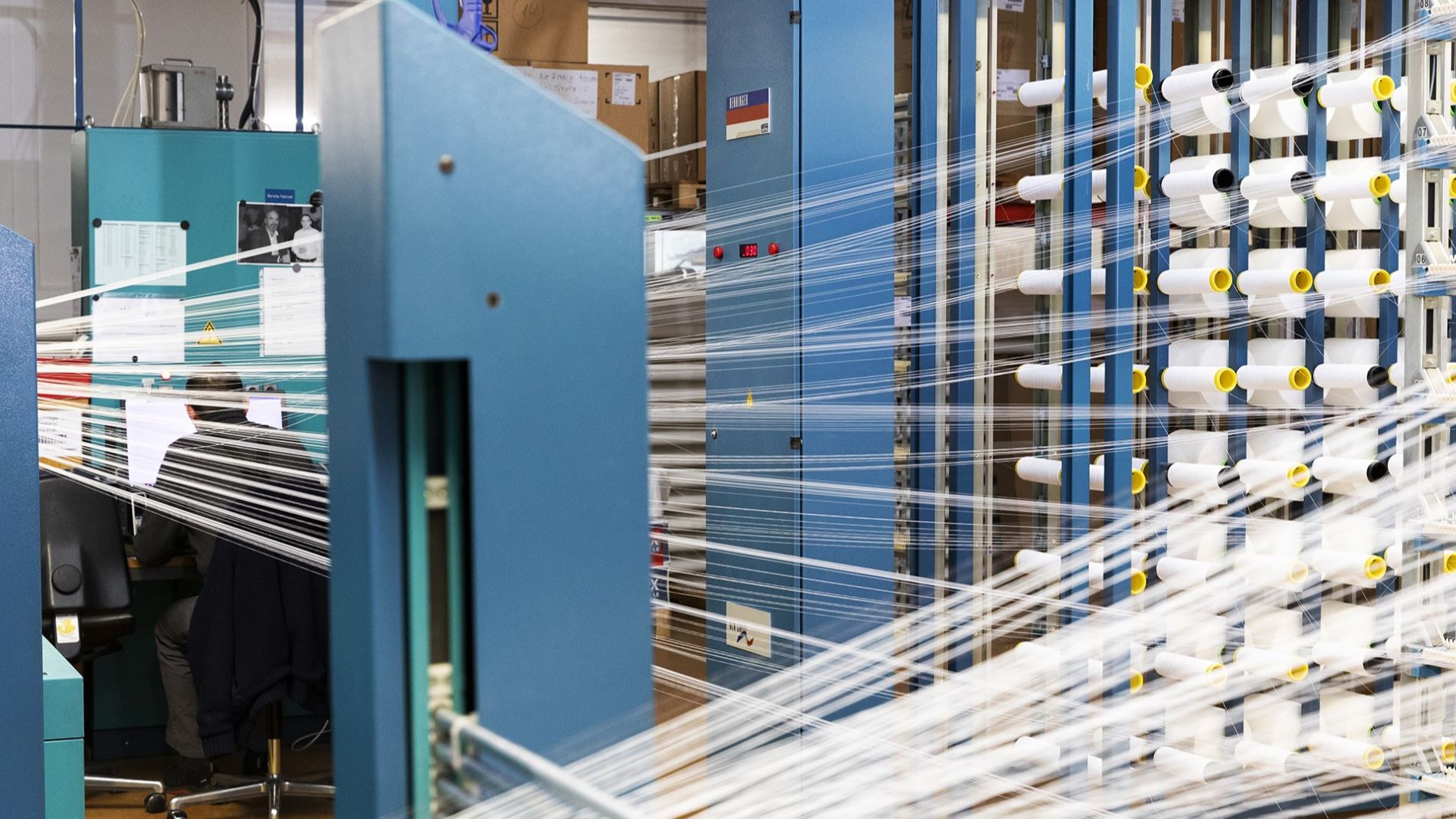
There is a particular kind of innovation that only happens when designers, technicians and textile engineers share the same floor. At Création Baumann, this proximity is not coincidence but culture. CEO Philippe Baumann describes it as the “short distance of ideas”: yarn experts speaking to finishers, loom specialists refining concepts with the design team, product developers testing – immediately – what the mill can truly do.
This is where the brand’s acoustic textiles were born, and why they continue to outperform: not through one breakthrough, but through years of accumulated know-how held tightly in-house.
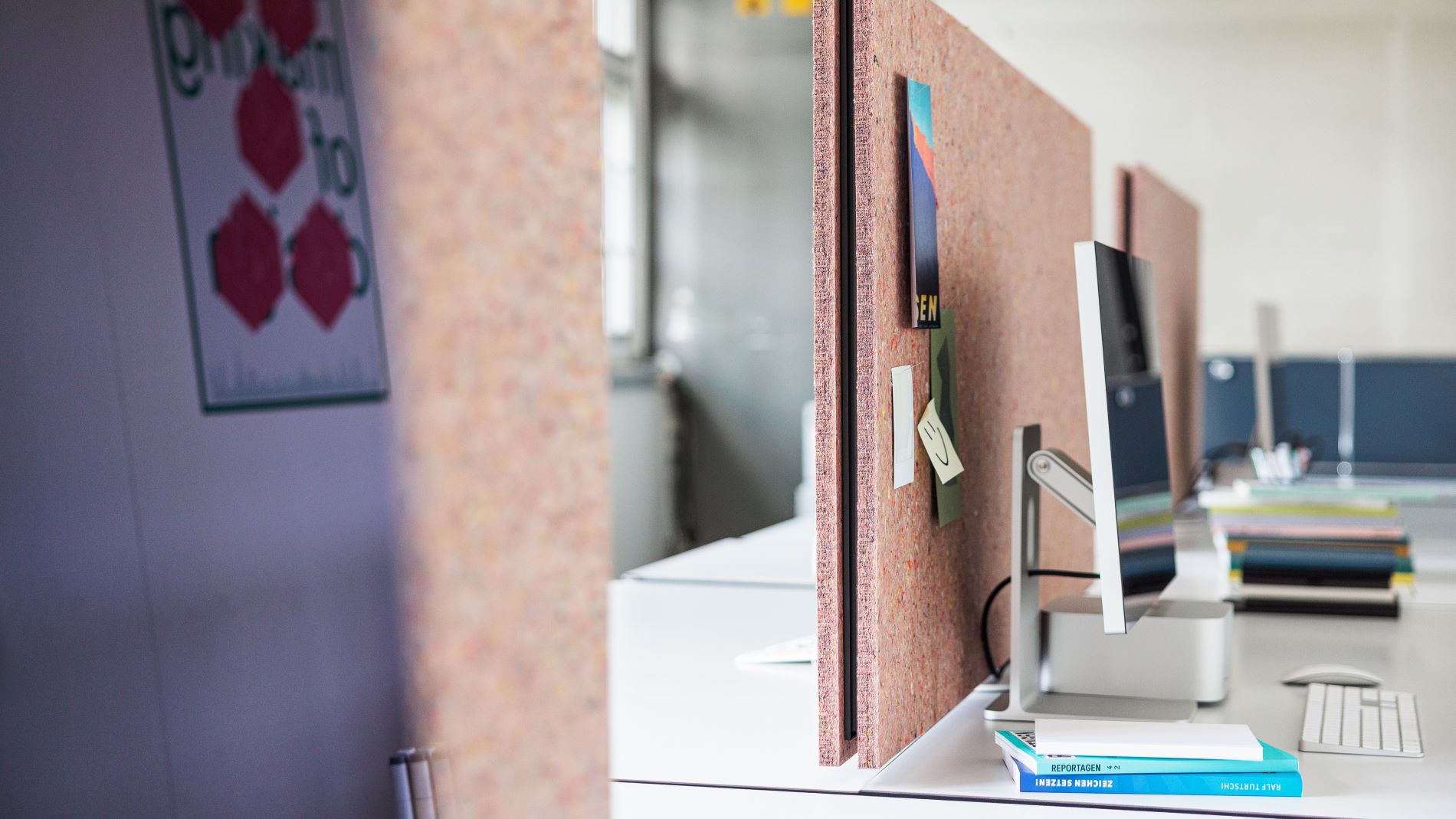
Photo: Tim Kögler Fotografie
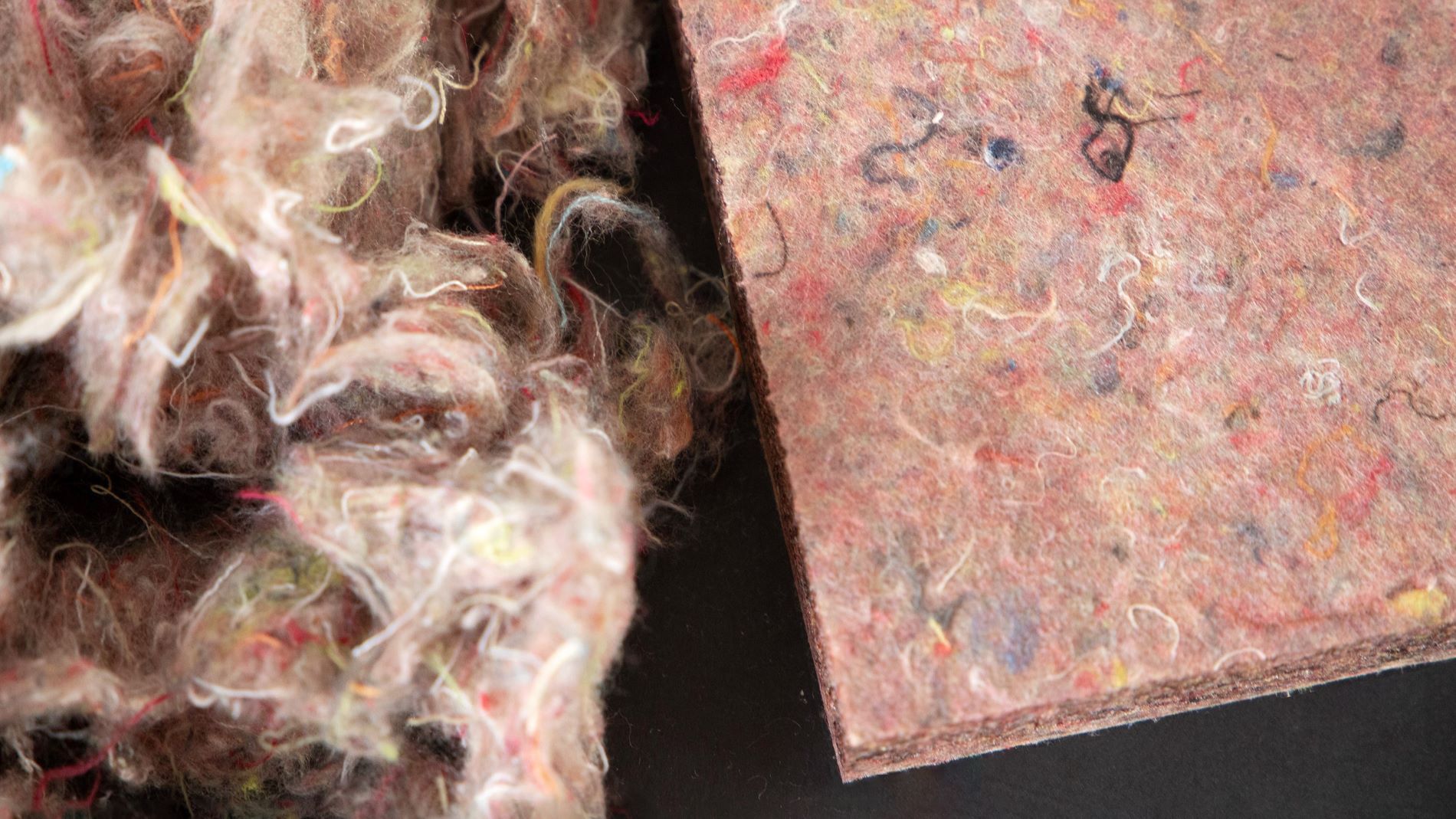
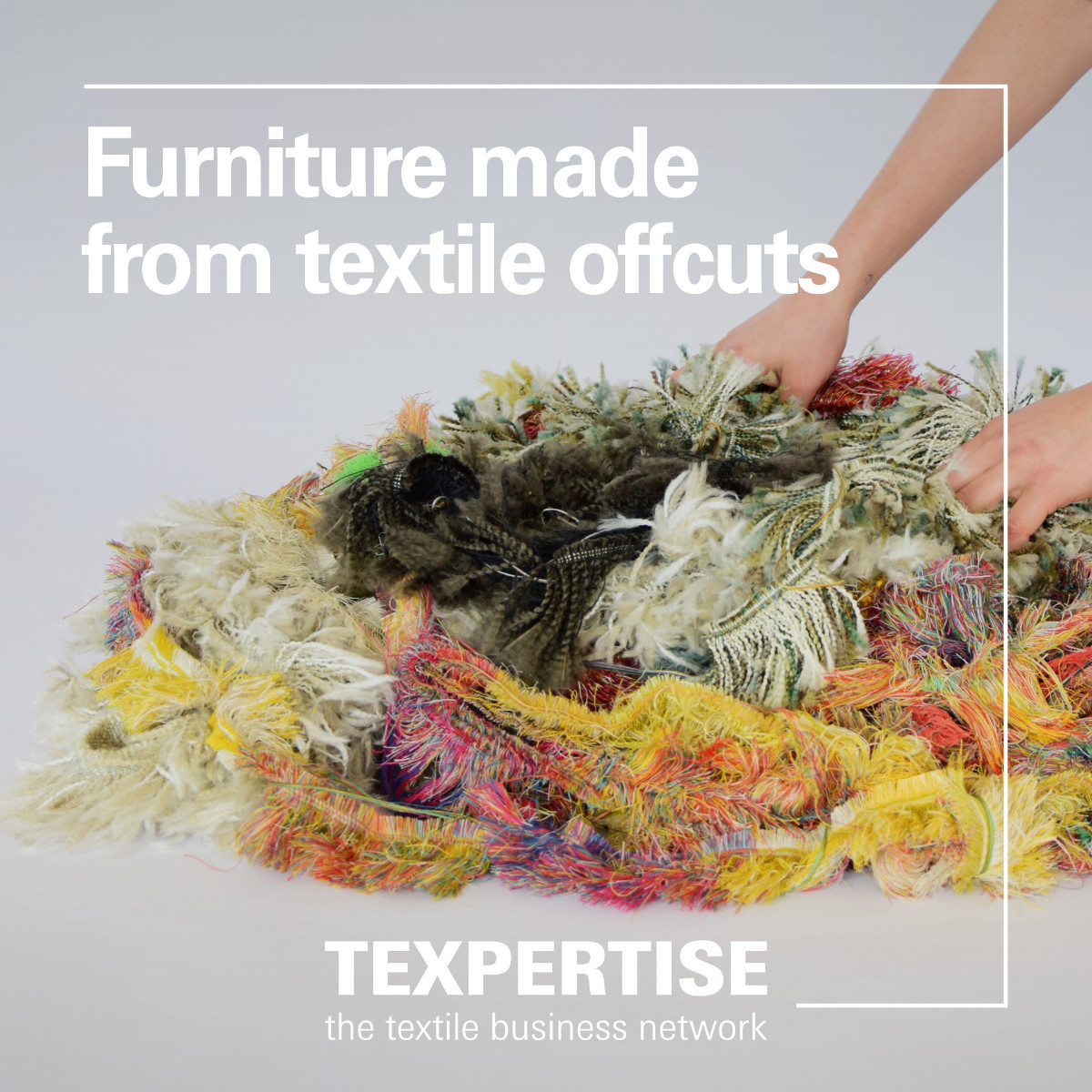
What sets the company apart today, however, is how it treats its own waste not as residue, but as potential. The decisive moment came when discontinued collections and production offcuts – high-quality, flame-retardant and technically advanced – had no path forward. Instead of disposal, Baumann’s team reframed them as a raw material. The process is both poetic and technical: the textiles are collected and sorted, processed in a multi-stage procedure, and then thermally pressed into dense acoustic panels. Each batch carries its own subtle hue, shaped by the mix of textiles that fed it. In an industry that once worshipped uniformity, variability has suddenly become a virtue.
It’s not about being perfect – it's about doing the maximum that is truly intelligent. Sustainability only works when it’s effective, not just marketing.
Balancing sustainability, performance and aesthetics is never straightforward. Yet Création Baumann approaches it with a designer’s eye and an engineer’s discipline. Their guiding principle – “mono when possible” – has brought the collection to 84% monomaterials, a meaningful step toward improved recyclability. At the same time, the company sees longevity as the most underrated environmental metric: a curtain that hangs for decades, resisting trend churn, quietly outperforms any fast-cycled solution.
Photo: Tim Kögler Fotografie
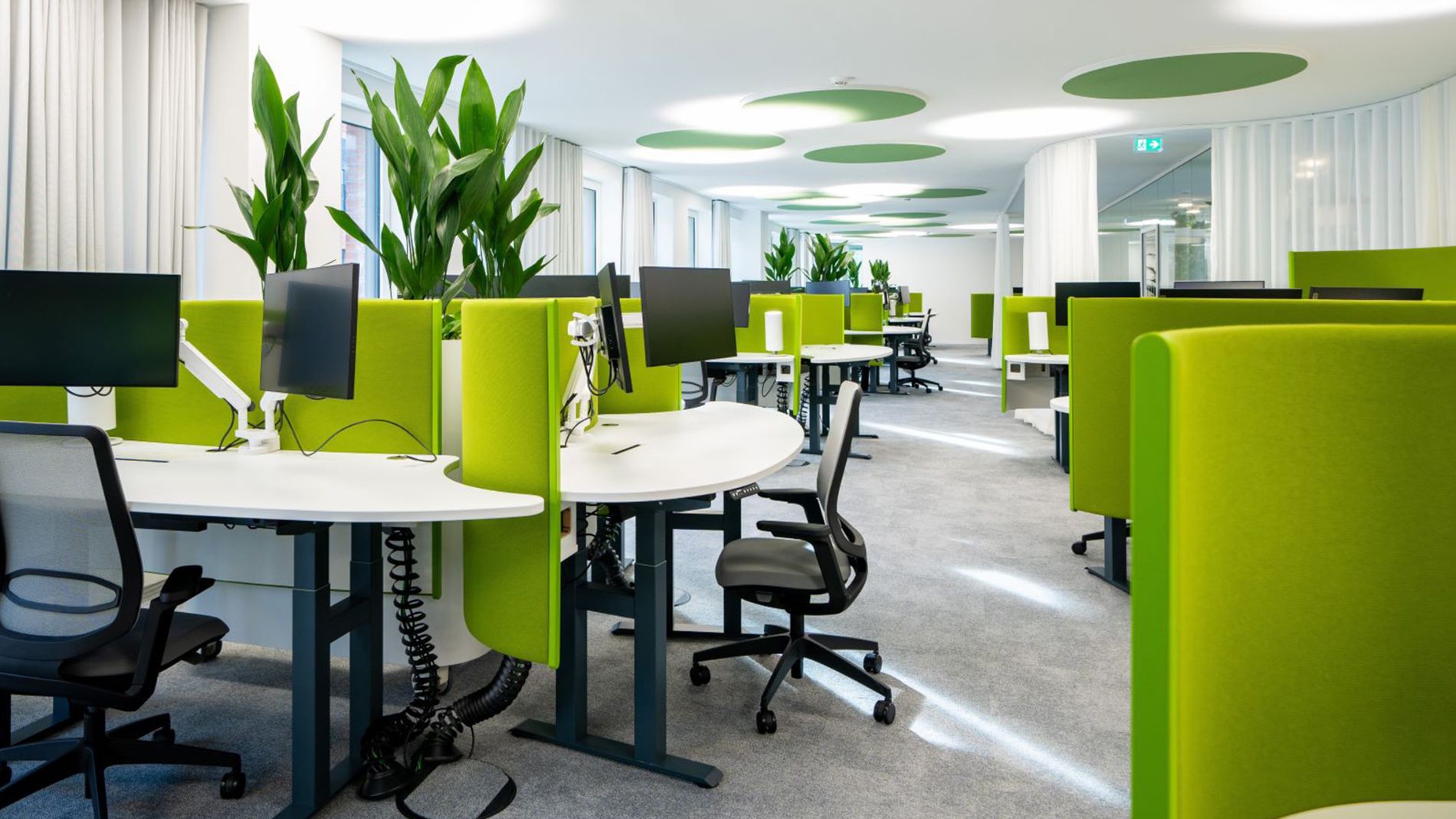
Photo: Office Curator
Looking forward, the acoustic recycling concept is expanding into slimmer formats, new product families and creative uses of weaving waste with natural texture.
Architects increasingly request materials made explicitly from remnants – a signal that the conversation around resources is shifting.
Création Baumann’s journey is not about perfect circularity, but about intelligent progress. In an era of loud sustainability claims, their approach is refreshingly grounded. They let the materials speak – softly, precisely, and with a story worth hearing.