
Reading time: 4 minutes
Key takeaways
- Many components and joining methods make footwear difficult to recycle.
- Modularity is shifting from niche concept to serious circularity contender.
- From glue-free assembly to component take-back systems, discover the brands reengineering footwear for a circular future.
Linear models need a rethink
Each year, nearly 24 billion pairs of shoes are produced and almost 90% of them are eventually discarded in landfills or incinerated within a year of their purchase1.
Complex in design and material makeup, most footwear is built to perform, but not to last, let alone to come apart and start again.
Circularity is transitioning from an aspirational sustainability goal to an operational and regulatory imperative.
Often more than 60 permanently bonded components, which have so far made circularity nearly impossible.
Case studies in action
Methods Footwear
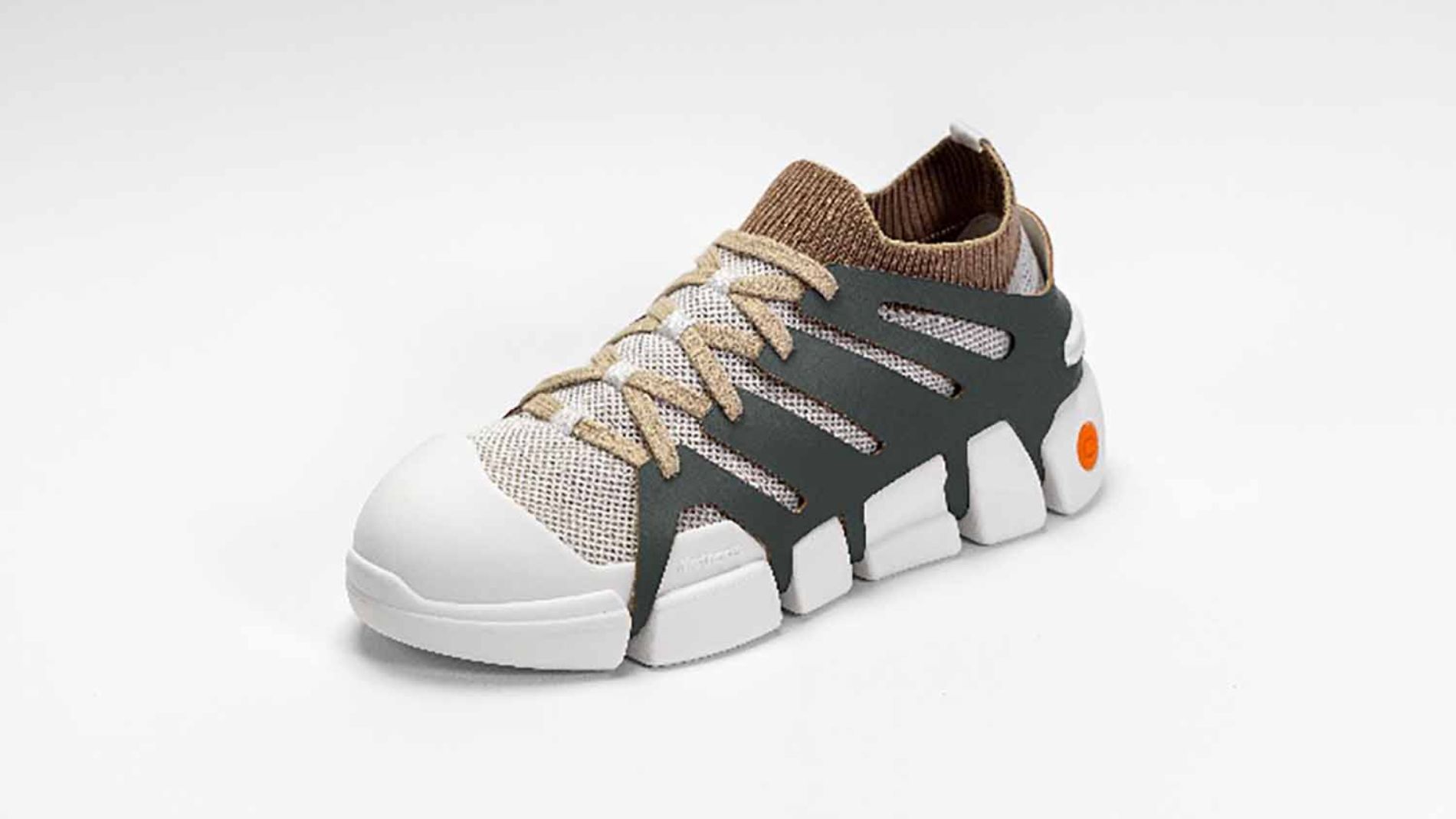
Designed in the Netherlands and manufactured in Portugal: shoes built from just five recyclable or biodegradable components, cleverly interlocking without glue or stitching for effortless disassembly2. Each of the shoe’s parts (the sole, upper, insole, laces and wrap) can be individually swapped or returned via a take‑back system, before being recycled into new components3.
Recognised with the 2025 ‘Green Good Design Award’, Methods blend minimalism and repairability with a distinctive aesthetic4. The shoes officially released just this June (2025), retailing at approx. €225.00.
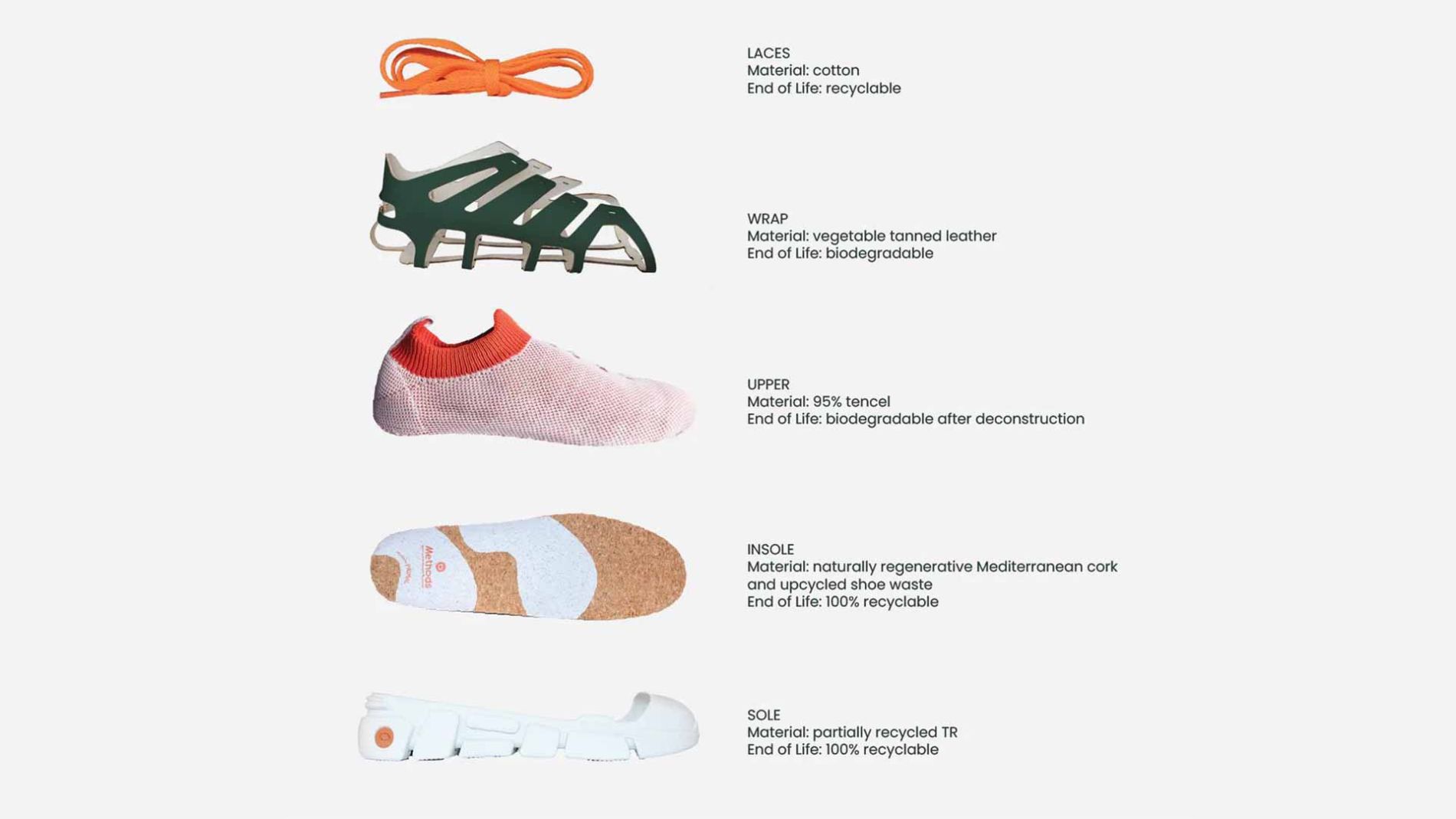
The shoe is comprised of just five parts, which can each be interchanged for style or shoe longevity. Source: Methods Footwear
Camper ROKU
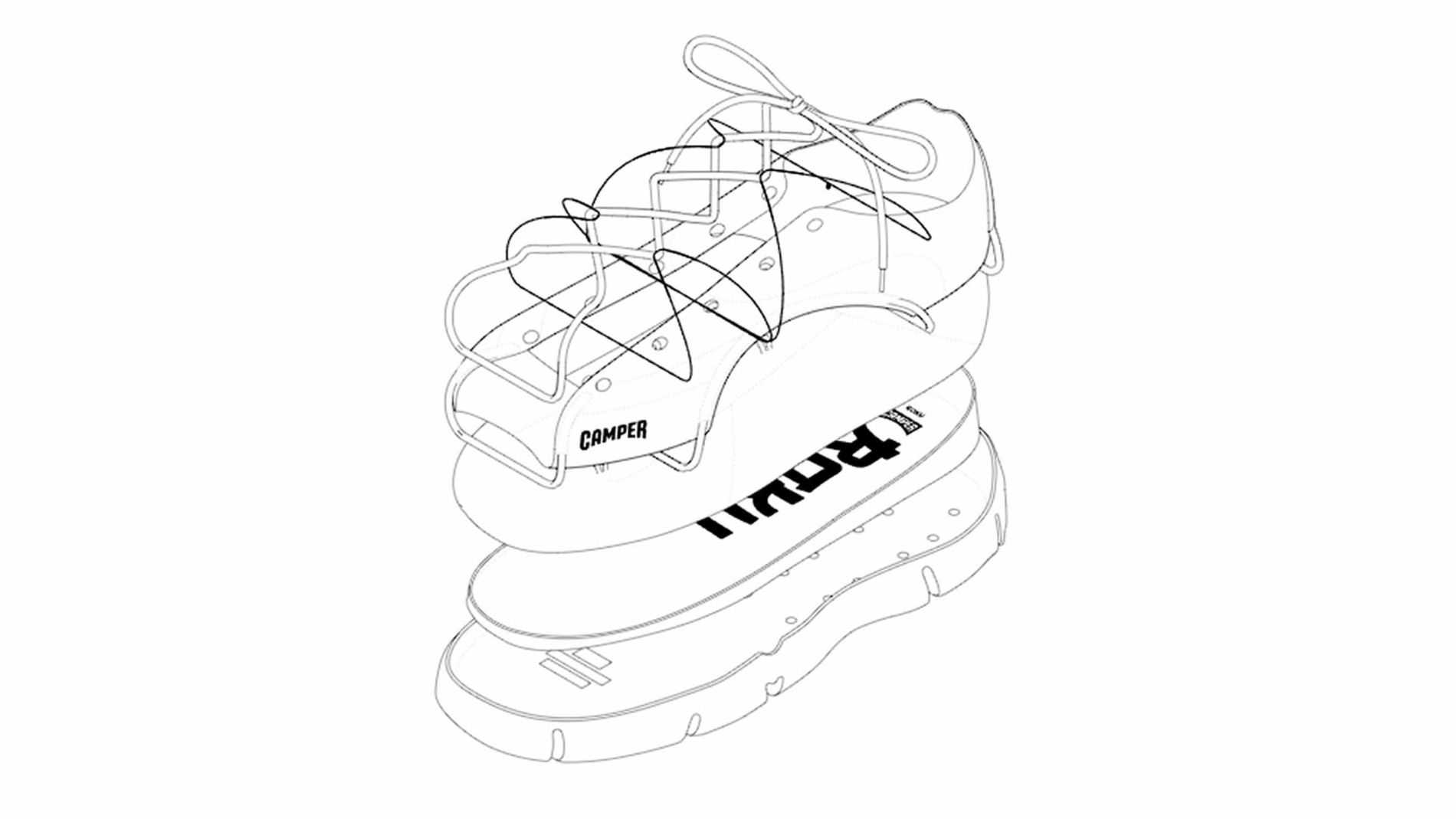
Inspired by organic shapes and a Japanese “Wabi” aesthetic, Roku is Camper’s bold step into modular footwear. The shoe is formed of six interchangeable components: a knitted upper, 3D knitted inner sock, footbed, laces, XL EXTRALIGHT® EVA outsole (with 51% pre-consumer recycled scraps) and a cord connector, offering both customisation and repairability5.
Designed to come apart without glue and sold as both fully assembled units and parts, the Roku system allows up to 64 unique style combinations, inviting users to become co-creators in their shoe’s lifespan6. Roku showcases how a heritage brand can move beyond experimentation – framing modular footwear as a tactile, design-forward expression of sustainability, wearability and personal expression6.
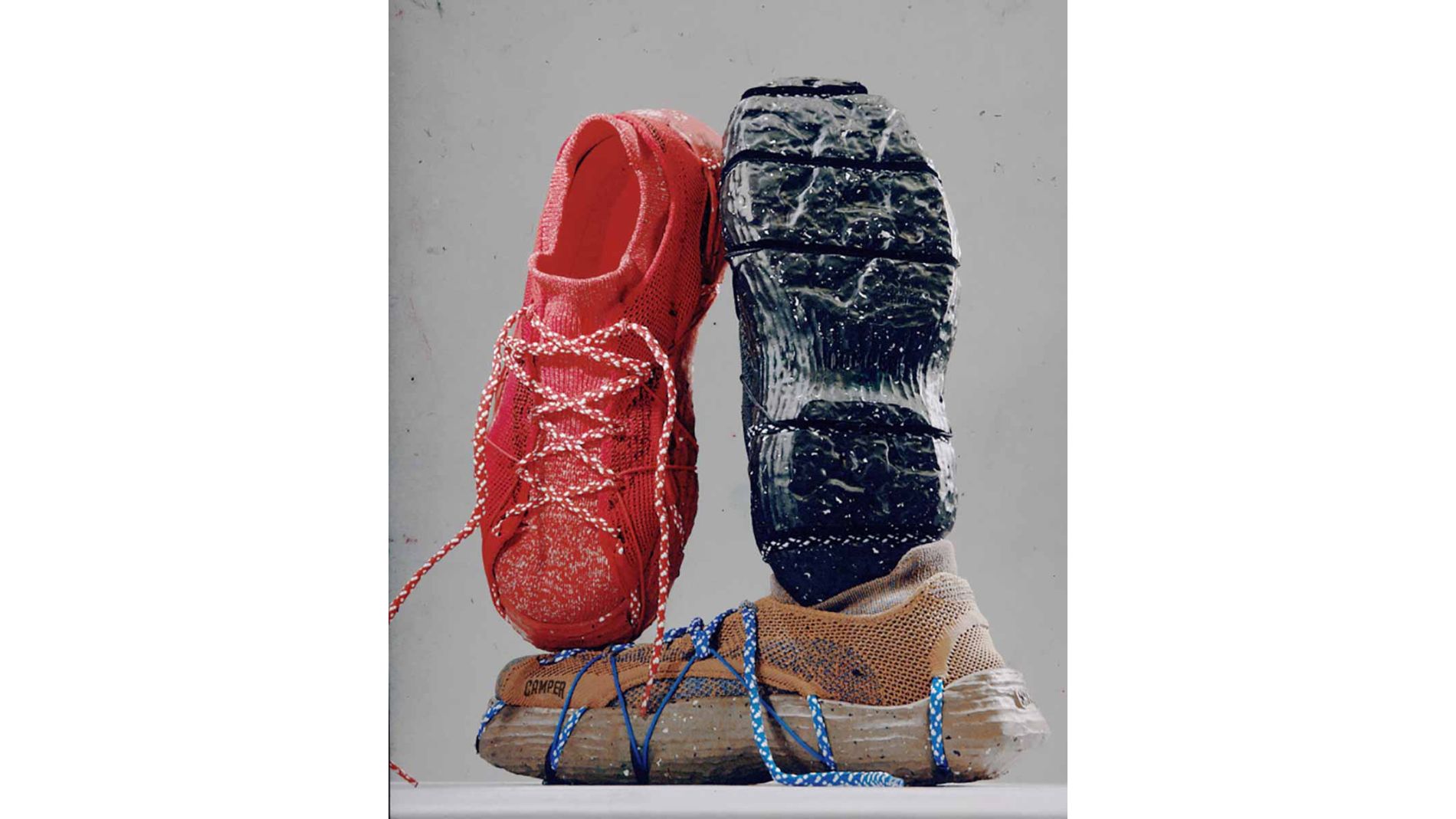
Salubata
Another example is Salubata, a Nigerian-based company transforming plastic waste into modular shoes designed to snap together and apart with ease7.
Beyond the product, Salubata channels part of its profits into supporting women entrepreneurs and children in underserved communities, embedding social impact into its circular model8.
Ralfy
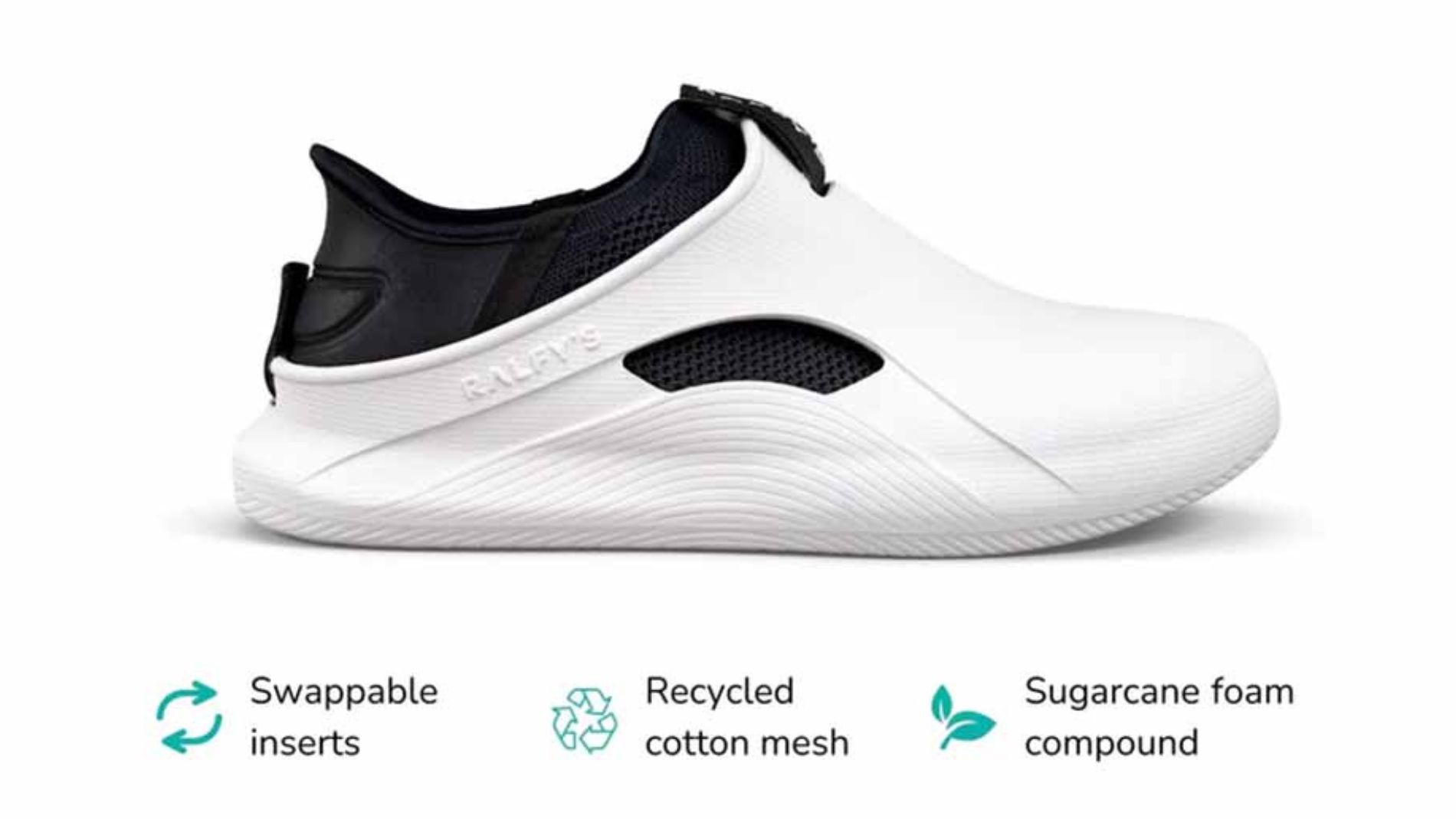
Launched via Kickstarter in early 2025 and heavily backed by nearly 500 supporters, the N1 bridges the gap between slipper comfort and sneaker functionality through a clever modular system.
Featuring a slip-in shell with swappable colour inserts, it offers 28 aesthetic combinations per pair, with no glues or glue-lined parts for easy adjustability. Built from renewable sugarcane foam, recycled cotton mesh and designed for durability, the N1 puts user empowerment first: replacing the footbed or shell insert extends each shoe’s life, reduces waste, and supports personalization, all wrapped in a hands-free, easy-clean package9.
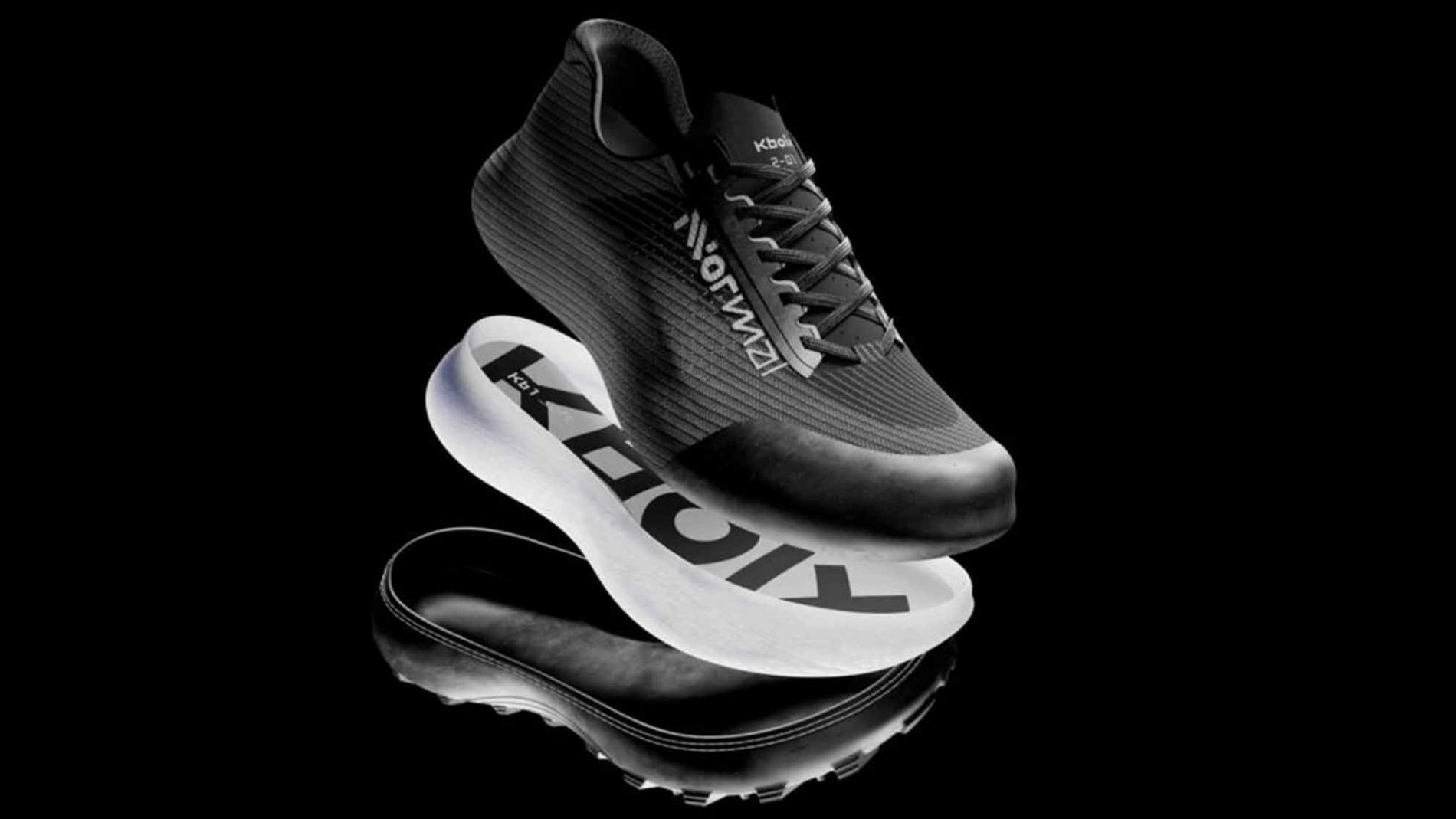
NNormal Kboix 01
Even in the highly demanding world of trail running, modularity is gaining ground. Kboix 01 breaks with tradition by offering three interchangeable midsoles, allowing runners to adapt cushioning and responsiveness to different terrains and personal preferences10.
Footloop
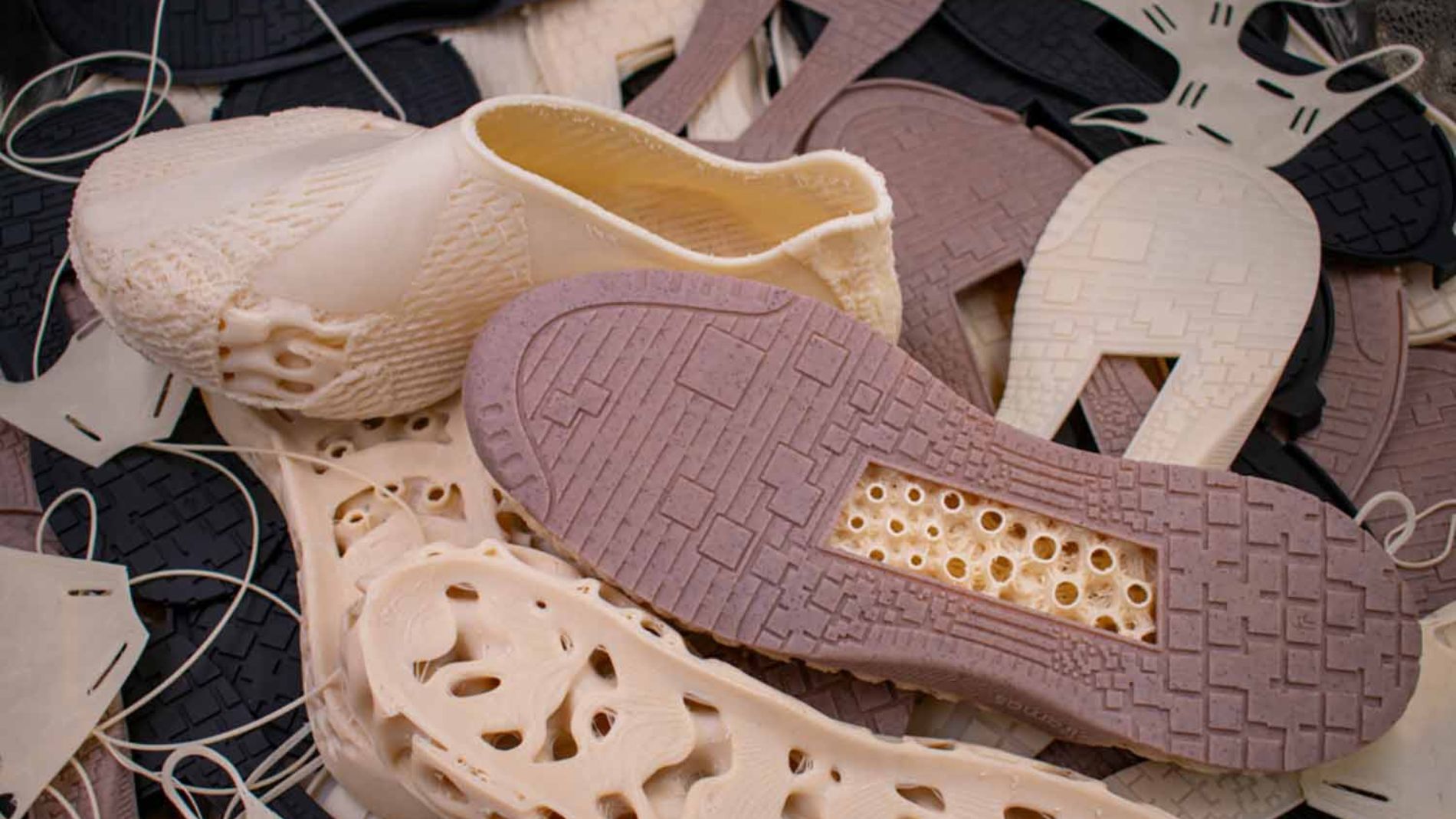
This modular sandal is developed by:
- Balena – A material science company with a proprietary compostable material platform.
- Moon Rabbit Lab – A computational design firm, with experience in footwear design.
- Framas – A technical injection moulding specialist, with expertise in footwear components.
Built through additive manufacturing with a single thermoplastic biomaterial, negating additives, the shoes are said to be fully recyclable or reprintable after use. Although it is still in the prototype phase, Footloop shows how minimalist design and sustainable innovation can merge in a loop-ready footwear vision11.
Author: Lorenzo Costanzo, WTiN
Sources
Online visits on 23 June 2025:
1 WTiN: „Fashion for Good on circularity for footwear” https://www.wtin.com/article/2025/february/03-02-25/fashion-for-good-on-circularity-for-footwear/
2 https://methodsfootwear.com/
3 Getnews, „Methods Sneakers: Circular, Customizable, and Sustainable” https://www.openpr.com/news/3664332/methods-sneakers-circular-customizable-and-sustainable
4 https://www.gp-award.com/en/produkte/methods-sneakers
5 „Roku, the new Camper | Société Anonyme Florence modular shoe.” https://www.societeanonyme.it/en/module/i01_blog/module-i01_blog-single?ib_category=collections&module=i01_blog&rewrite=55-inside-roku-the-newest-modular-shoes-by-camper&utm_
6 „Roku Italy” https://www.camper.com/en_IT/roku/women & https://www.trendhunter.com/trends/roku-shoe-line
7 https://www.salubataofficial.com/
8 L. Beighley, „Customizable Shoes from This Startup Could Help Stamp Out Plastic Waste”, IEEE Entrepreneurship https://entrepreneurship.ieee.org/2021_01_28_shoes-startup-stampout-plastic-waste/
9 https://ralfys.com/
10 https://www.nnormal.com/it_IT
11 Arsutoria Studio: „Footloop: a new sustainable way forward for footwear” https://arsutoriastudio.com/en/footloop-a-new-sustainable-way-forward-for-footwear/