
Reading time: 3 minutes
“Localise it!” — true to this motto, the Kinzo team prepared their successful pitch, impressing with their understanding of forward-thinking work practices and their sensitivity to life in the Bavarian capital. In close collaboration with the client, a design concept was then developed. To achieve this, digital meetings were held several times a week with project participants from various countries, including Germany, England, India, and the USA.
“We focused on life in the city.”
The software company is leasing office space for around 400 employees in the “Die Macherei” quarter in the east of Munich.
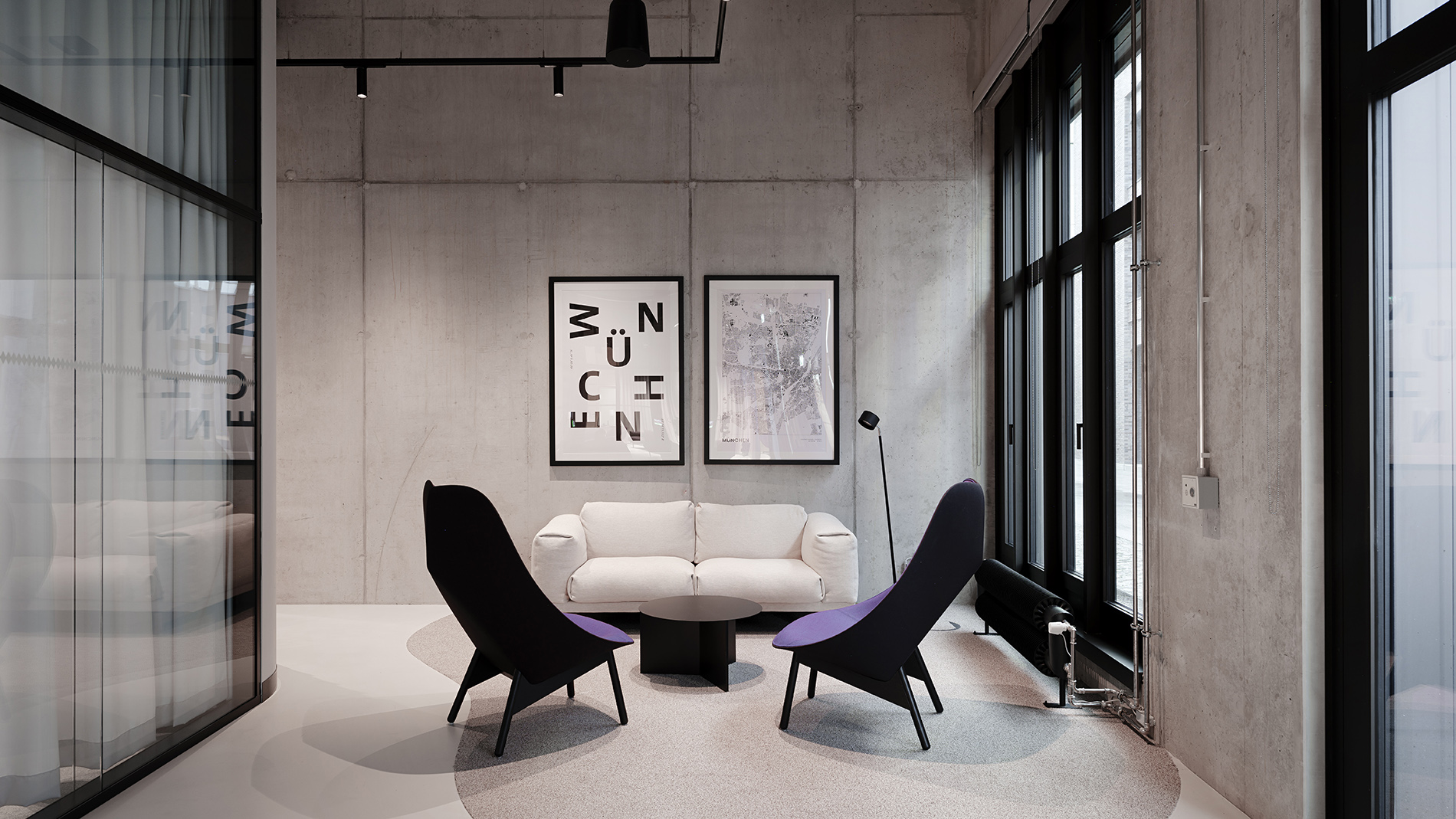
However, anchoring the interior design in local motifs by no means meant creating a Wiesn atmosphere. The references are far more subtle, as Laura Kummer, the partner at Kinzo responsible for the project, explains. It is above all those glorious summer days that many Munich residents spend outdoors along the River Isar that served as inspiration. But typical elements such as the grooved plaster on historic facades or the unmistakable diamond pattern also reappear in adapted form within the interior architecture.
Future-proof work environments
The new Munich location, realised by Kinzo, extends across three floors and comprises 570 square metres on the ground floor, 2,500 square metres on the third floor, and 2,100 square metres on the fourth. As the majority of employees here work in sales, the space requires more than just conventional desks. Accordingly, there are only 61 desks on the third floor and 56 on the fourth.
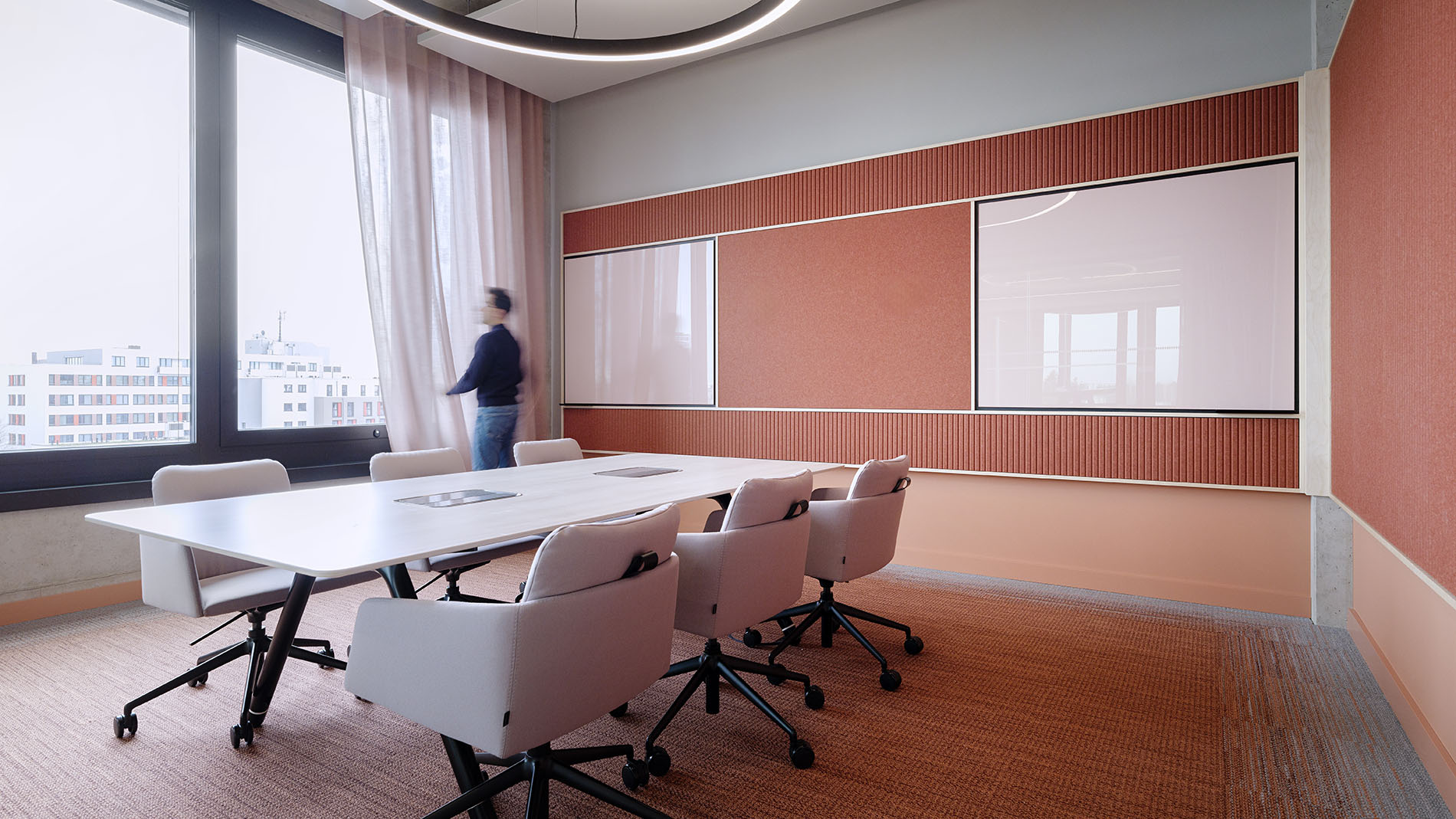
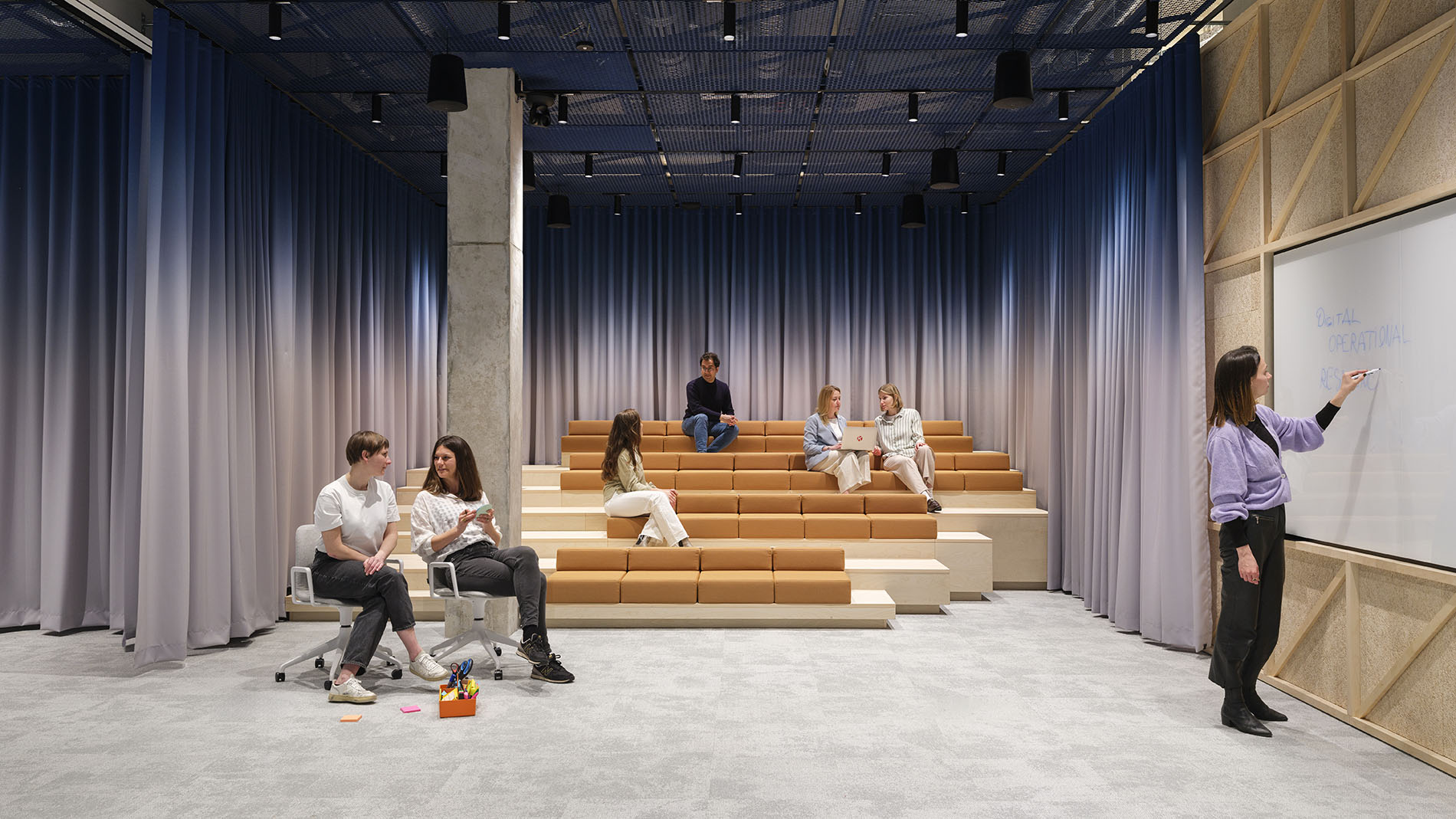
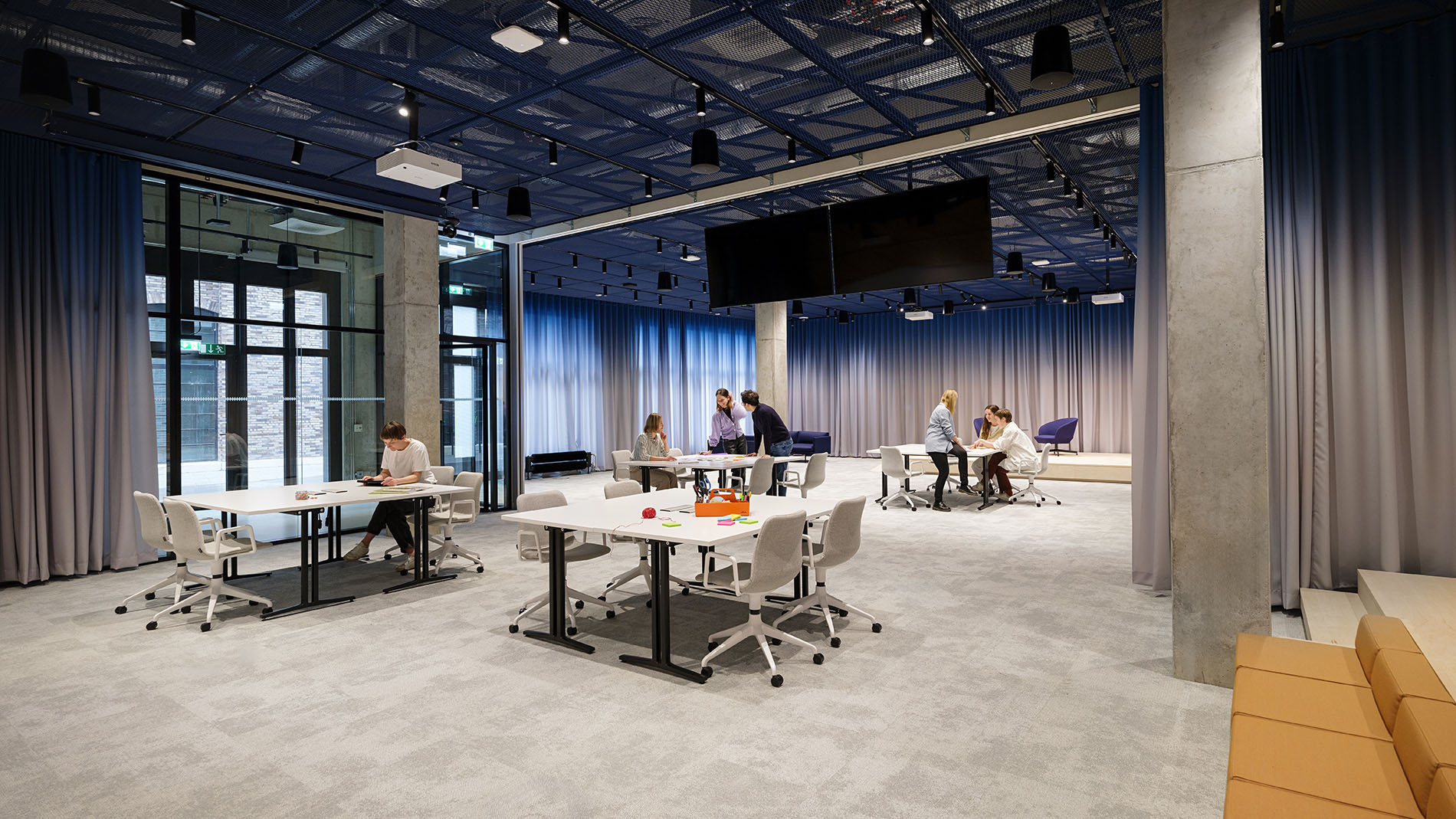
In addition to flexible group workstations and smaller work and meeting niches, the office also features a multifunctional workshop and training room. Semi-public areas are located on the ground floor and parts of the third floor, primarily dedicated to training sessions and client events.
“Being a good host.”
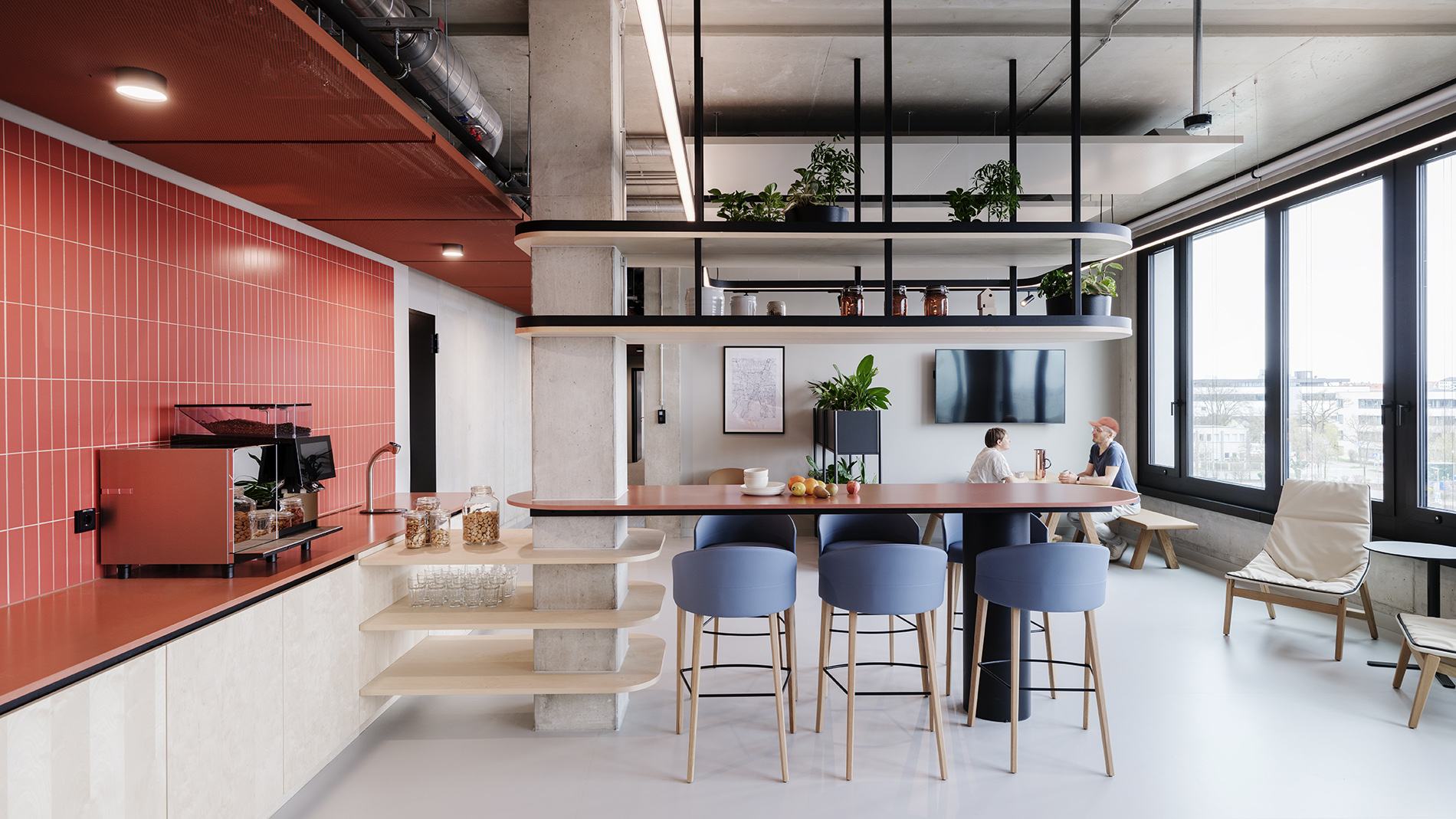
This is a guiding principle here — so a barista bar and catering kitchen are essential elements.
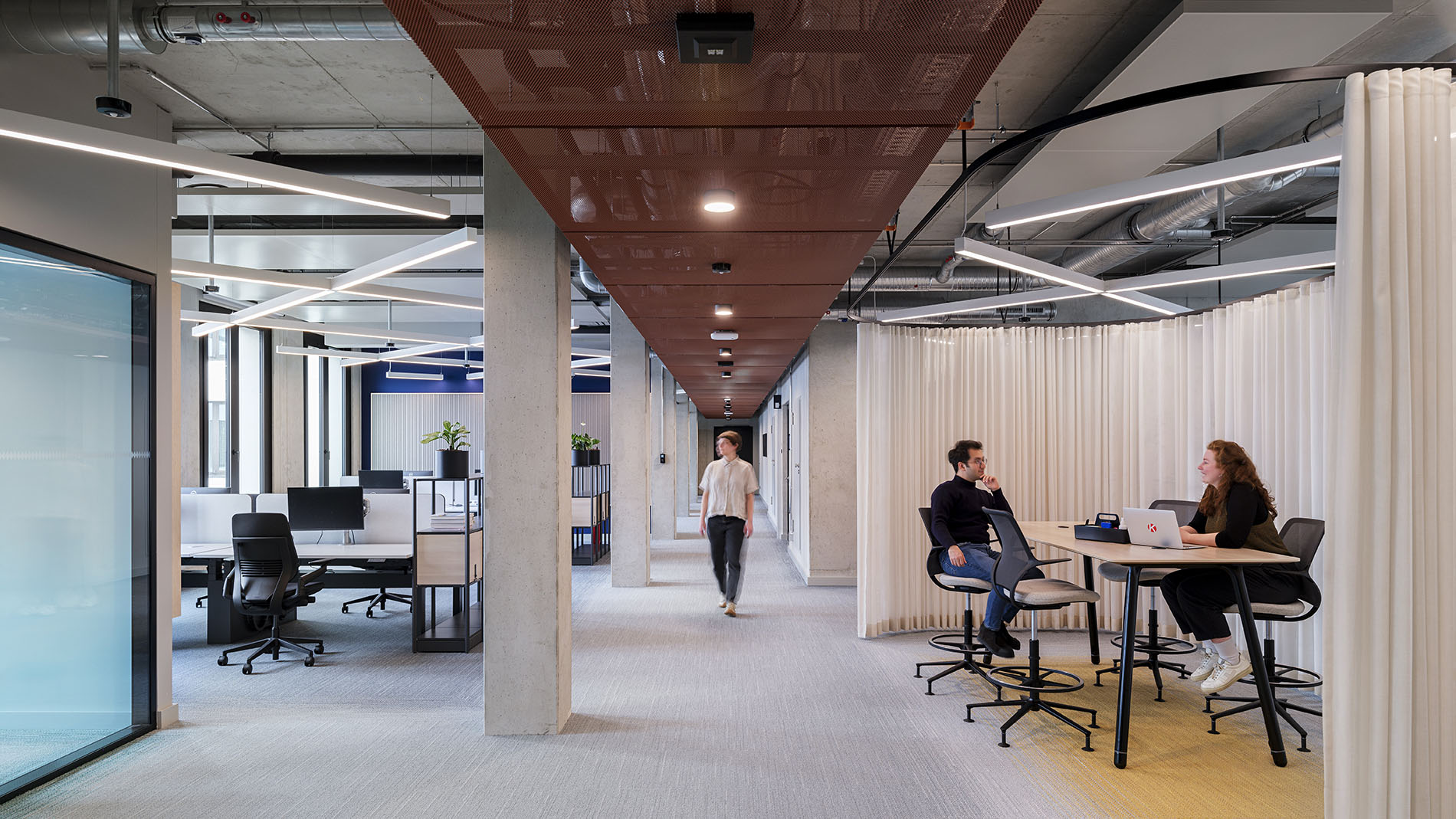
The remaining upper-floor areas are reserved for internal work and communication zones. The rule is simple: all workstations are shared, and a clean-desk policy is standard practice. For certain teams, so-called “team homes” or “neighbourhoods” have been defined — areas where employees typically spend most of their time.
Central design elements
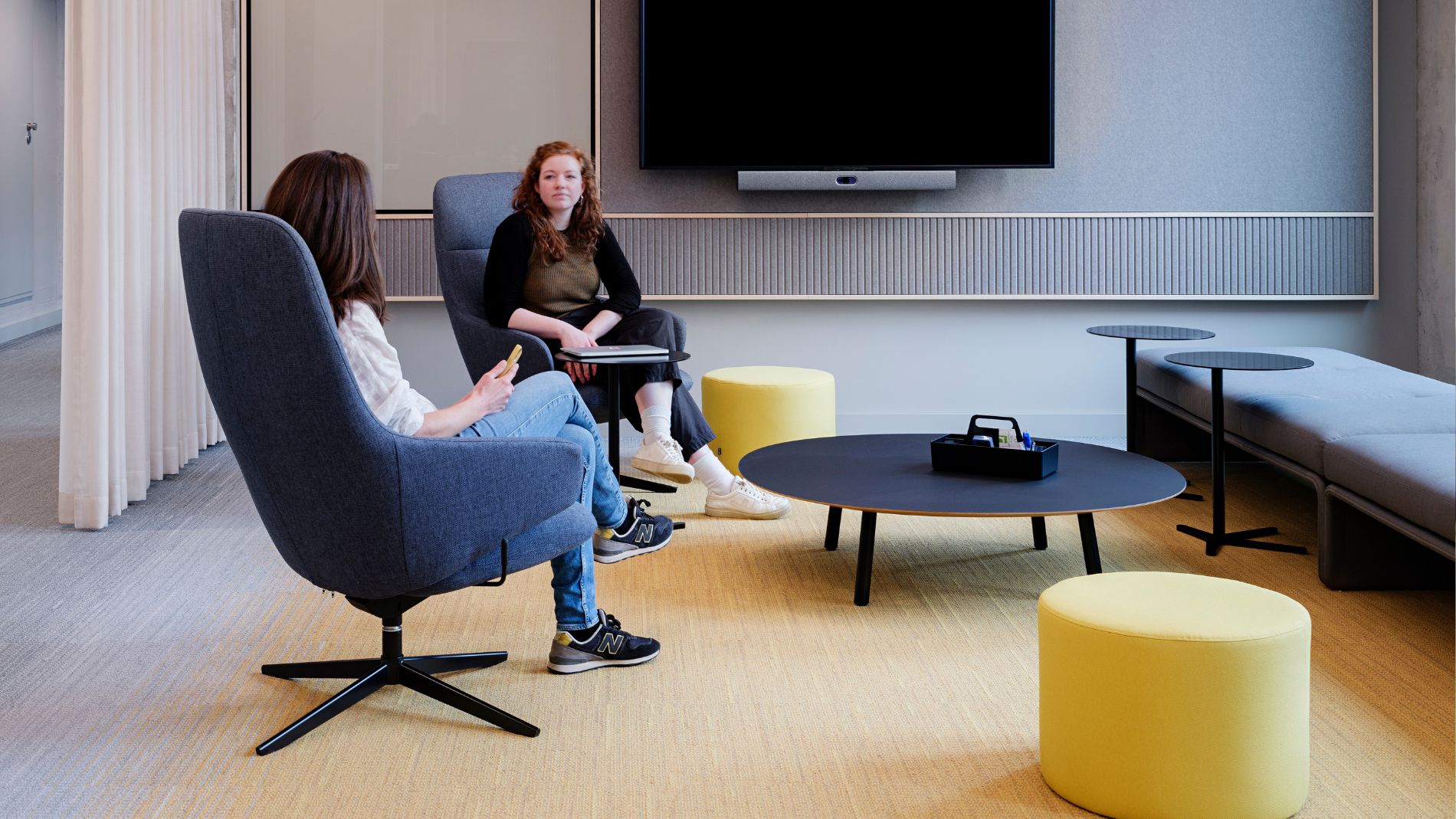
Kinzo designed the majority of the approximately 220 seating and work areas in spaces that partly convey an informal character — including meeting and workshop rooms, as well as a library, cafés, and communal areas furnished and equipped in a wide variety of ways, always ready for both analogue and digital use.
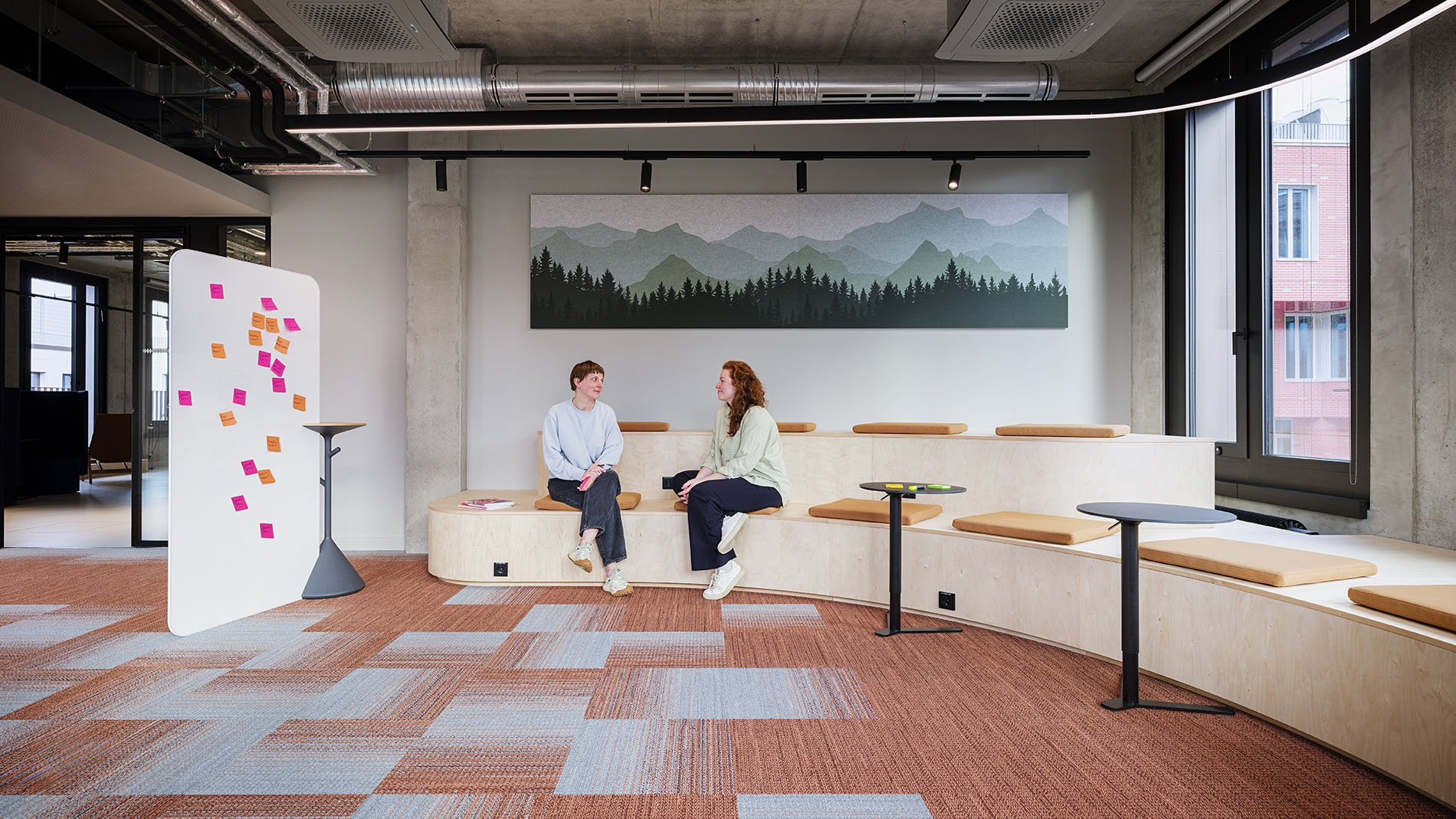
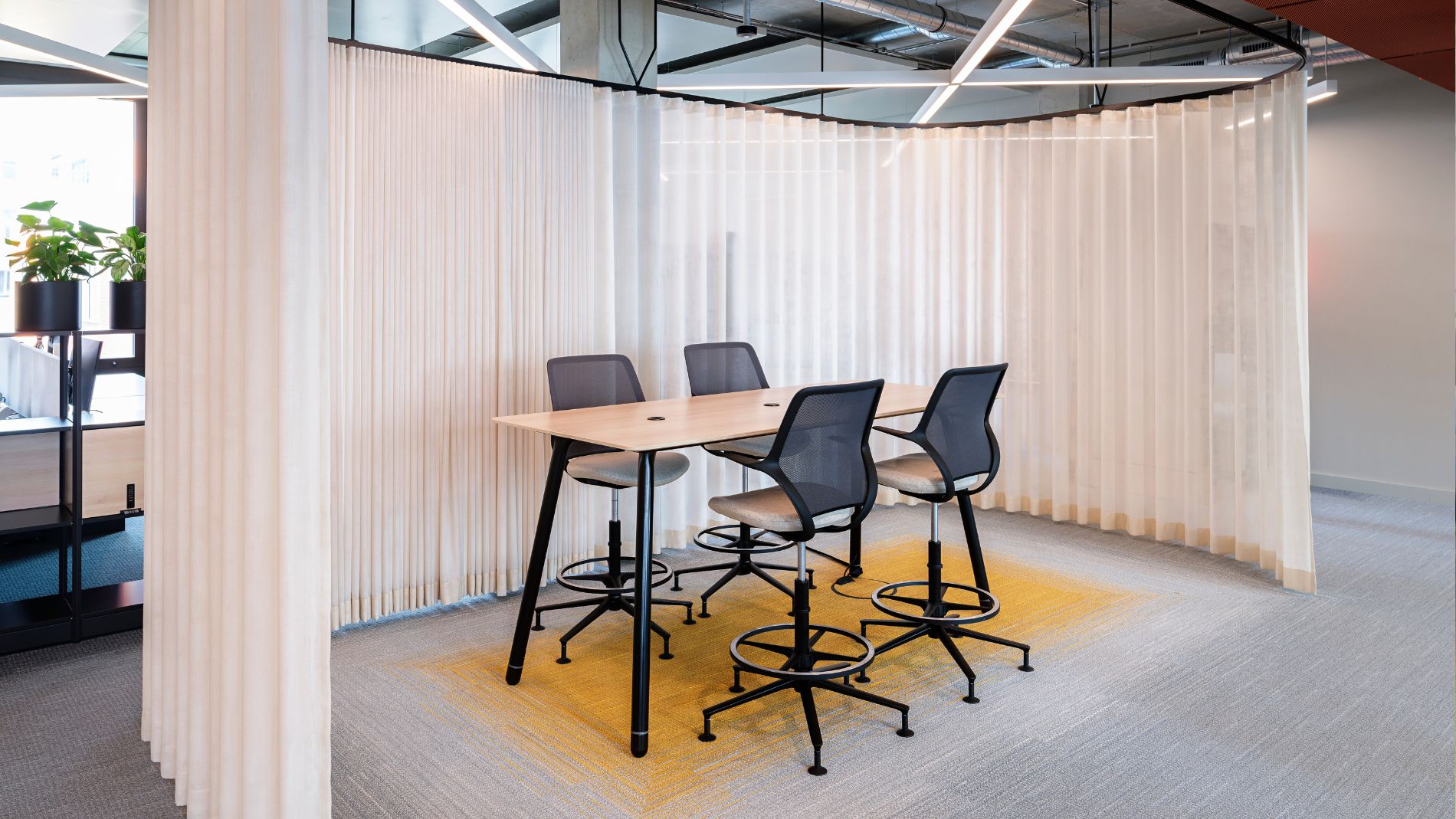
Several recurring design features characterise the spaces, such as the choice of flooring. On the ground floor, the floors are entirely concrete, while the upper floors are laid with carpet featuring different colour gradients. The colour code is clear: yellow stands for collaboration, dark grey for individual and focused work, and red or blue represent communication. To make it easier to distinguish the floors visually, one level features blue above and red below, while the other reverses the scheme with red above and blue below.
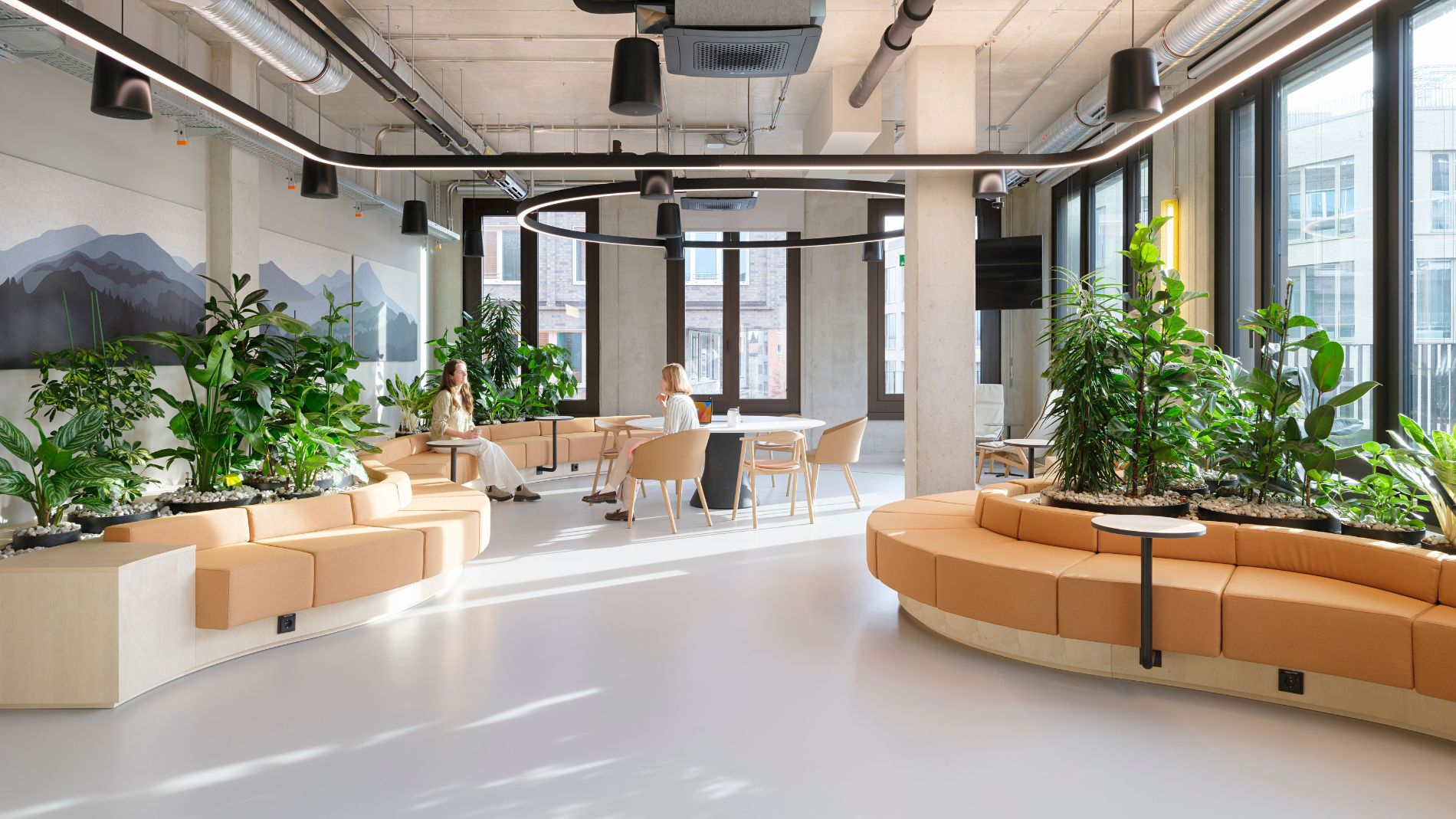
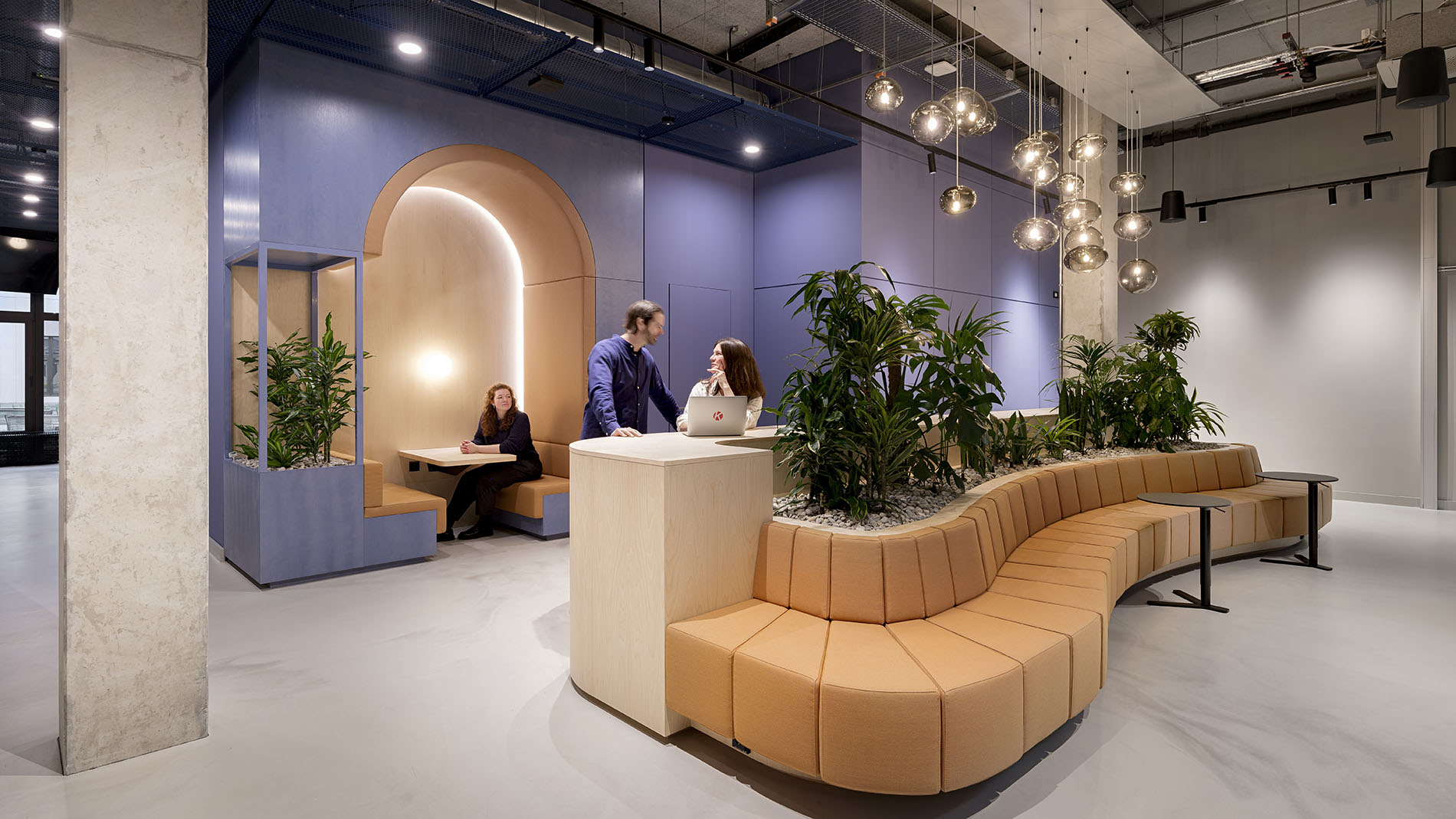
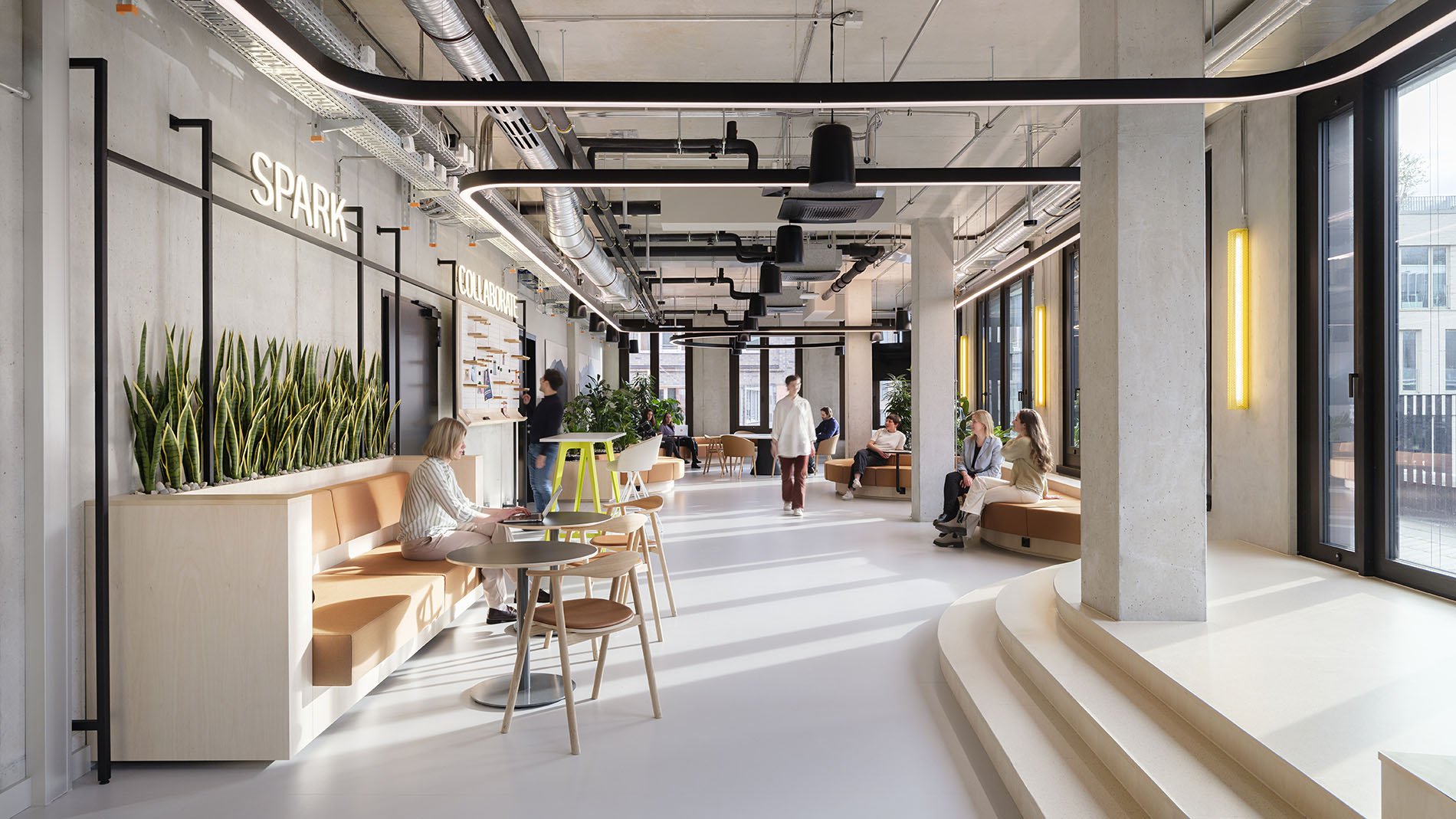
Another defining design element is the series of intricate built-in structures that blur the line between furniture and interior architecture. These integrate multiple functions across different zones — serving as seating, reception points, storage, or even planters.
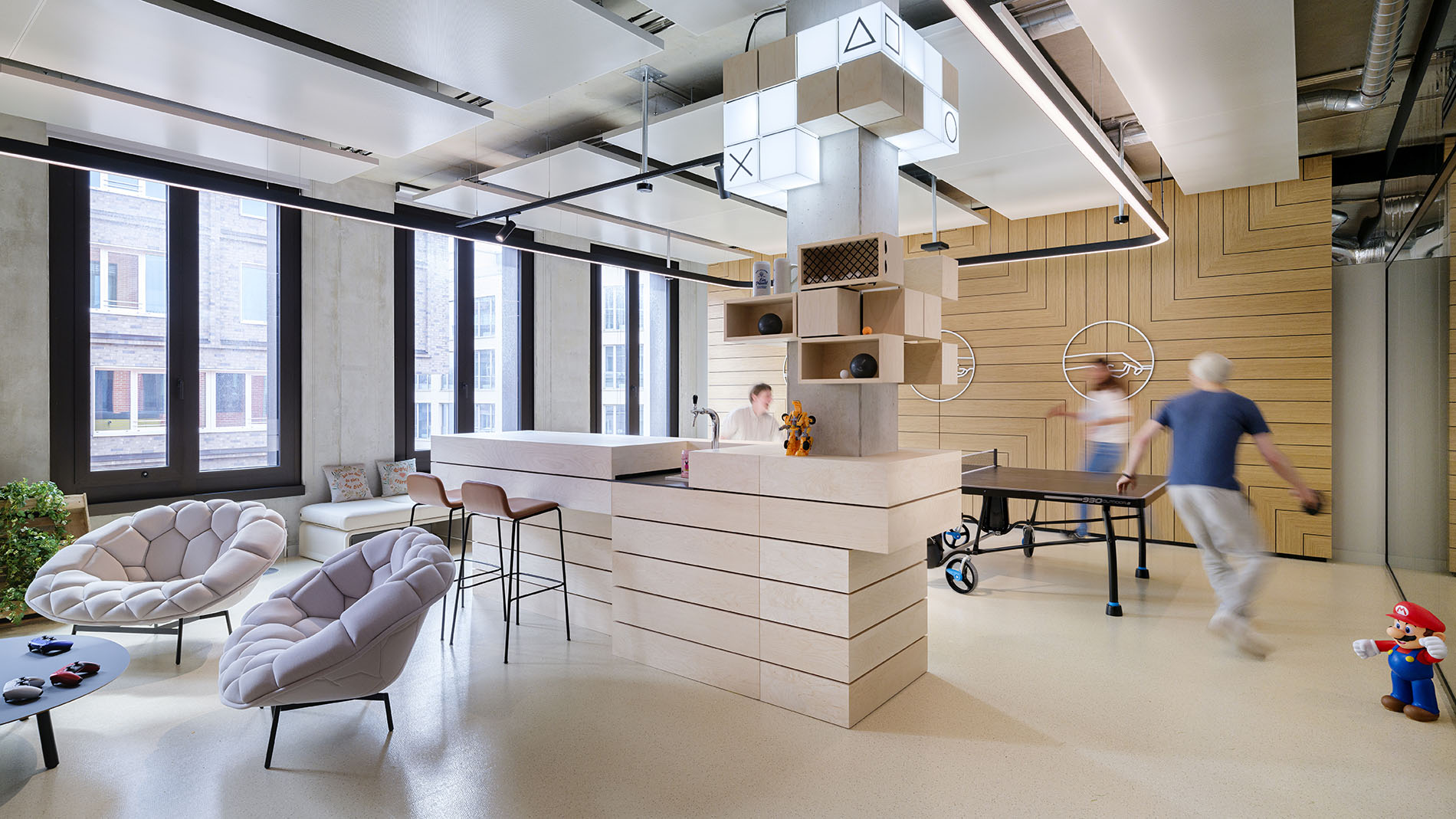
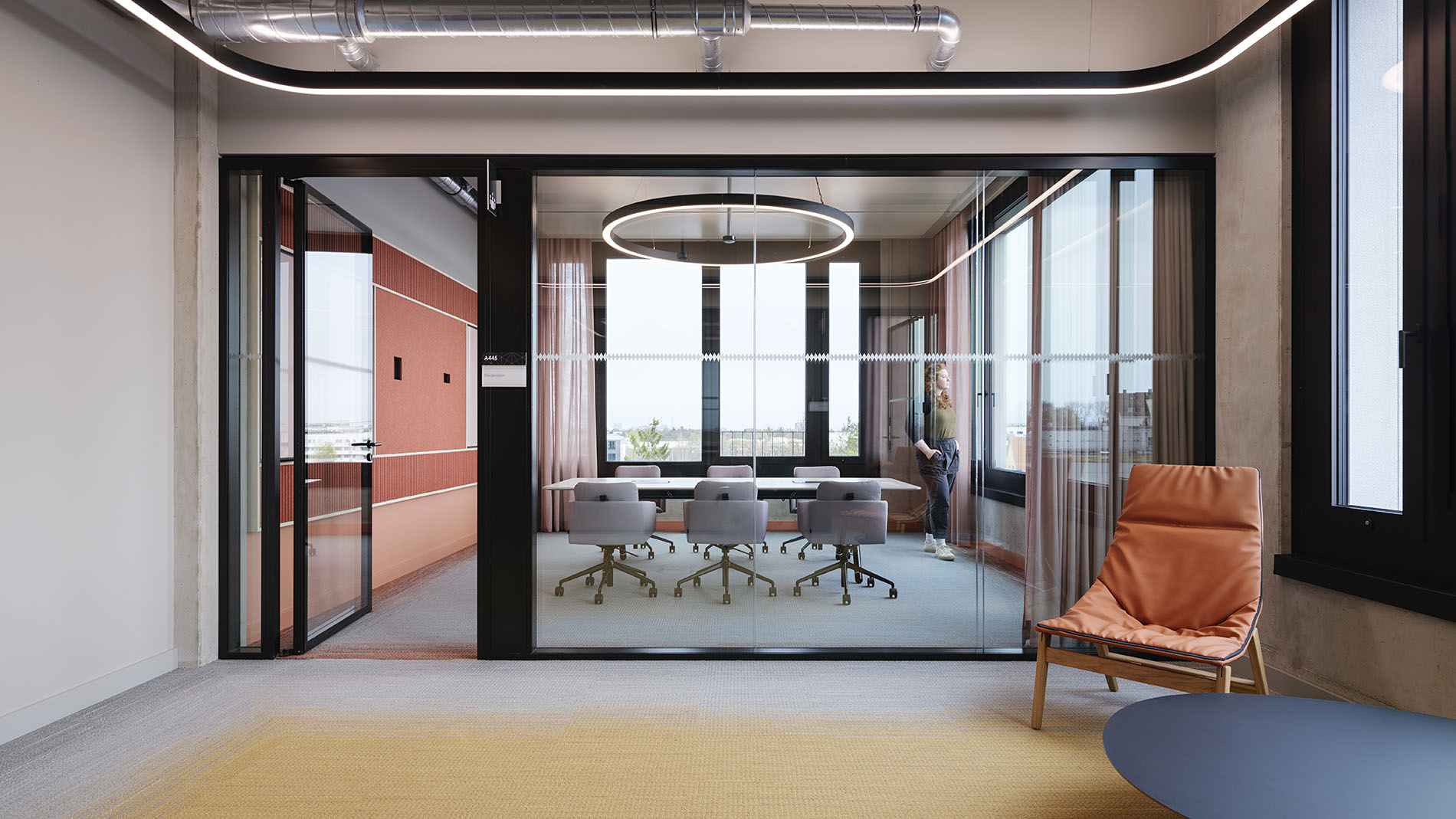
Otherwise, the Kinzo team employed local colour in a subtle rather than decorative way. The Bavarian lozenge motif reappears in various interpretations — for instance, in zigzag-hung pendant lights, the wall shelving at the reception area, or as a pattern within built-in elements and tiles.
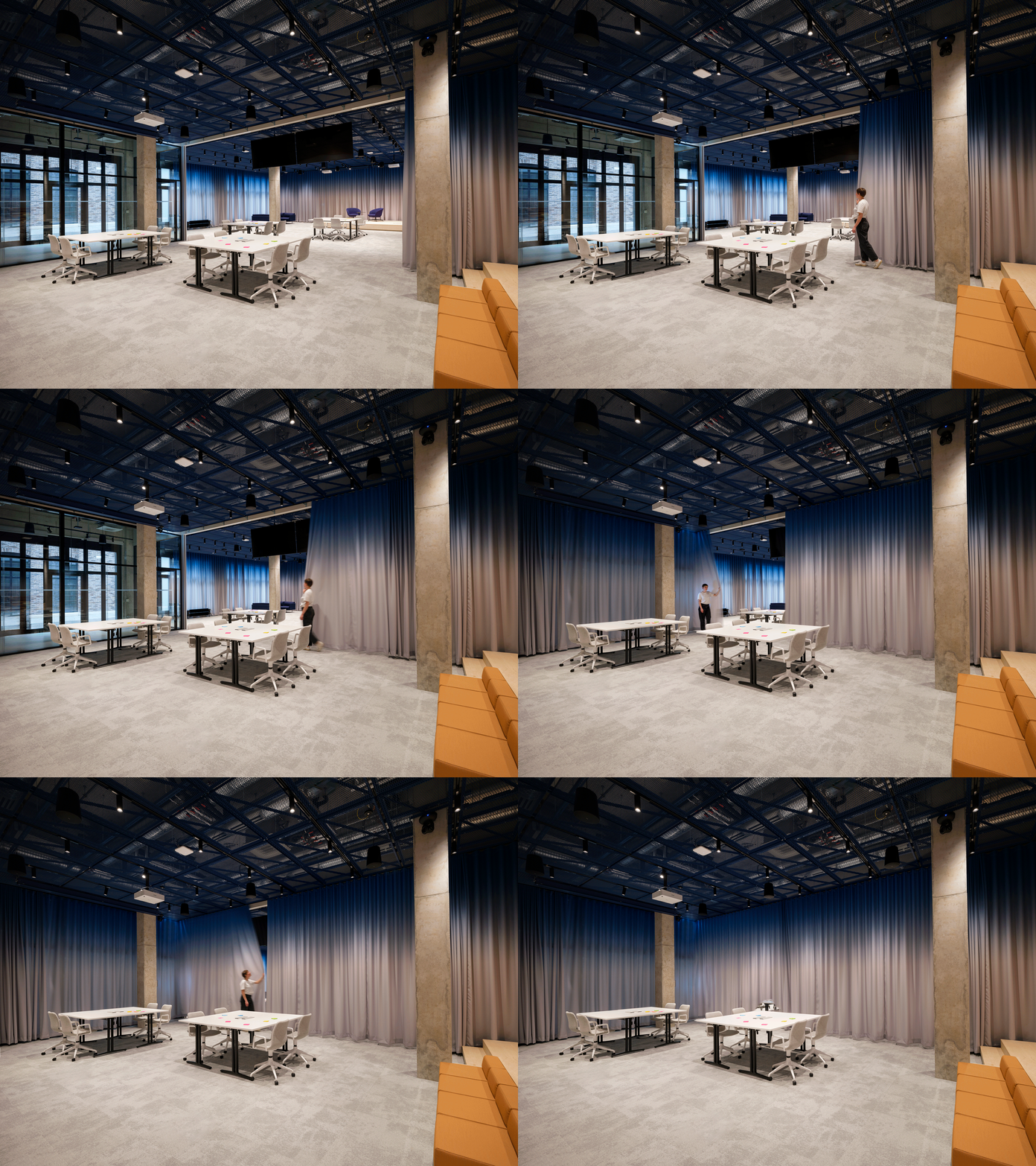
The large, flexible workspace on the ground floor, used primarily for training, can be divided into zones by curtains whose blue-to-white gradient evokes the proverbial Munich sky. And the grooved plaster typical of local historic buildings served as inspiration for the vertical relief of the acoustic panels.
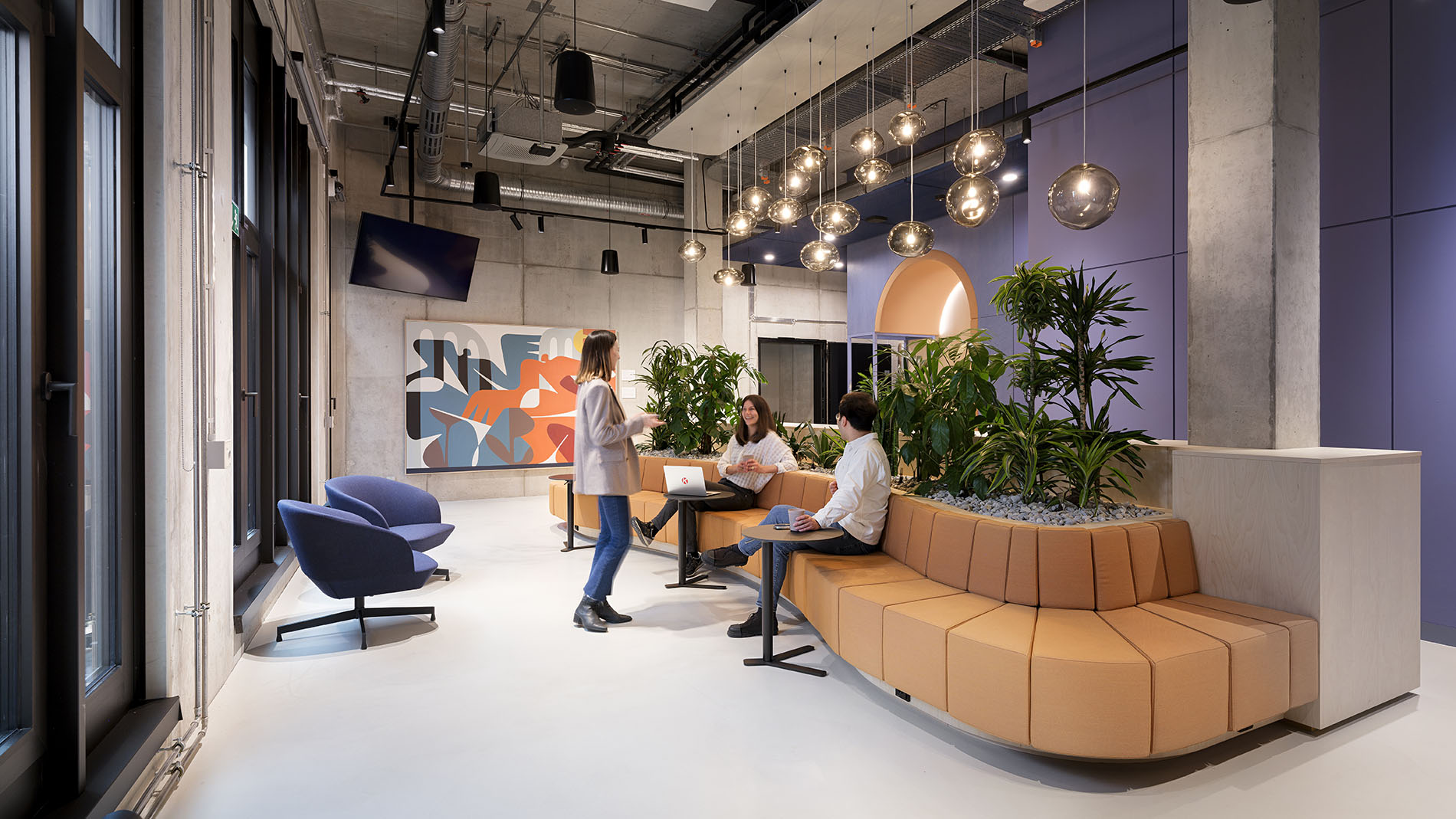
The River Isar, in turn, winds its way through the hub in the form of curved seating benches. Bespoke artworks created in collaboration with Munich-based artists offer a contemporary interpretation of life in the city. Complemented by abstract mountain motifs and lush greenery, the design aims to evoke a sense of an organically flowing landscape — allowing international employees to experience the unique character of the location while feeling comfortable and at home in their workplace.
Kinzo
Kinzo is an internationally active architecture firm specialising in interior design, refurbishment, and placemaking. Founded in 2005 by Karim El-Ishmawi, Martin Jacobs, and Chris Middleton, the multidisciplinary teams based in Berlin, Hamburg, and Munich oversee projects of varying scales — from initial concept through to completion.
Photos: © Sorin Morar