Can AI see what we miss? A new way of looking at textile quality
21 Apr 2026
Artificial intelligence is fundamentally transforming textile quality assurance. From automated defect detection to connected data analysis, new approaches are emerging that stabilise processes and reduce waste.
AI improves visual quality control through consistent real-time inspection
early defect detection reduces waste and rework
connected data enables end-to-end quality management
main challenges: data quality, integration and acceptance
hands-on formats such as the AI escape room foster understanding and openness
future: continuous, data-driven and proactive quality assurance
new skills combine textile expertise with data literacy
From defect detection to process intelligence
The demands placed on textile quality assurance are constantly increasing: demands for efficiency, sustainability and consistency are meeting ever more complex production chains. Artificial intelligence (AI) is evolving from a supporting tool into a central building block across the entire value chain.
Carina Krumrein (M.Sc.), research associate at the Centre for Management Research at the German Institutes of Textile and Fibre Research Denkendorf (DITF), works precisely at this intersection of textiles and data science.
Even today, visual inspection offers significant potential – particularly for high-frequency, repetitive tasks.
“AI makes a clear difference, particularly in critical and highly repetitive visual inspection tasks.”
Real-time quality along the production line
In modern production environments, AI systems are integrated directly into machinery – for example at looms, knitting machines or in finishing processes. There, they detect defects such as holes, stains, faults or shade variations in real time.
The key advantage lies in consistency: while human inspectors lose precision over long shifts, AI systems deliver stable results. Defects are also identified earlier in the process, meaning less faulty material moves downstream. The result: less waste, reduced rework and more stable quality. At the same time, structured defect data is generated, going far beyond simple inspection.
“The combination of real-time detection and actionable data for continuous improvement is fundamentally changing day-to-day quality work,” explains Krumrein. This data enables targeted process optimisation – for example through predictive maintenance or the adjustment of machine parameters.
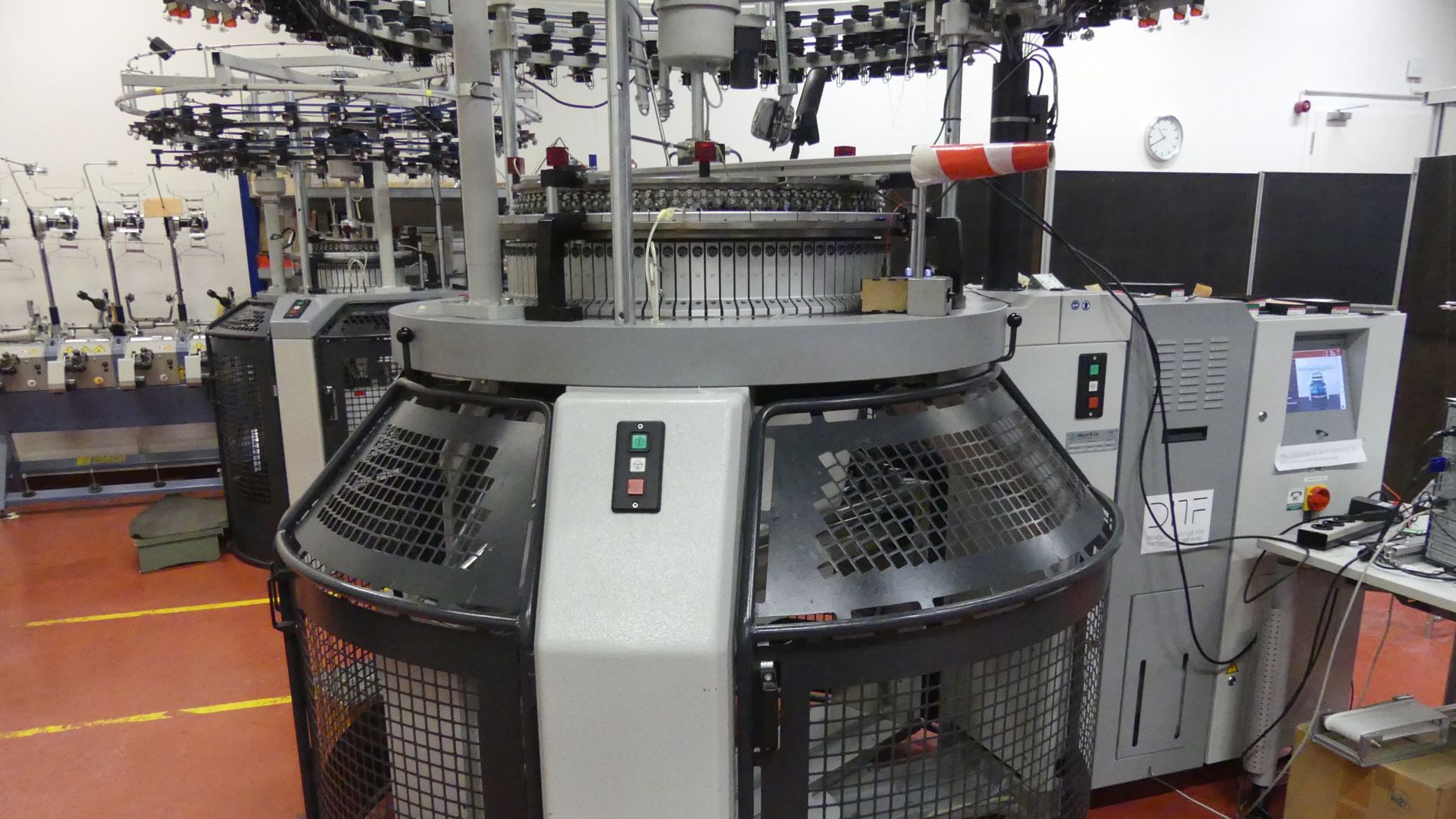
Knitting machine monitored using an event-based camera. Source: DITF
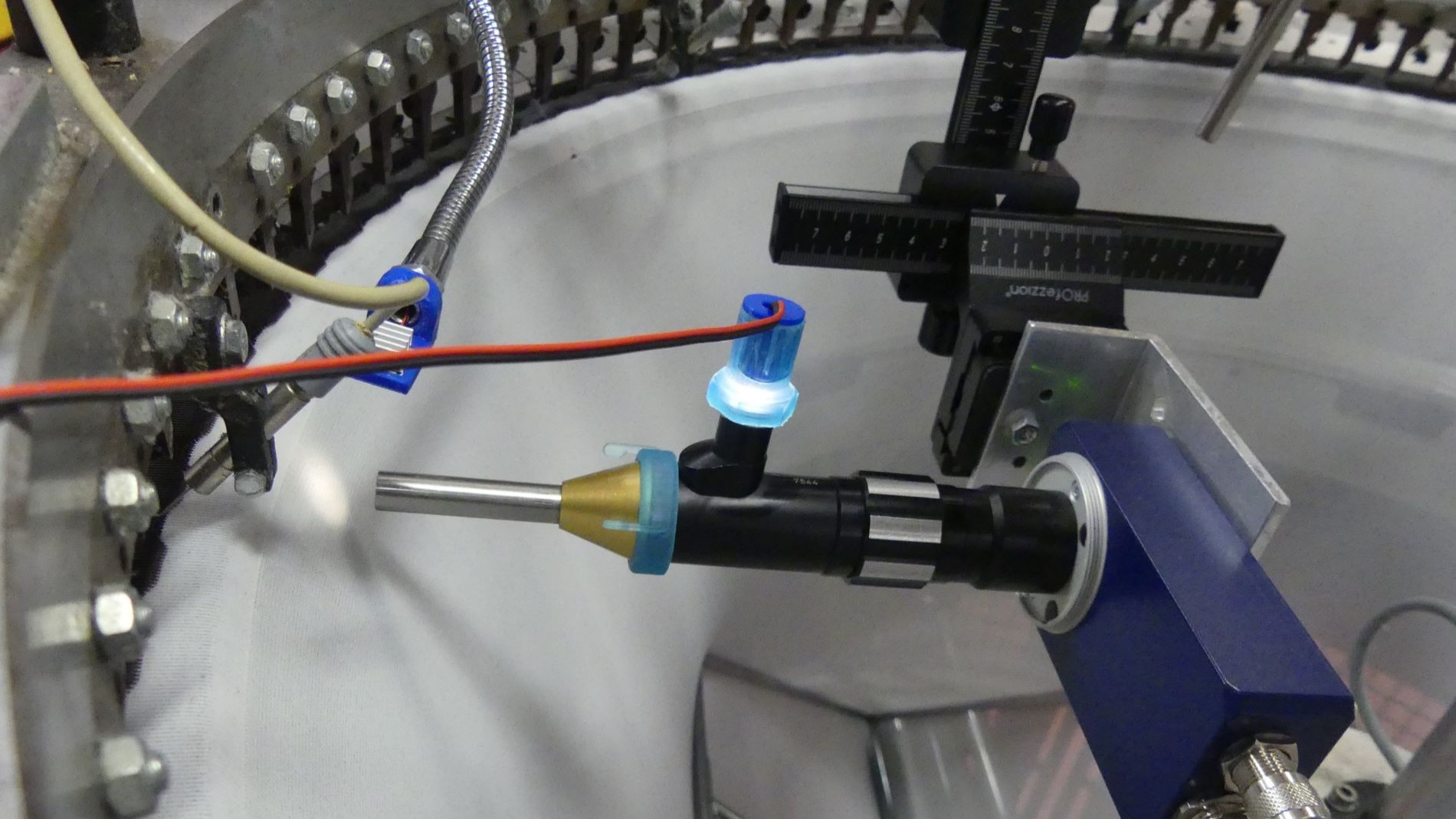
The camera used to monitor the knitting process is integrated into the machine. Source: DITF
The value chain as a connected system
A key step lies in linking previously isolated data points. AI acts as a “linking layer” that identifies relationships between raw materials, process parameters and final quality outcomes.
For instance, fibre properties, yarn parameters, machine settings and inline inspection data can be analysed together. Based on this, AI identifies patterns: which combinations lead to stable quality – and which systematically cause defects?
The result is a paradigm shift: away from isolated quality checks towards a continuous, data-driven view of the entire process.
With this “digital memory for quality”, systems can not only provide recommendations but also automatically adjust parameters – such as tension, stitch length or dyeing conditions. Particularly in areas with high variability, such as conductive yarns for e-textiles, this opens up new possibilities: quality can be predicted without extensive testing.
Register for free and read the full article.
Please check your login details.
Outlook: proactive quality and new skill sets
In the long term, quality assurance will change fundamentally: moving away from end-of-line sampling towards continuous monitoring and predictive control.
AI systems will:
monitor quality in real time
predict defects before they occur
dynamically optimise process parameters
In doing so, they address key industry challenges such as cost and sustainability pressures – by reducing waste, lowering resource consumption and stabilising processes.
At the same time, requirements for professionals are evolving. Traditional textile expertise remains essential but is increasingly complemented by data literacy.
Future skill sets include:
understanding data and models
the ability to critically assess results
working with digital dashboards
communication across production, IT and quality
Or, as reflected in Carina Krumrein’s perspective: textile expertise and data competence are converging – not as a replacement, but as a complement.
Cover photo: The DITF microfactory – a central project and experimental lab featuring, among other things, a high-performance AI computer, 3D scanning systems, textile printers and single-ply cutters with automatic sorting units. Source: DITF