
Reading time: 6 minutes
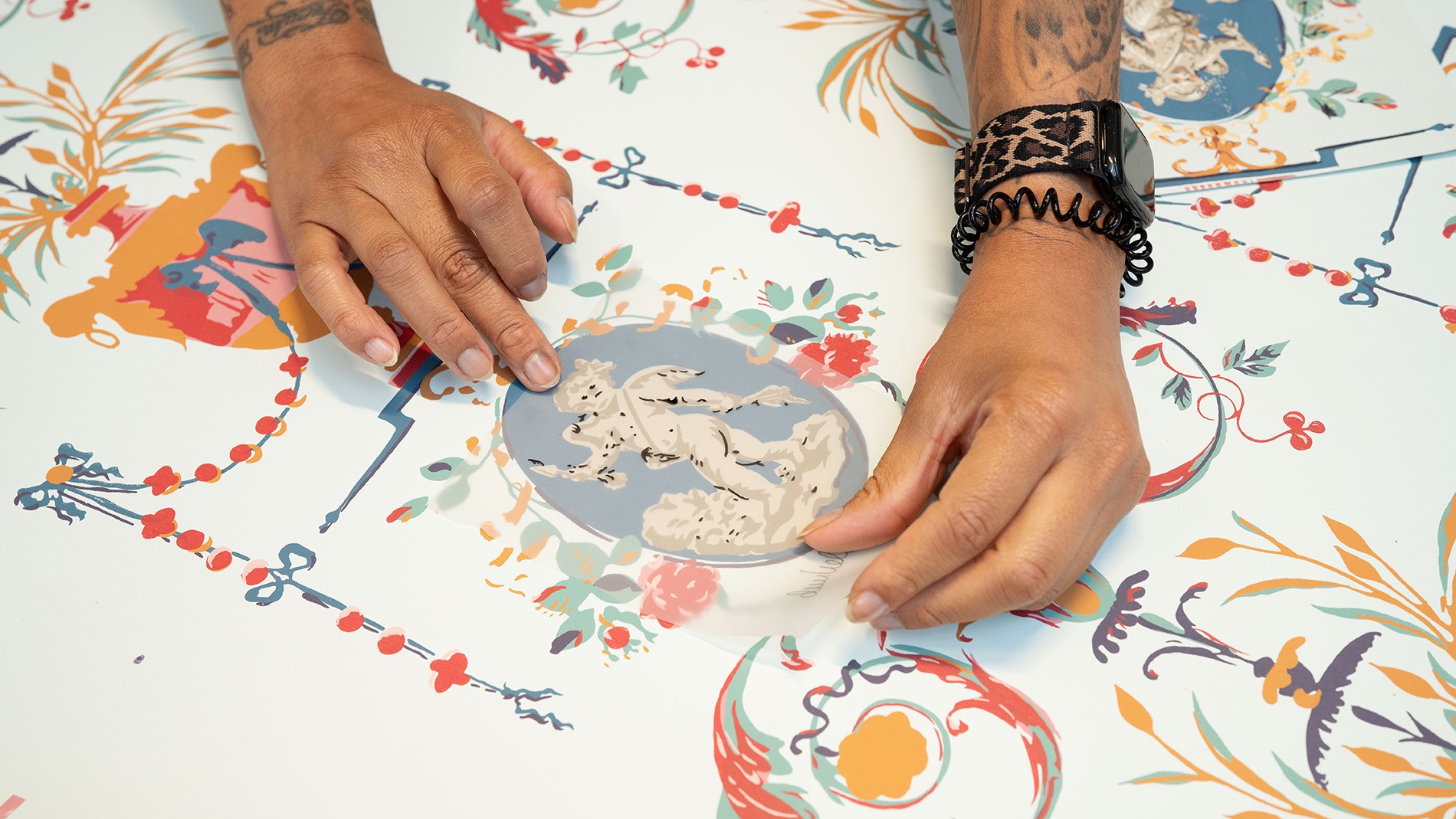
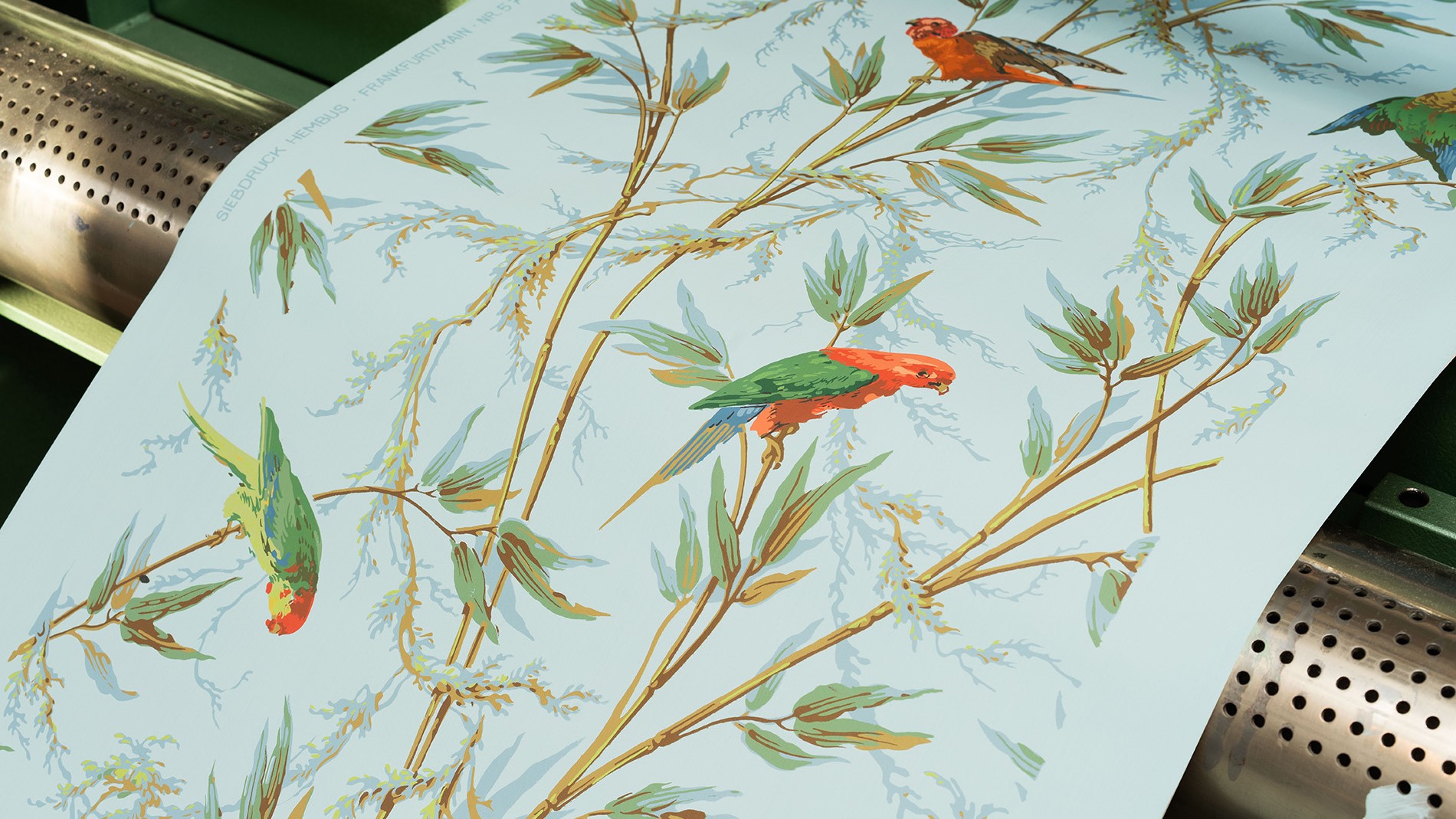
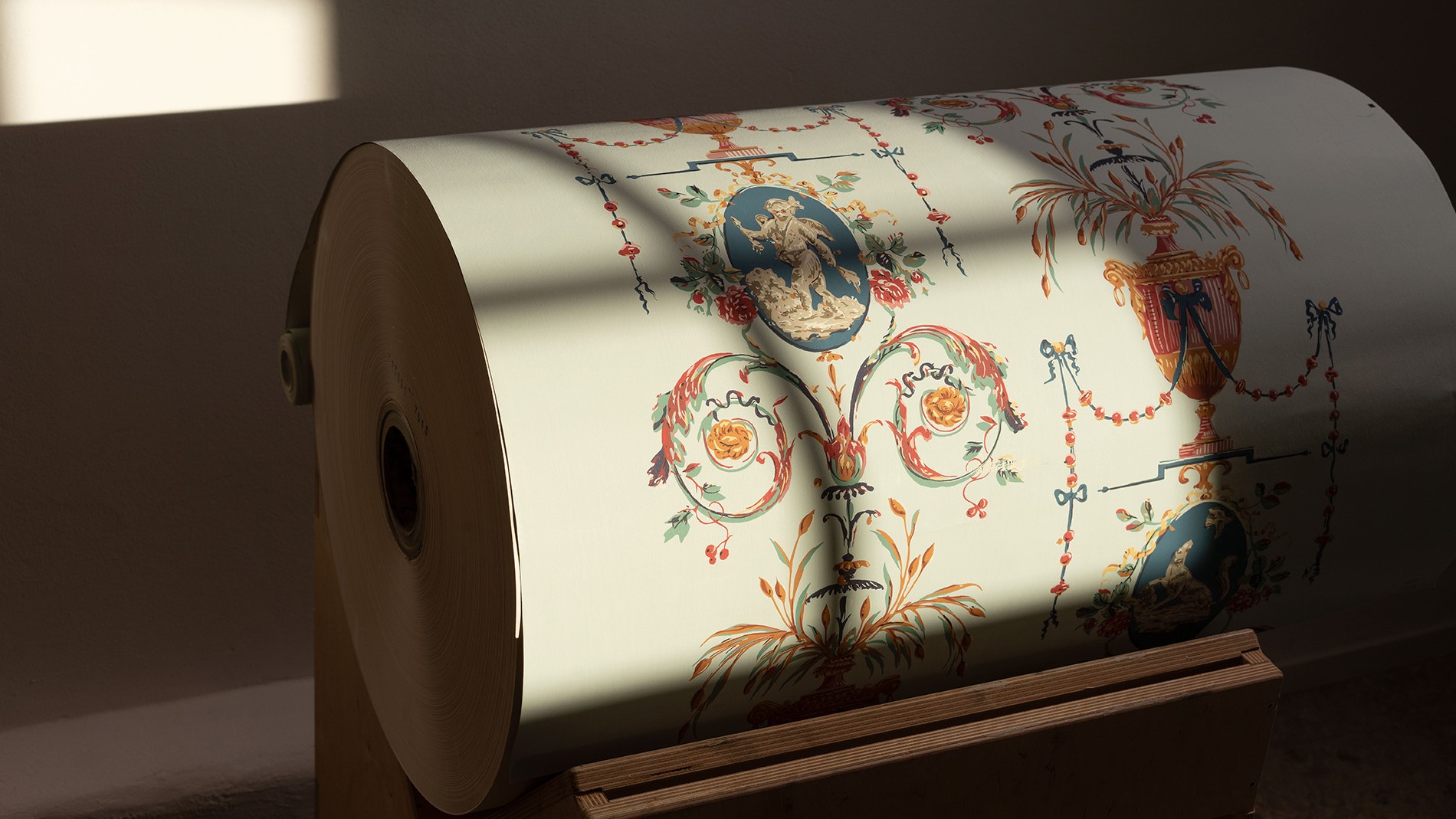
When people think of wallpaper today, they generally picture industrially manufactured products: digitally or rotary printed, dimensionally stable, available at short notice and in large volumes. Hembus deliberately takes a different approach. Each wallpaper is created in a historic farmstead in Groß-Bieberau using traditional screen printing – colour by colour on genuine paper. It is precisely this production method that shapes the character of the surfaces. Each colour is applied separately, creating its own layer. This produces depth, tactility and a material quality that can scarcely be achieved with industrial printing processes.
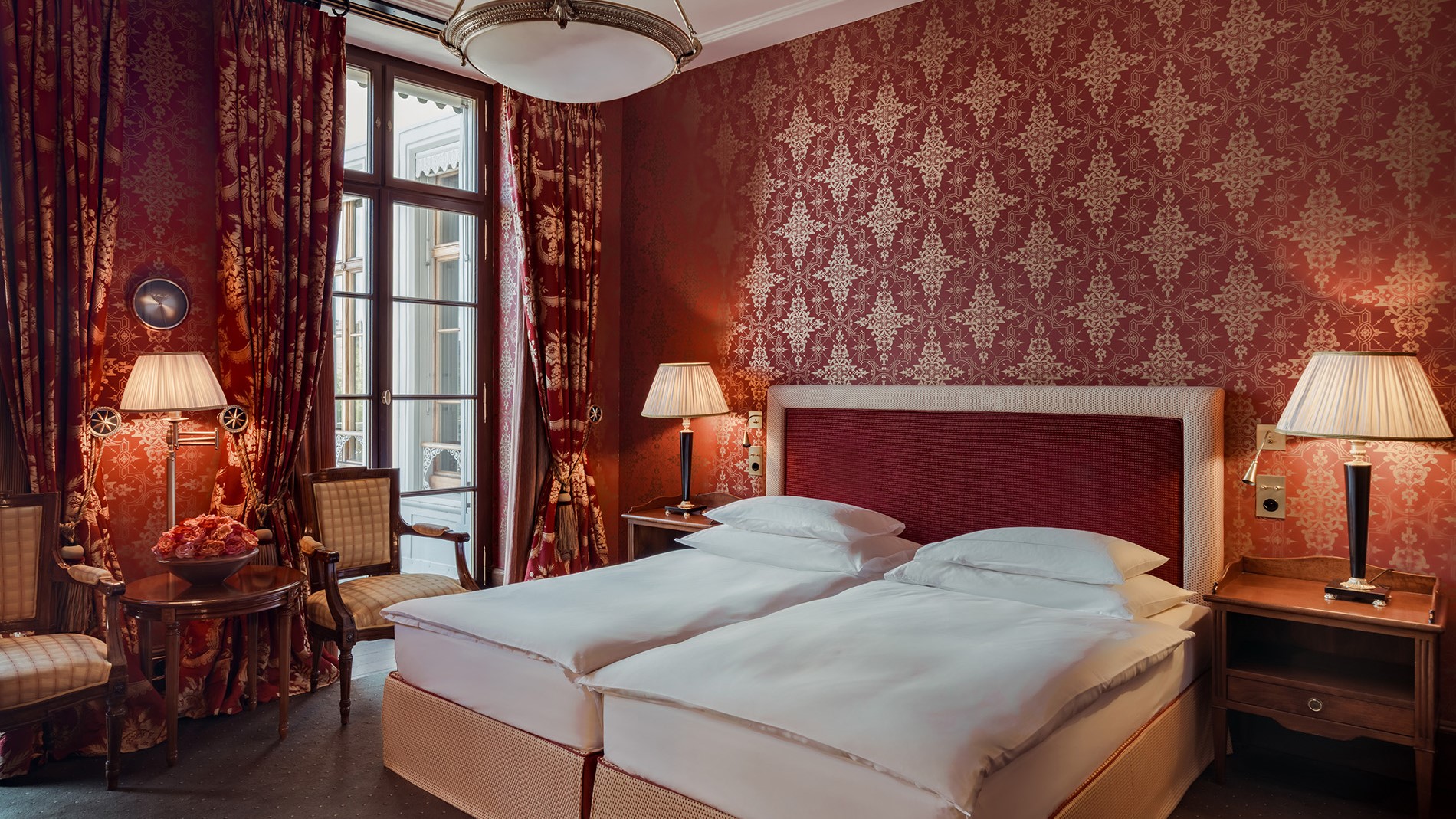
A material that plays its part
At Hembus, paper is more than simply the carrier for the design. It determines the entire process. It expands, contracts and changes in dimension depending on temperature and humidity. Each batch behaves slightly differently. The exact repeatability that is standard in industrial production is therefore hardly possible. Yet it is precisely these characteristics that give the finished wallpaper its character. The lengths do not appear as perfectly smooth, reproduced surfaces; they reveal that paint has genuinely been applied. Depending on the design, the surface can be matt or glossy, delicate or textured, metallic or even flocked.
Sourcing suitable paper grades is not straightforward, however. There are now very few manufacturers able to supply the required quality, while the quantities needed fall below the usual production volumes of the paper industry. The company searched for months before finally finding a manufacturer capable of delivering the necessary quality. “Even if the minimum order quantity will probably be enough to last us for the next ten years,” Held says with a wink.
The managing director nevertheless has no interest in switching to non-woven substrates. Paper can be drawn around curves, adapted to uneven surfaces and contributes to an atmosphere that is difficult to capture in technical specifications.
A heart beating since 1952
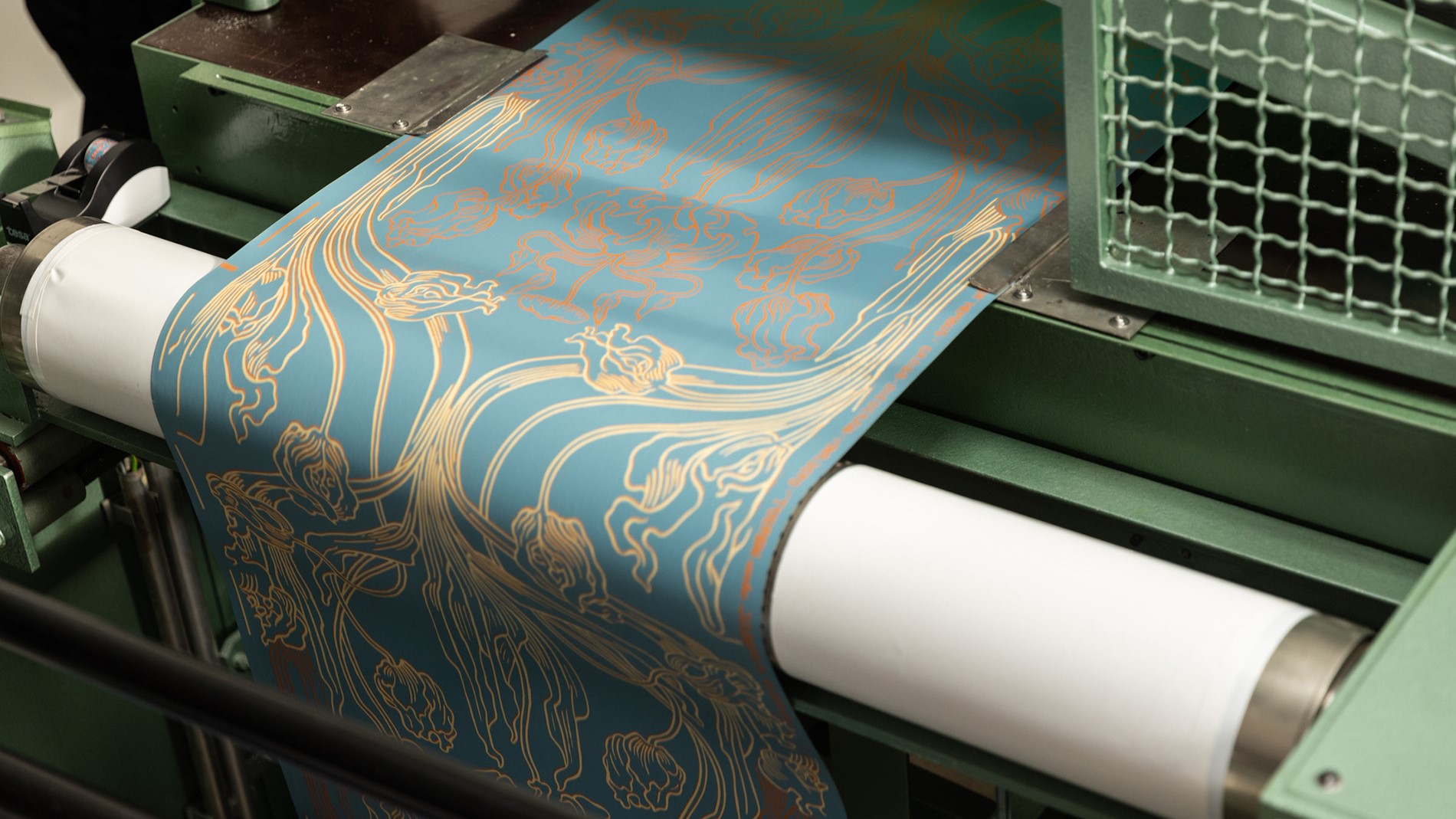
At the centre of production is a screen-printing machine built in 1952. According to the workshop’s records, “Julius” was developed by Willy Messerschmitt to reconstruct wallpapers for Frankfurt’s Goethe House after it was destroyed during the war. A second example survives in a Munich museum archive. In Groß-Bieberau, by contrast, the machine is still in operation. “Julius is the centre around which everything revolves here,” says Held. Developed for bespoke small-batch production, the machine makes it possible to adapt ink application, layer thickness and print effect to historic references.
Up to 75 passes may be required for a particularly elaborate wallpaper. After each print, the length is rewound by hand and passed through the machine again. Some productions take months.
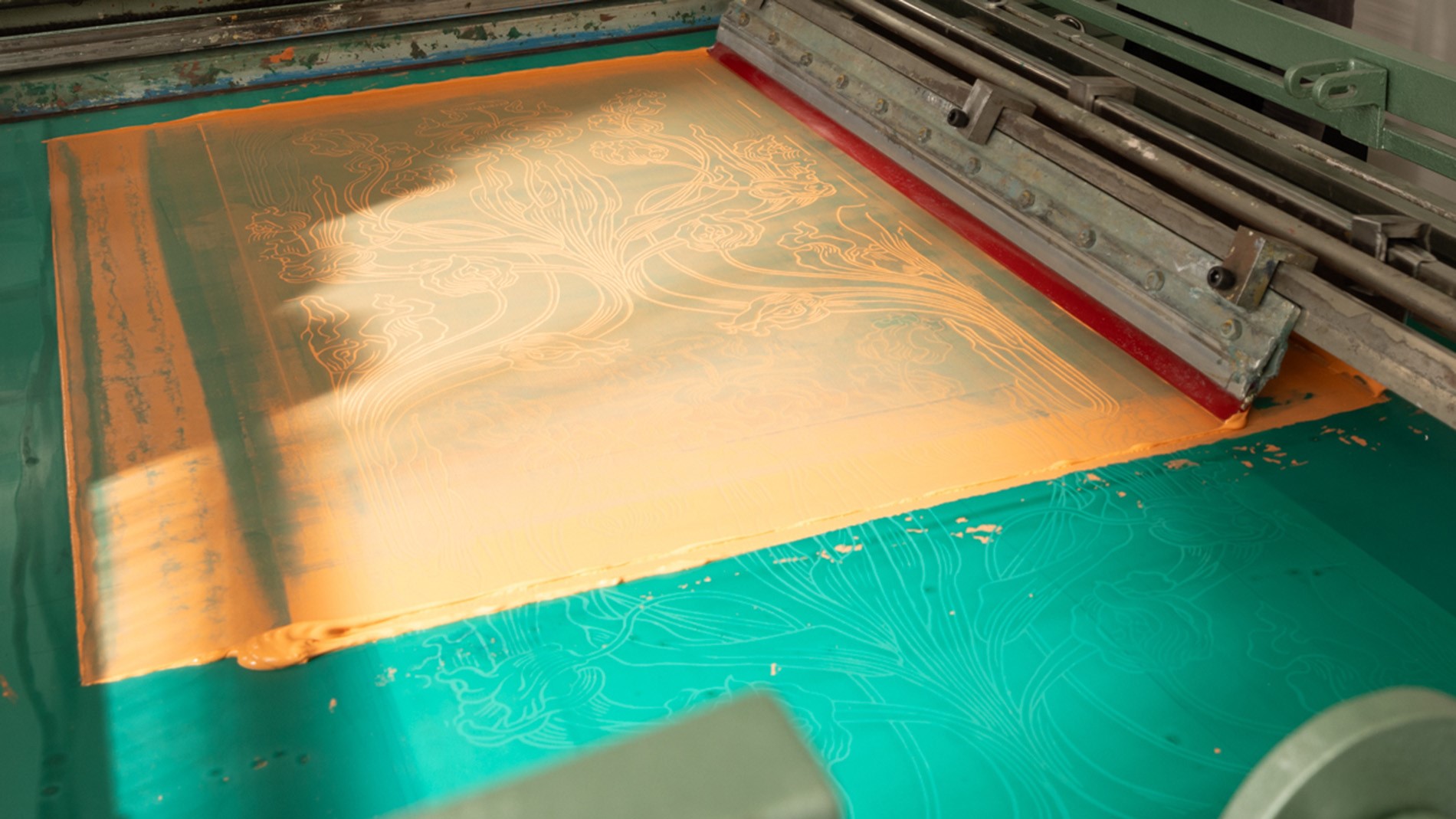
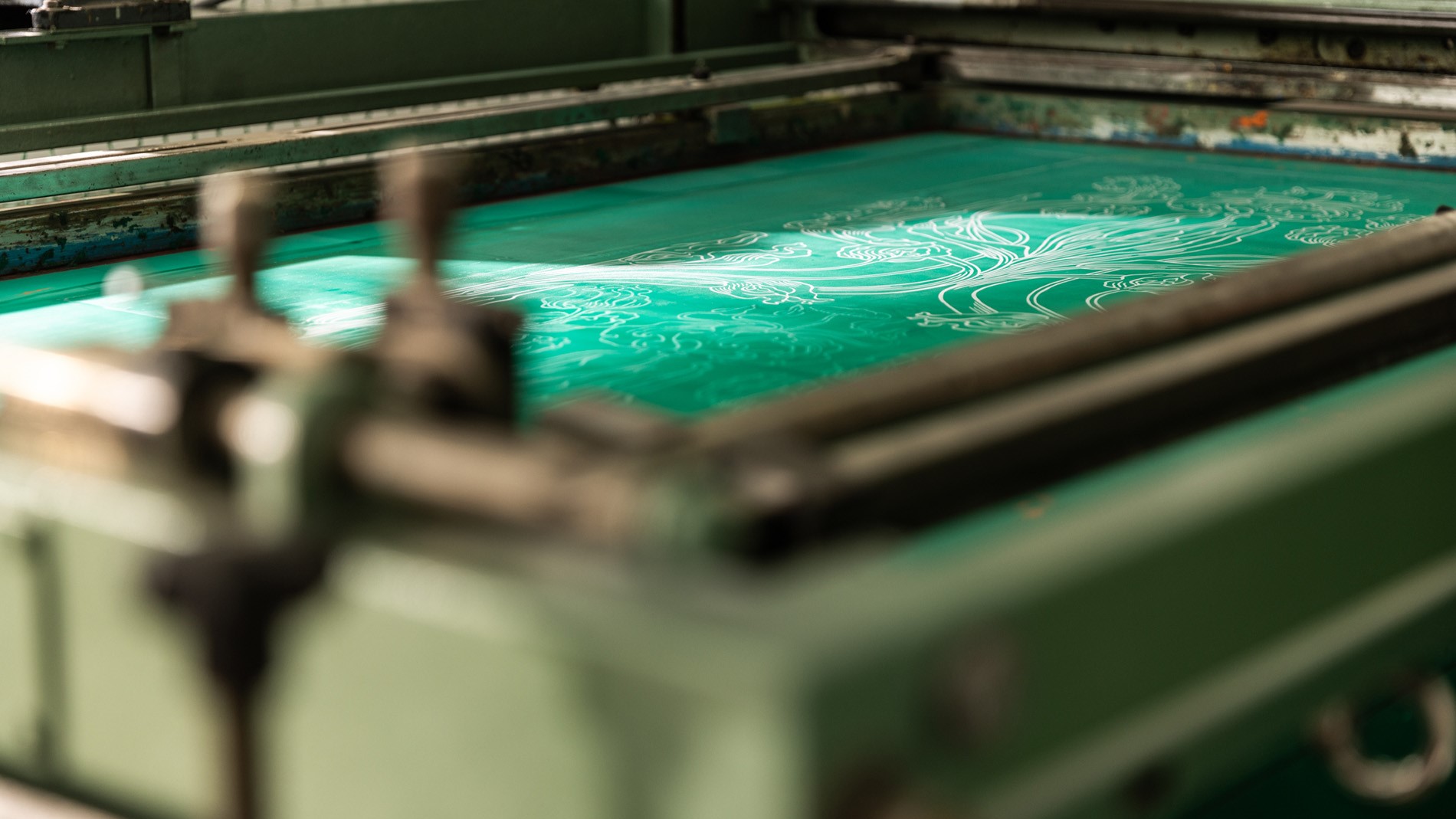
Much of what makes “Julius” special cannot simply be replaced. When a new vacuum roller was needed, an employee drilled several thousand holes by hand into a steel tube because no machinery manufacturer could supply the required part. Fine adjustment also follows robust principles: the most frequently used tool is a hammer, Held says with a smile. Experience and a feel for the machine are what matter.
From fragment to new wallpaper
Hembus’ roots date back to 1894. Since 2023, the wallpaper atelier has been part of Steuernagel & Lampert, a long-established craft business specialising in heritage conservation, restoration and high-quality surfaces. The acquisition involved more than a change of ownership for the brand and machine. Within just a few months, around 12.8 tonnes of wallpaper stock, hundreds of screens, machine parts, slides and historic fragments had to be secured, documented and relocated. The extensive archive is still being systematically reviewed and catalogued today. One member of staff is dedicated solely to this task.
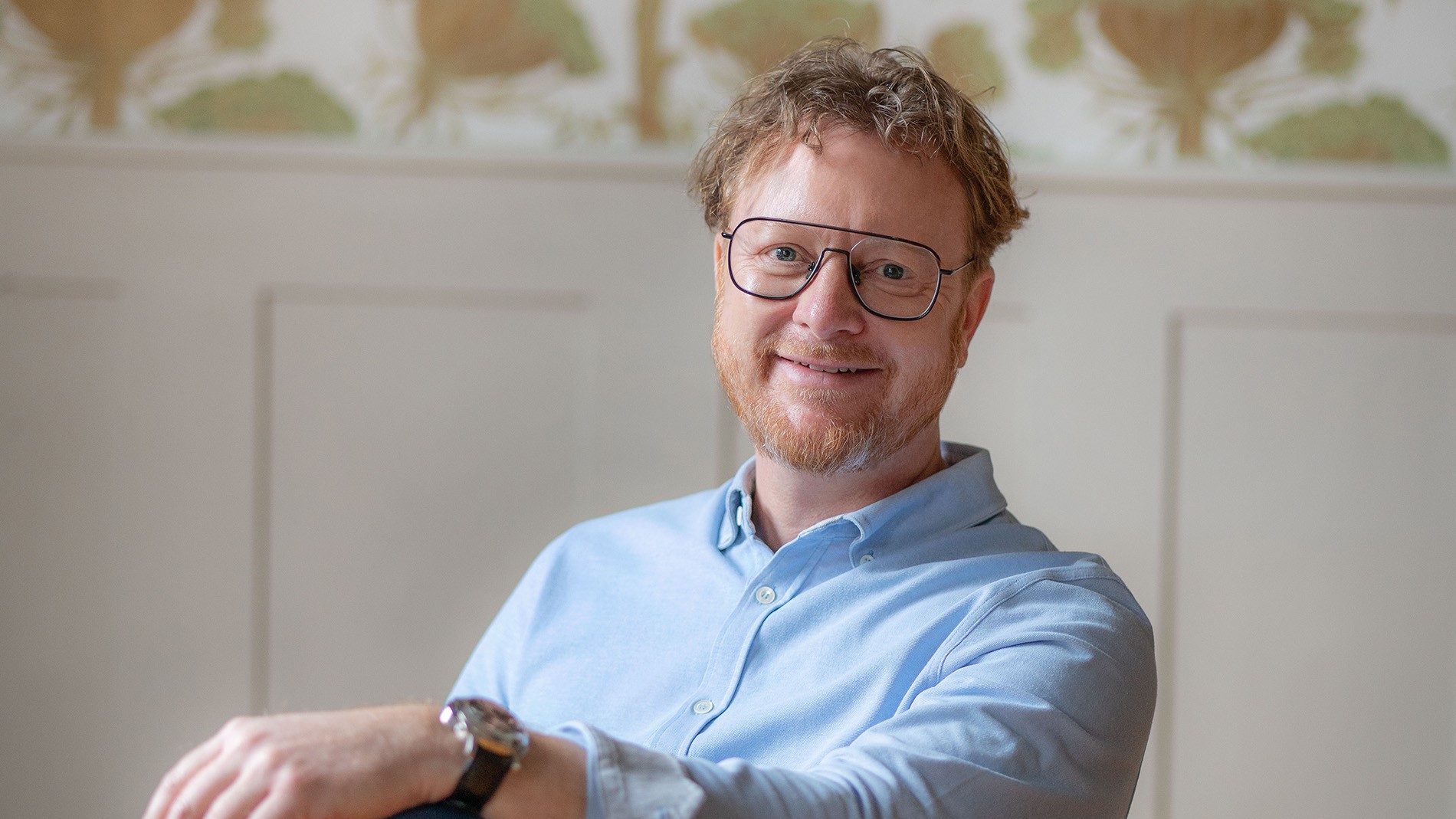
For Held, this was no ordinary company acquisition. It was also about preserving a rare craft and knowledge built up over generations. “Tradition does not mean freezing something in time; it means carrying it forward in a way that ensures it remains meaningful tomorrow,” he explains.
The archive comprises more than 800 historic and contemporary designs, as well as original fragments – in some cases the only surviving evidence of earlier wall decorations. These include references that have never been reconstructed and Asian paper cuttings that may date back to the 17th century.
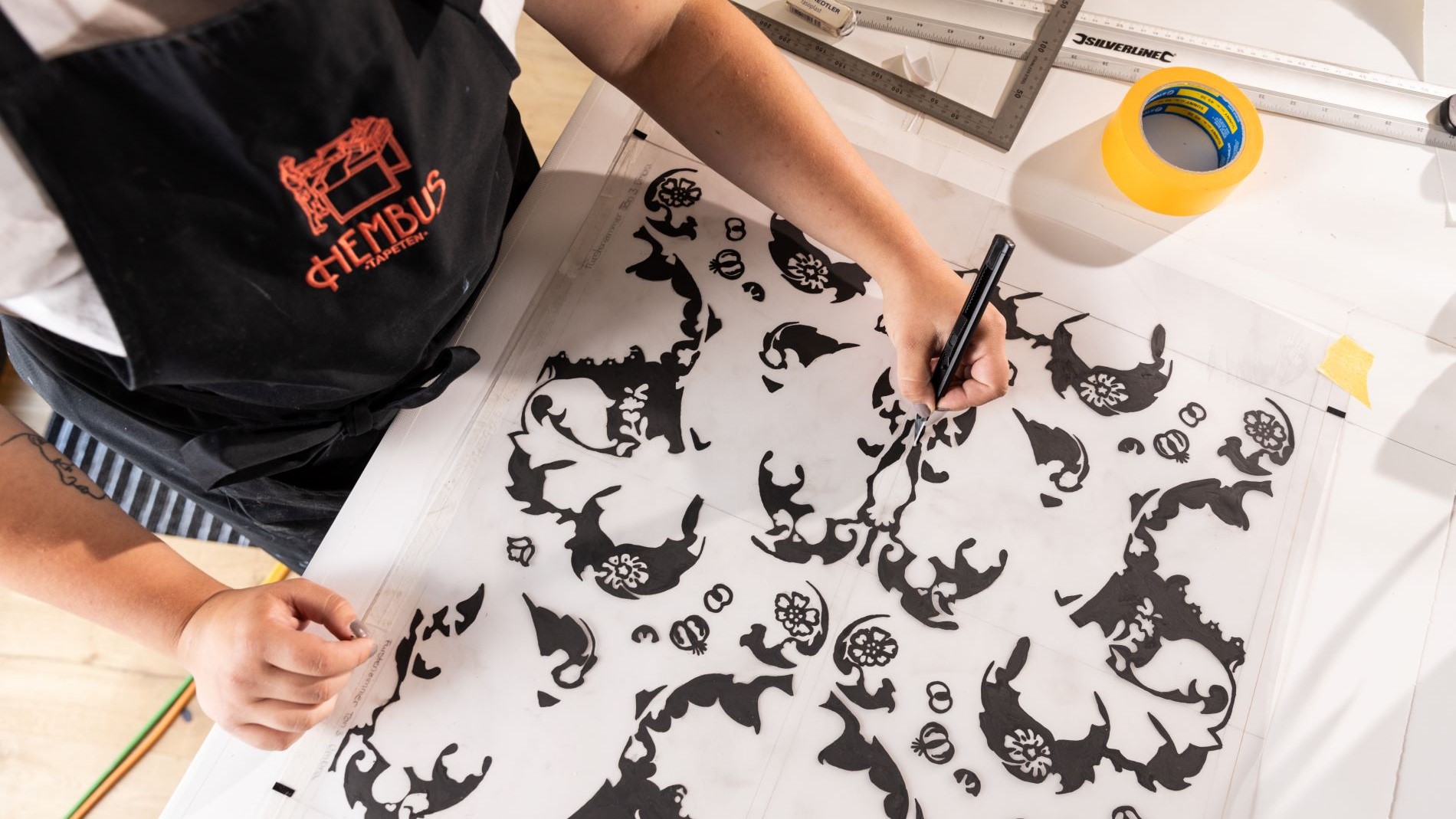
When a reconstruction begins, it therefore starts with detective work: what fragments, photographs or old rolls exist? What was the size of the repeat? Which colours, paper and printing techniques were used? The artwork and colour separations are then created by hand. The forms are transferred onto film with brush and ink, the screens are exposed, test prints produced and the colours matched.
The aim is not a superficial copy. Historic forms have their own visual language. A line printed with a carved block ends differently from a digitally constructed line. The knowledge required – spanning restoration, ecclesiastical painting, art history and material expertise – is not acquired overnight, but developed over decades.
Tradition as a starting point
Historic reconstructions remain an important part of the work. Yet the future of wallpaper does not lie solely in repeating the past. The archive also serves as a starting point for new colourways, artists’ editions and bespoke designs.
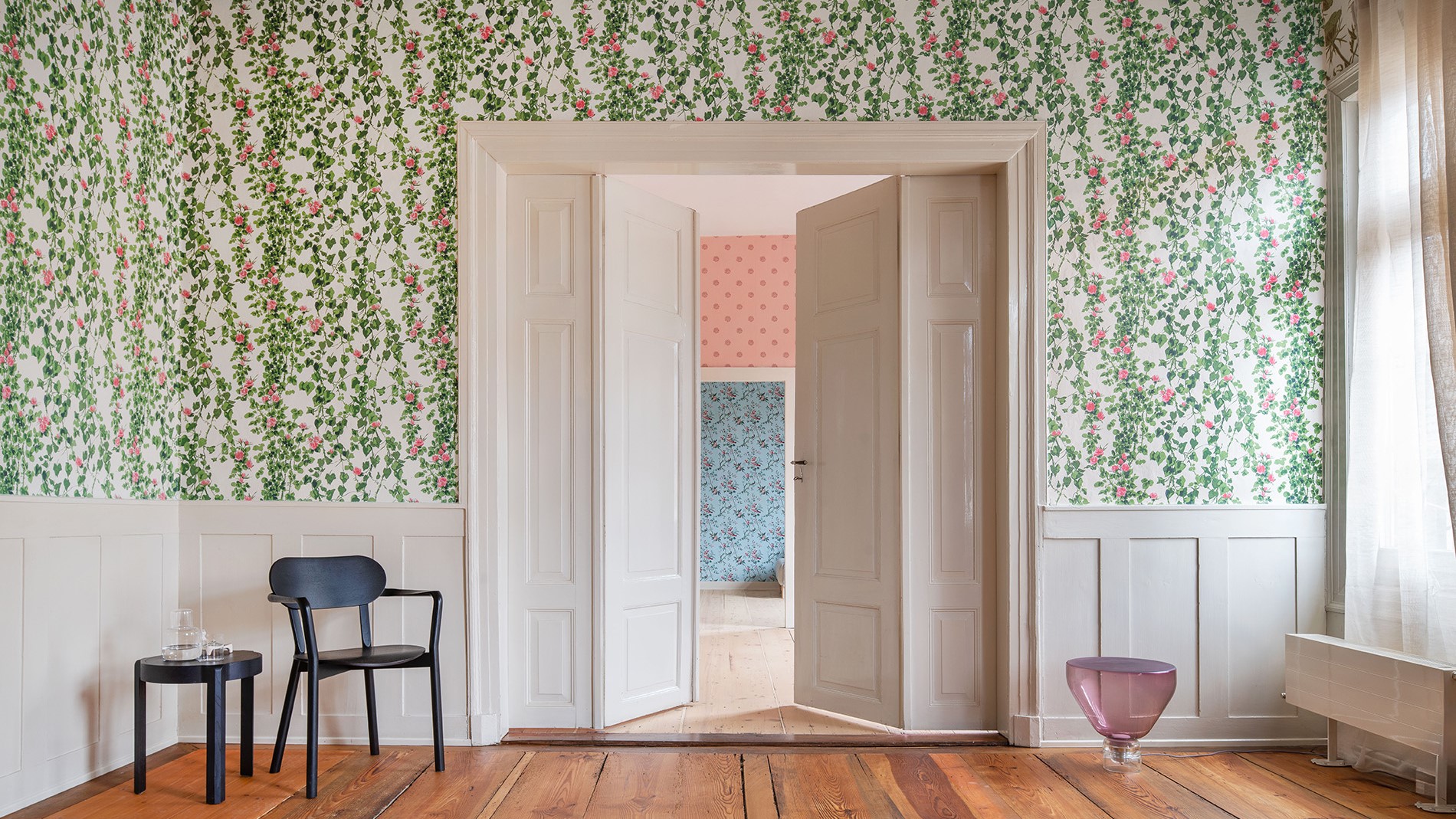
The extent to which colour can transform the effect of a pattern is illustrated by a project for an apartment on New York’s Park Avenue. At the request of an architecture practice on Fifth Avenue, a vine motif originally rendered in mustard, beige and brown was reinterpreted in pale blue tones. The pattern remained, but the character of the wallpaper – and therefore of the entire room – changed fundamentally.
Designers and interior architects are increasingly seeking out precisely these possibilities, Held reports. Rather than selecting from a finished catalogue, they want to create a specific spatial atmosphere. Screen printing allows colours to be mixed individually, existing patterns to be reinterpreted and original designs to be realised in small batches.
“For me, there is nothing more exciting than when someone says: I would like something that does not yet exist,” says Held. Experience in restoration helps to translate others’ ideas precisely: the executor’s personal taste is not the focus, but rather the intended effect of the design.
Between archive and market
While the conventional wallpaper market has been under pressure for years, Hembus operates by its own rules. “We are not a factory; we are a manufactory,” managing director Jörg Held puts it succinctly.
“We do not think in terms of seasonal collections or short lead times, but in individual projects. Consultation and craftsmanship are at the heart of what we do.”
An order begins with consultation, often followed by test prints and a so-called fahne – a production sample that enables customers to assess the colour, sheen and overall appearance. “Our ambition is to create something exceptional that people can identify with,” says Held.
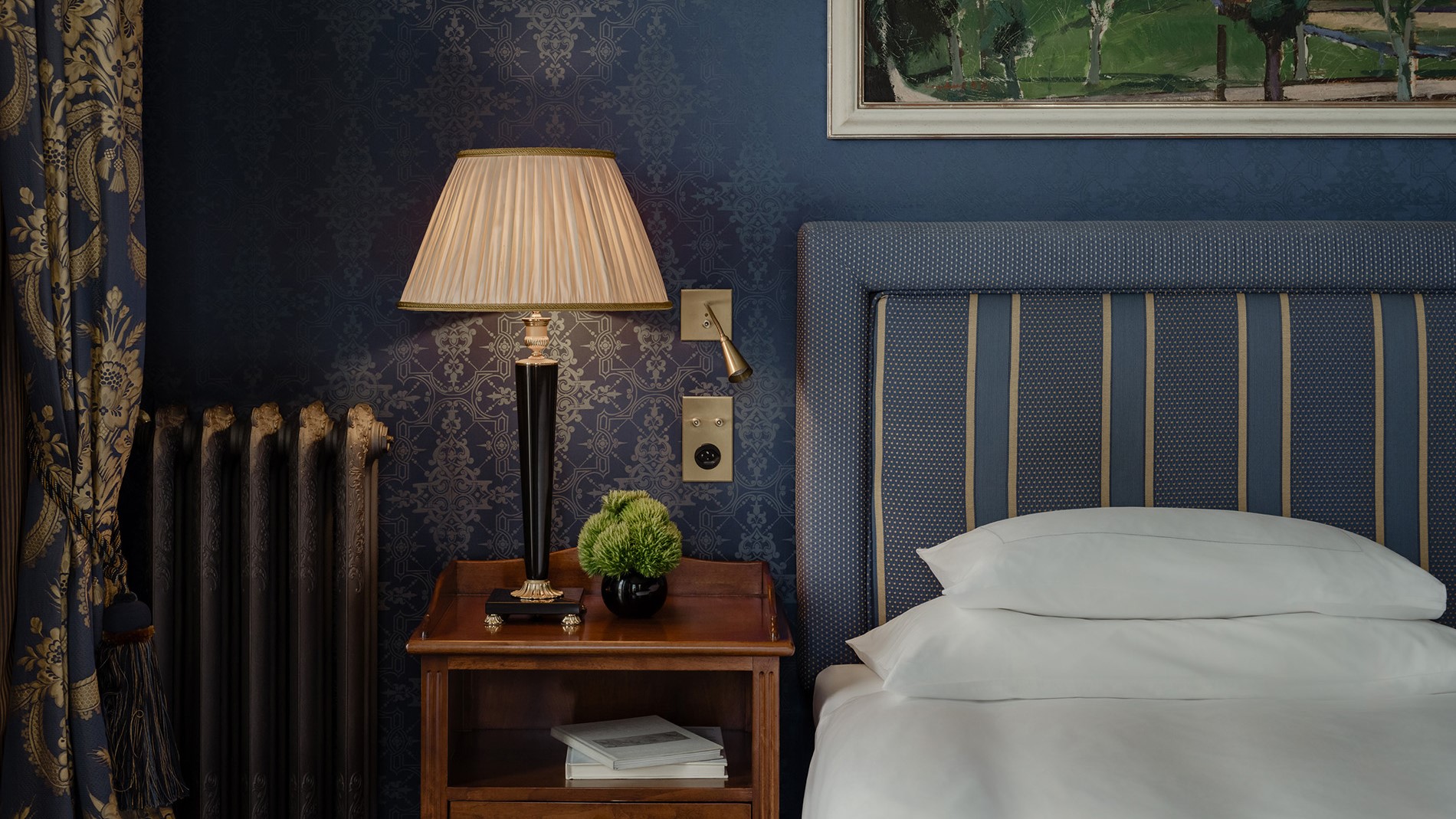
Clients include museums, palaces, hotels and film studios, as well as conservators, interior architects, designers and private clients. Not every project involves an entire wall. Increasingly, individual lengths are used as accents, to highlight niches or framed like artworks. Wallpaper thus becomes a design element in its own right – not simply a wall covering.
At Heimtextil in January, interest in handcrafted surfaces was clear. Numerous designers sought contact with the atelier. At the same time, Held reflects, it became apparent how difficult such a product is to fit into conventional distribution structures. Retailers expect predictable delivery times, whereas screen printing on paper follows its own rhythm.
A matter of conviction
This is precisely where Hembus’ distinctiveness lies. The atelier preserves historic techniques not for their own sake, but develops them further. Historic patterns are reconstructed, reinterpreted and adapted to contemporary spatial concepts. The craft remains visible in the result: no two lengths are identical down to the last detail. What would count as a flaw in industrial production gives the product its character. “Good design is and remains good design, regardless of when it was created,” says Held. He considers creating new patterns merely for the sake of novelty to be the wrong approach. What matters are proportion, colour and a design that does not lose its impact over the years.
This conviction is intended to shape the future, too. Traditional screen printing on paper, the reconstruction of historic references and individual colour design will remain the foundation. At the same time, Held aims to develop Hembus carefully through new collections, artists’ projects and closer collaboration with architects and designers. The atelier is also set to become more visible again internationally and in the high-end interiors sector.
“We want to develop Hembus further, but not dilute it.”
This may also point to a future for wallpaper. In a market where motifs have quickly become interchangeable, authenticity, craftsmanship and traceable materials are gaining renewed importance. Perhaps that is its greatest strength: not chasing every trend, but creating spaces with character that endure.
Cover photo by Ingmar Kurth