
Reading time: 3 minutes
In the context of a globally expanding circular economy, the efficient processing of textiles is becoming strategically critical. Autonomous AI-guided sorting systems combine artificial intelligence, robotics, computer vision and digital twins to enable more efficient material flows.
For decision-makers in the interiors and contract sectors, as well as manufacturers and recyclers, this represents a fundamental shift: textiles are no longer simply recycled, they are intelligently reintegrated into the cycle.
Market and innovation pressure
Stricter legislation on producer responsibility, rising collection volumes and the growing demand for high-quality material recovery are increasing the pressure to innovate.
According to P&S Intelligence1, the global textile recycling market reached approximately USD 5.7 billion in 2024 and is projected to grow to around USD 8.6 billion by 2032.
In addition, a recent DataIntelo study2 estimates the AI-based textile waste sorting market at around USD 1.24 billion in 2024, with a compound annual growth rate of nearly 18.7 % through 2033.
Sorting technologies are therefore becoming a central component of a viable circular economy.
AI-based material classification
At the core of autonomous sorting systems lies artificial intelligence and image processing: Hyperspectral imaging and machine learning models enable real-time identification of fibre types (such as cotton, polyester and blends) as well as colour classification. Current scientific findings already demonstrate high classification accuracy.
In practice, textile items pass through optical scanning modules, are classified by AI and then precisely separated into material and colour groups using robotic systems.
The result: precise separation, significantly reduced error rates and consistent process quality.
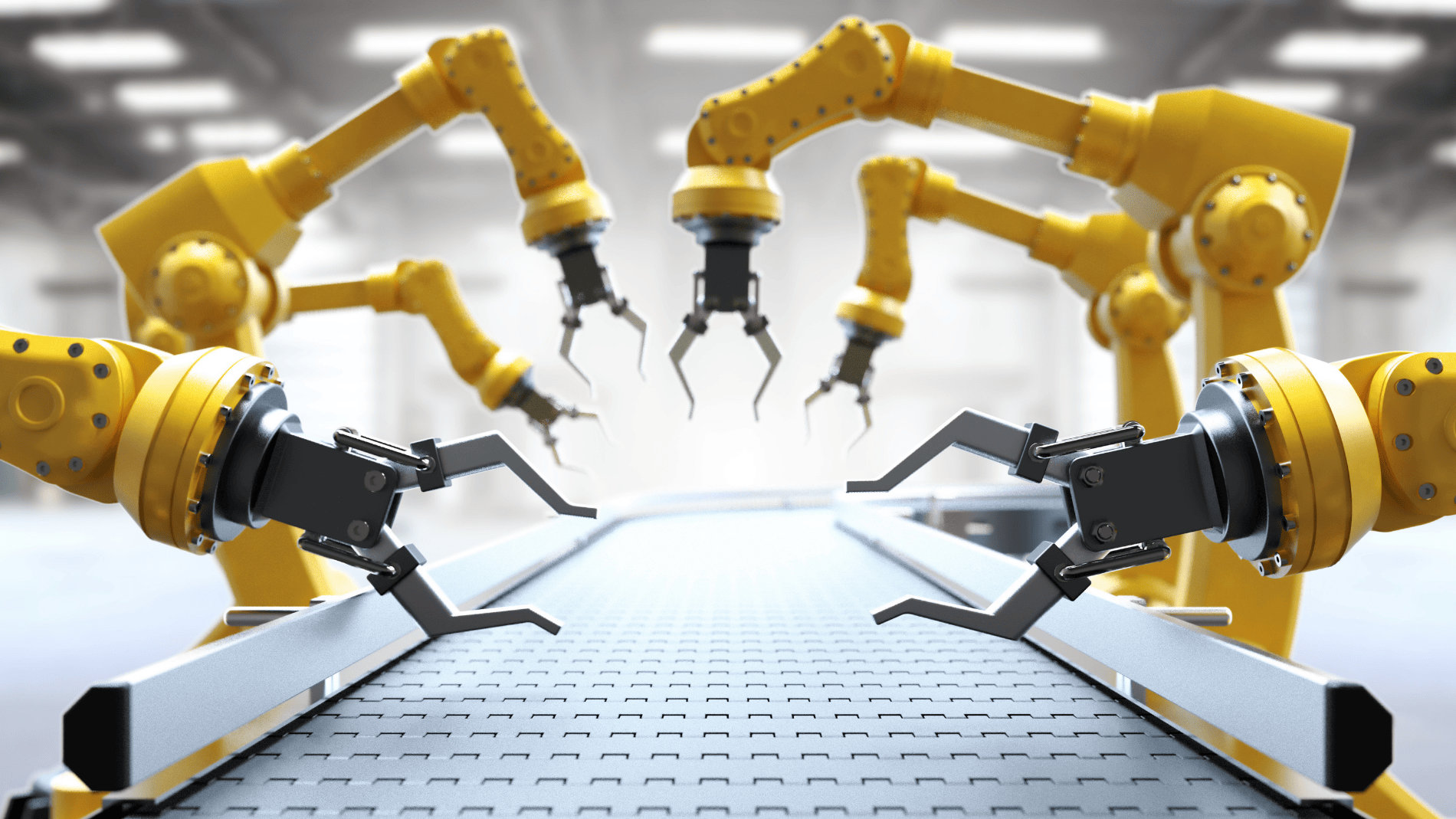
Compared to conventional conveyor-based or semi-automated systems, robotic sorting can increase by up to 60 % while reducing energy consumption and manual intervention. At the same time, adaptive learning processes enable continuous optimisation: systems independently detect material variations and dynamically adjust their sorting and gripping strategies – a key advantage for industrial scalability.
Digital twins and simulation
Digital twins add a data-driven control layer to textile recycling. These are digital replicas of real-world sorting facilities that reflect all sensor, image, and production data in real time. Processes can be simulated, bottlenecks identified early and maintenance cycles can be planned proactively (“predictive maintenance”).
Fraunhofer IOSB employs digital twin approaches in recycling and sorting projects (including the Waste4Future project3 & MODAPTO project4). Siemens also demonstrates the use of digital twins in fiber production (Lenzing)5, underscoring their applicability to textile value creation and recycling processes.
The result is an adaptive system that continuously improves physical processes and enables data-driven decision-making.
Economic viability and scalability
While initial investments are significant, long-term efficiency gains clearly outweigh the costs. Higher purity levels of recovered fibres increase material value, while labour and operating costs decline.
Pilot projects show up to 40 % reduced process costs alongside higher yields. In addition, funding programmes such as Horizon Europe and the Innovation Fund are facilitating access to digital recycling solutions, particularly for SMEs.
Automation is thus becoming not only environmentally necessary but also economically.
Integration into existing recycling networks
Existing facilities can be progressively digitalised by first integrating optical recognition systems and AI modules into current conveying and sorting lines. Via IoT interfaces and cloud-based data platforms, these systems can then communicate with existing material management systems.
A key success factor is data harmonisation: AI systems must support common data standards (e.g. ISO 22095 for chain of custody) and interface formats. This allows, for example, a digital material passport to be generated automatically and shared across the network.
Integration typically takes place via modular retrofit solutions. These systems enhance existing facilities rather than replacing them. Research institutions such as Fraunhofer ICT, as well as initiatives like ReHubs Europe6, demonstrate that the combined use of sensor technology, AI and digital twin simulation enhances existing processes in real time without disrupting operations.
For operators, this means that the transition to an intelligent circular economy can be implemented step by step, without the need for complete system replacement.
Conclusion
Autonomous AI-powered sorting systems represent a significant step forward in the development of the textile circular economy. They combine artificial intelligence, robotics and digital twins into an integrated system, that make sorting processes more transparent, efficient and scalable.
For manufacturers, recycling companies and planners, this opens up a future field that aligns environmental responsibility with industrial economic viability.
FAQ
What are Autonomous AI-Guided Textile Sorting Systems?
These systems combine artificial intelligence, robotics and image processing to automatically detect, classify and sort textile waste. They analyse fibre type, colour and material composition in real time to enable precise separation for high-quality recycling. In this way, they lay a new foundation for a truly circular economy.
How does AI-based fibre and colour classification work?
Hyperspectral cameras capture the material to be recycled. Machine learning models analyse and process the data. The AI identifies fibre types such as cotton or polyester, as well as colour groups, and directs sorting via robotic grippers. This significantly increases the purity and value of recycled materials.
How can AI-based sorting systems be integrated into existing recycling processes?
Through modular retrofit solutions, where existing facilities are enhanced with AI and sensor modules are connected to data platforms via IoT interfaces. This enables digital tracking of material flows without fully replacing existing processes.
1 https://www.psmarketresearch.com/market-analysis/textile-recycling-market-report
2 https://dataintelo.com/report/textile-waste-sorting-ai-market
3 https://www.iosb.fraunhofer.de/en/press/press-releases/2025/efficient-recycling-use-plastic-waste-streams.html
4 https://www.iosb.fraunhofer.de/en/projects-and-products/modapto-modular-manufacturing-digital-twins.html
5 https://www.siemens.com/en-us/company/insights/lenzing-tencel-production-plant-digital-twin/
6 https://www.rehubs.eu/