
Reading time: 7 minutes
Germany’s oldest professorship in textiles, textile bicycle spokes and crane ropes, as well as the world’s oldest still active manufacturer of circular knitting machines, all bear witness to the fact that the city’s textile expertise extends far beyond its industrial past. Chemnitz also recently gained additional international attention as European Capital of Culture 2025.
TU Chemnitz: Two professorships, one textile legacy
The Capital of Culture year concluded in November 2025 with a major closing ceremony attended by around 36,000 people. Many are now asking: what remains of the Capital of Culture year? In addition to approximately two million visitors from near and far, there appears to be a new awareness of the former industrial metropolis. The news magazine Der Spiegel, for instance, asked whether Chemnitz might be “Germany’s most underrated major city”1. In its review of international coverage, the public broadcaster MDR noted that the epithet “Saxon Manchester” in particular had made an impression – a reference to the city’s centuries-old textile tradition.2
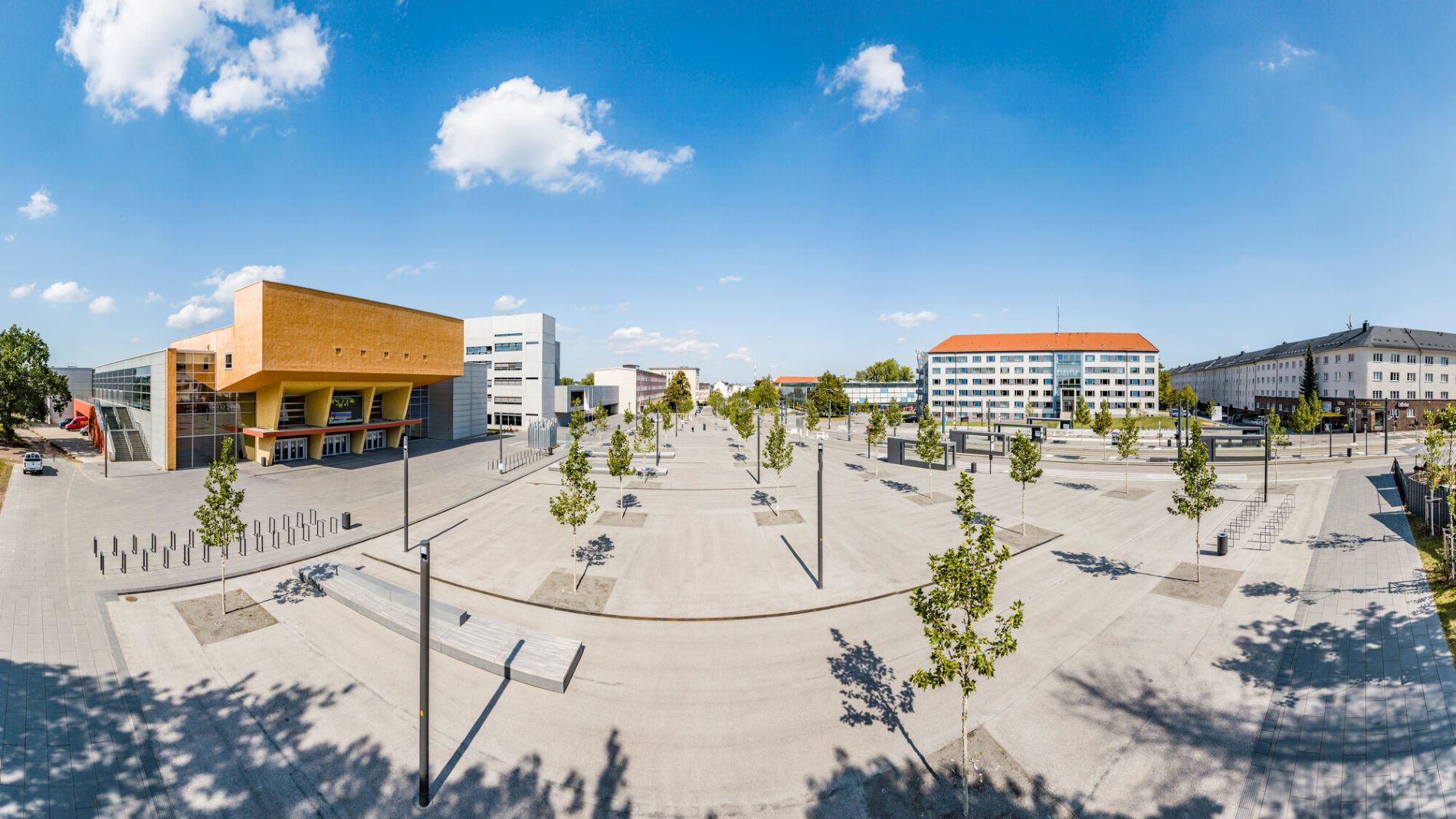
This tradition also lives on at Chemnitz University of Technology (TU Chemnitz). With more than 8,400 students from 94 countries, it is one of Germany’s most international universities. The Faculty of Mechanical Engineering in particular is closely interwoven with the city’s textile history. When the institution was founded in 1836 as the Royal Trade School – from which TU Chemnitz later emerged – mechanical engineering was already part of the curriculum. At the heart of German textile machinery manufacturing, engineers were needed to design the weaving, knitting and spinning machines that were exported from Chemnitz to the world. Today, two professorships at TU Chemnitz in particular are continuing this textile legacy.
“Chemnitz is the textile capital of Europe”
The Professorship of Textile Technologies, the oldest of its kind in Germany, is based here. Its roots date back to the early nineteenth century. Although the chair was closed in 1996, it was revived in 2014 under the leadership of Professor Holger Cebulla. Reflecting on the interruption, Cebulla explains: “Following reunification, the textile industry in eastern Germany collapsed dramatically within just a few months.” The closure of the chair was a direct consequence. Its revival formed part of a structural and innovation programme. “We started out as a team of two; today we are 30,” says Cebulla. He welcomes the international attention Chemnitz received during the Capital of Culture year: “After all, we do not live in just any city, but in the textile capital of Europe.”
Internationality is part of everyday life at the professorship: students and textile researchers come from countries including China, India, Ethiopia, Syria and Ukraine. Research ranges from conventional apparel to high-performance carbon textiles and the utilisation of natural fibres such as hemp for wind turbine applications. An “Open Wool Lab” dedicated to circular economy approaches aims to establish local value chains from raw material to finished garment, particularly for sheep’s wool. The “Textile Trainer”3 was also developed here as a response to the growing shortage of skilled labour in the textile industry. Funded by the EU, the digital learning platform offers free online courses covering both fundamental and specialised textile knowledge for education and professional development. Originally developed to safeguard skilled labour in Saxony’s textile industry, the portal is now used by thousands across the entire DACH region. “Even we were surprised by the high level of interest,” says Cebulla.
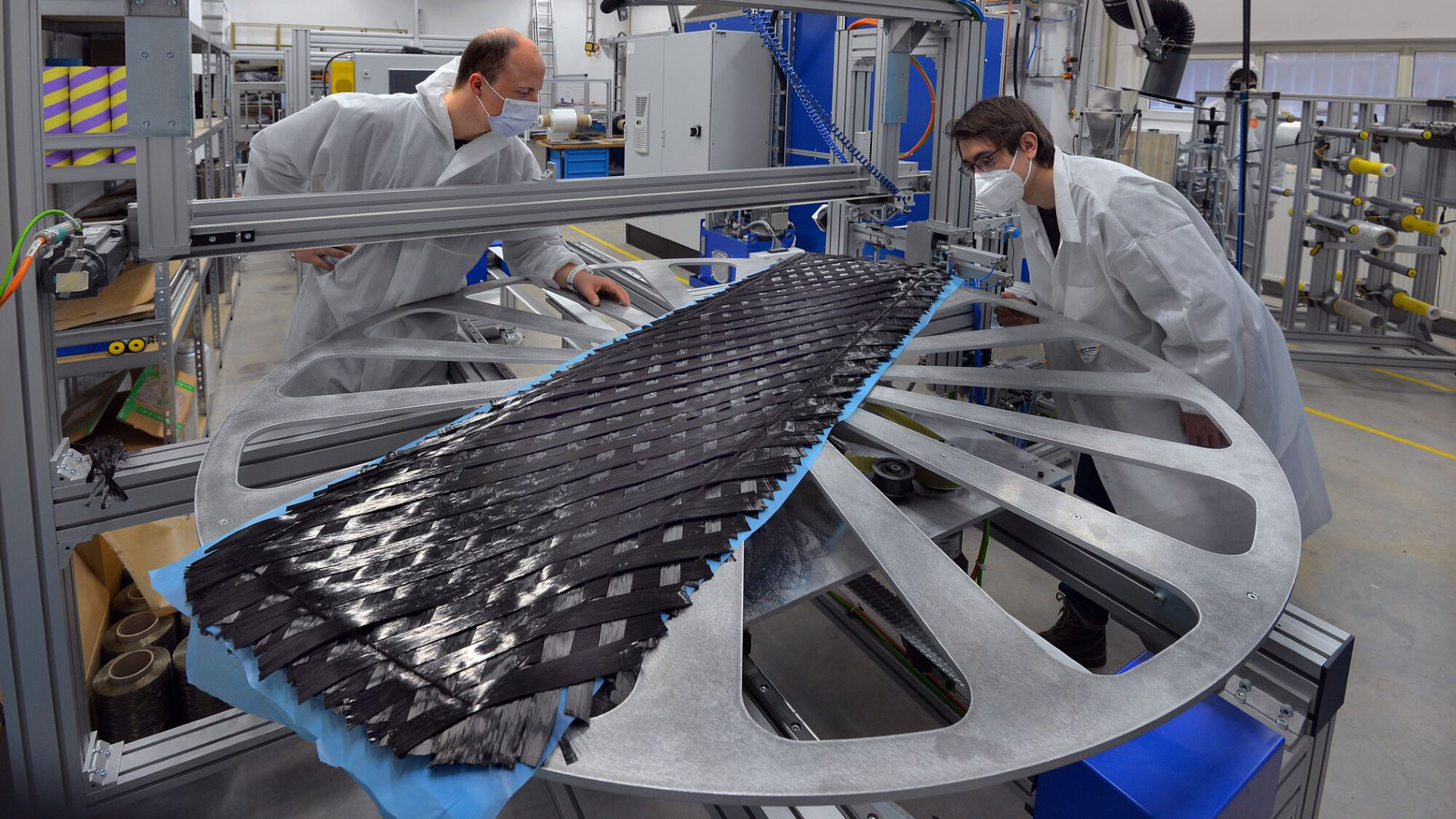
From the laboratory to the world: a textile start-up incubator
Applied textile research also plays a key role at the Professorship of Conveying and Material Flow Technology. Here, fundamental research is conducted into modern high-performance fibre ropes and textile traction and load-bearing systems, with the aim of developing lightweight and flexible alternatives to traditional materials such as steel. Research is generally carried out in close cooperation with industrial partners worldwide. The professorship not only advances the region’s textile heritage academically, but also translates it into viable business models. In recent years, numerous spin-offs have emerged, carrying forward the legacy of Saxon textile machinery manufacturing in new forms.
“Chemnitz may have lost the big names of historic textile machinery manufacturing, but the textile spirit of innovation remains,” says Dr Christoph Müller, head of a research group at the professorship. Two examples of this innovative spirit are the spin-offs Pi Rope and Trowis, both of which featured in the Capital of Culture exhibition “Textile? Future! 2025” at the Chemnitz Industrial Museum.
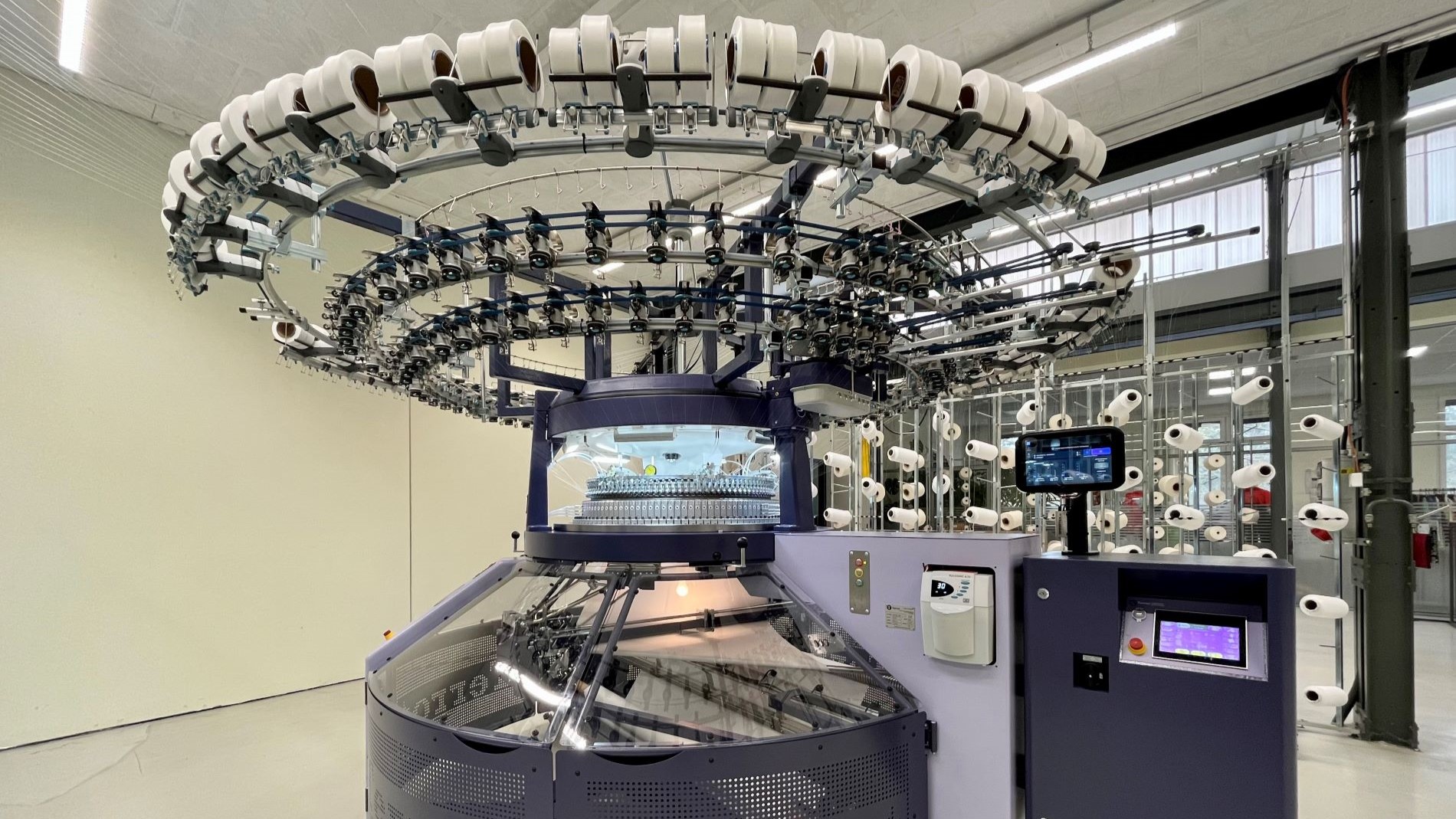
Terrot: where Chemnitz’s mechanical engineering tradition lives on
Traditional textile machinery manufacturing also remains very much alive in Chemnitz. One example is Terrot Textilmaschinen, the world’s oldest still active manufacturer of large-diameter circular knitting machines. Originally founded in 1862 in Bad Cannstatt, Baden-Württemberg, Chemnitz has served as the company’s development and production site since the 1990s. Following reunification, Terrot acquired the local Strickmaschinenbau GmbH Chemnitz, which had emerged from the former VEB Strickmaschinenbau/Kombinat Textima, thereby inheriting the textile legacy of three long-established local textile machinery manufacturers: Wirkmaschinenfabrik G. Hilscher (founded 1851 in Chemnitz), Strickmaschinenfabrik Seyfert & Donner (founded 1875 in Chemnitz and once Germany’s largest of its kind) and C.A. Roscher from Mittweida (a specialist in circular knitting machines from 1890 onwards).
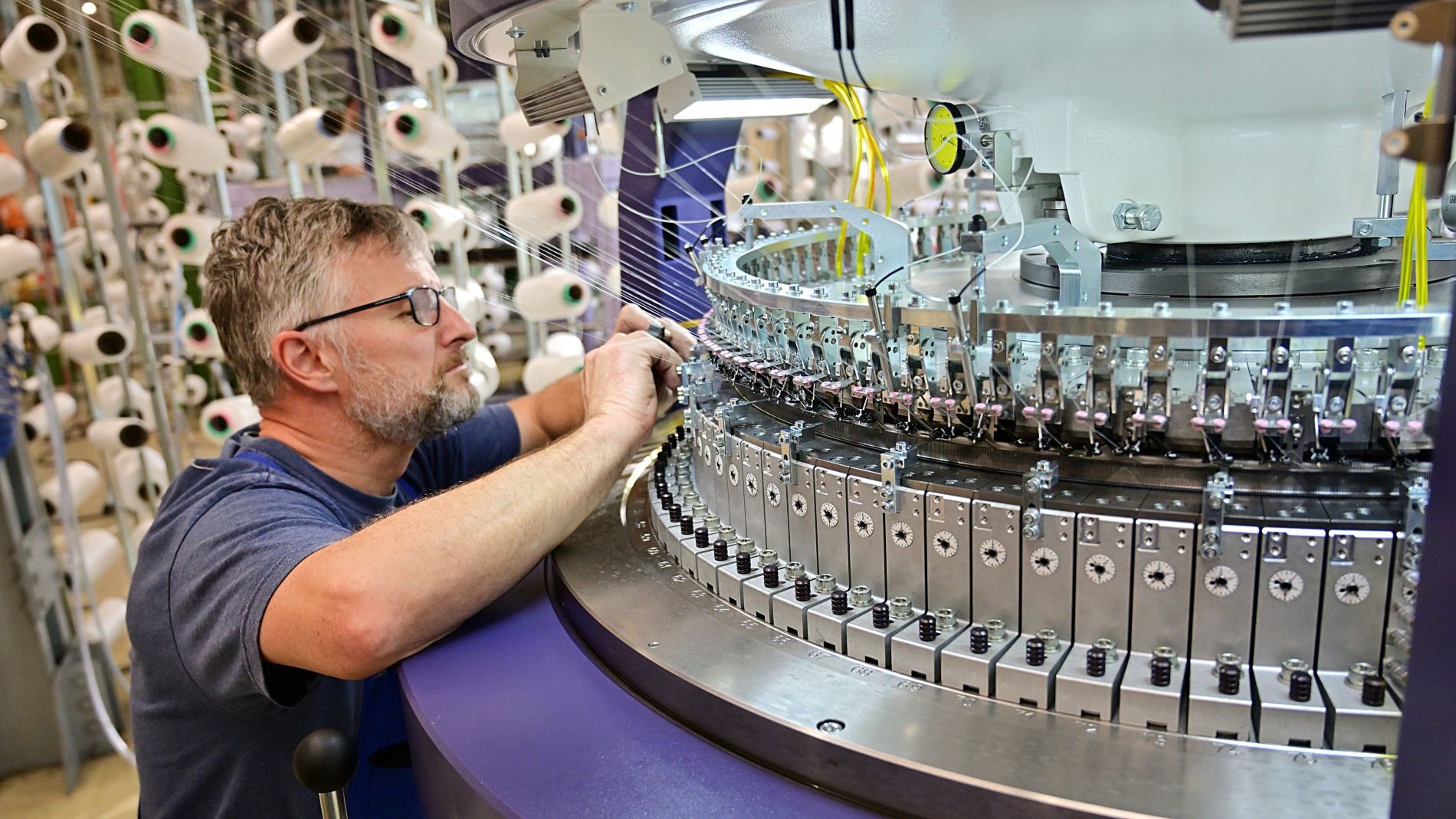
Today, Terrot generates annual turnover of approximately €33 million (as of 2024) with around 100 employees and 400 active customers worldwide. Terrot machines produce jerseys for professional sports, fashion, leisurewear and swimwear, as well as technical textiles for the automotive and medical technology sectors and home textiles such as mattress covers. Even following its acquisition by the Chinese-Italian company Santoni Shanghai at the end of 2023, Chemnitz remains Terrot’s central site, housing design, development, production, final inspection and research. “We are consciously committed to Chemnitz because we value our home and the region, because expertise exists here, and because we are convinced that German textile machinery manufacturing continues to be in global demand,” says Terrot Managing Director Martin Vorsatz. The Capital of Culture year offered the region an opportunity to reinterpret its industrial identity and to demonstrate internationally that modern textile technology “made in Chemnitz” remains synonymous with textile engineering excellence that sets standards worldwide, says Vorsatz. “That is precisely where we see the starting point for the textile future of the region.”
How Chemnitz became a textile powerhouse – more in Part 11 German: https://www.spiegel.de/reise/staedte/chemnitz-die-am-meisten-unterschaetzte-grossstadt-deutschlands-tipps-fuer-einen-staedtetrip-a-fe3510f9-79a6-4e99-9075-66cad3181076
2 German: https://www.mdr.de/nachrichten/sachsen/chemnitz/chemnitz-stollberg/pressespiegel-kulturhauptstadt-jahr-chemnitz-kultur-news-100.html
3 German: https://textil-trainer.de/
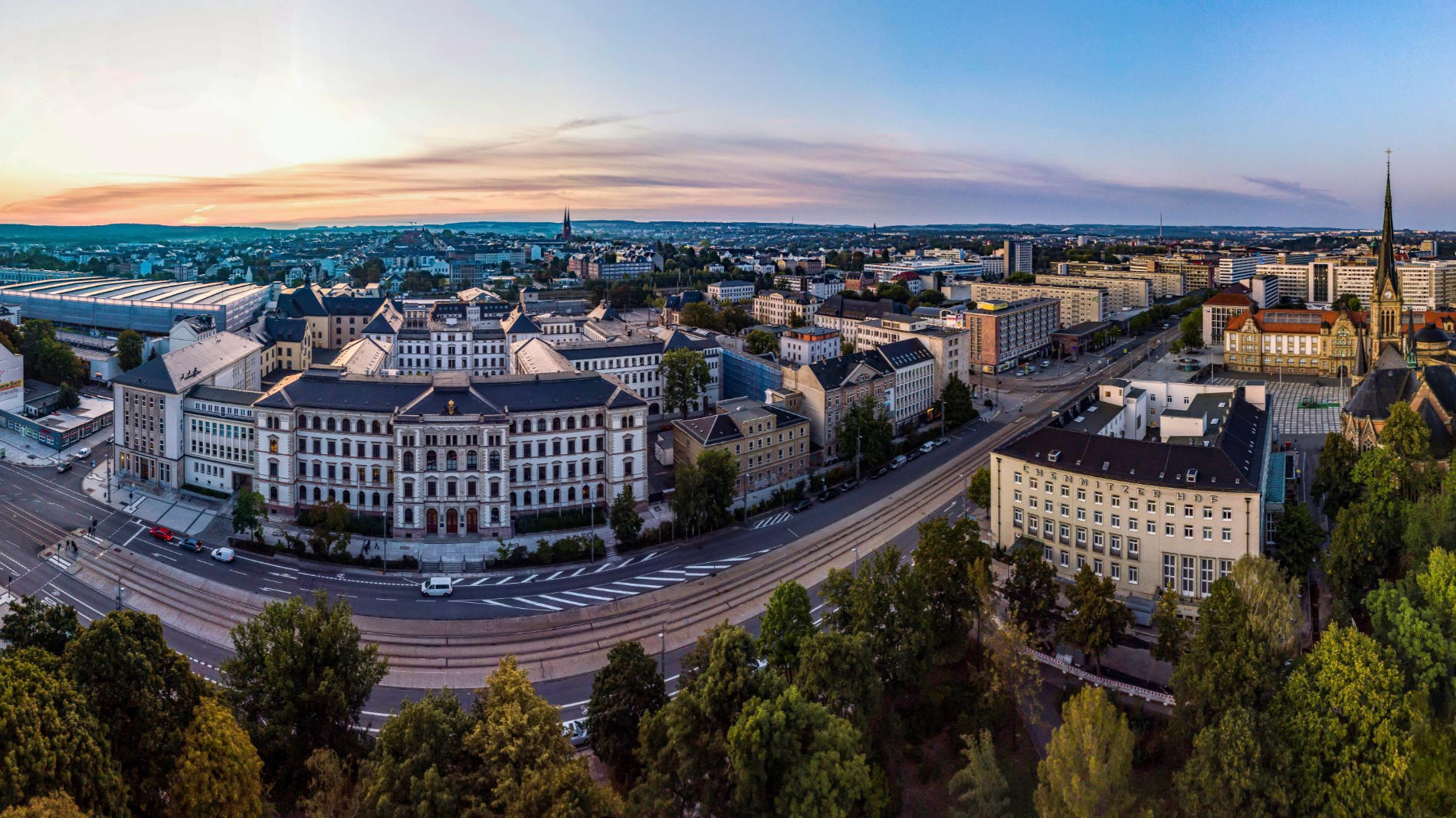
Header image: Chemnitz panorama with Böttcher Building. Photo: Jacob Müller